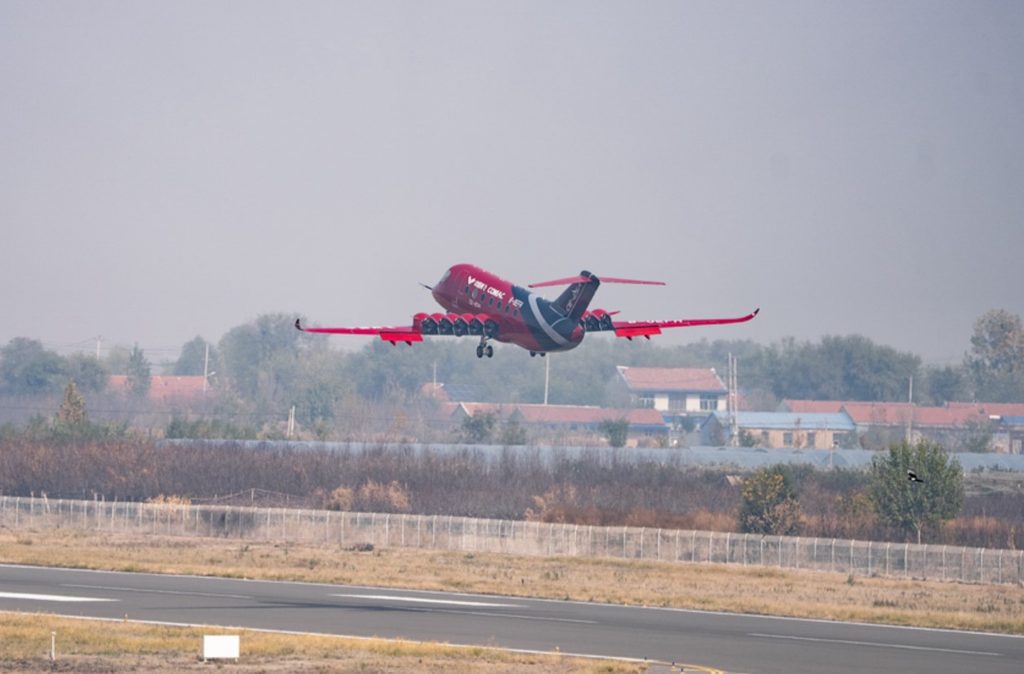
Two pilots and a flight-test engineer boarded a 10-tonne electric aircraft in Binzhou, Shandong, on November 14, 2026, and flew for 16 minutes and 38 seconds. That is what happened, and it matters without needing embellishment.
Ten Fans, Nineteen Seats, Manufacturer Numbers
The CE-25A’s headline performance figures are design specifications, and they will not become certified operational numbers until regulators say so.
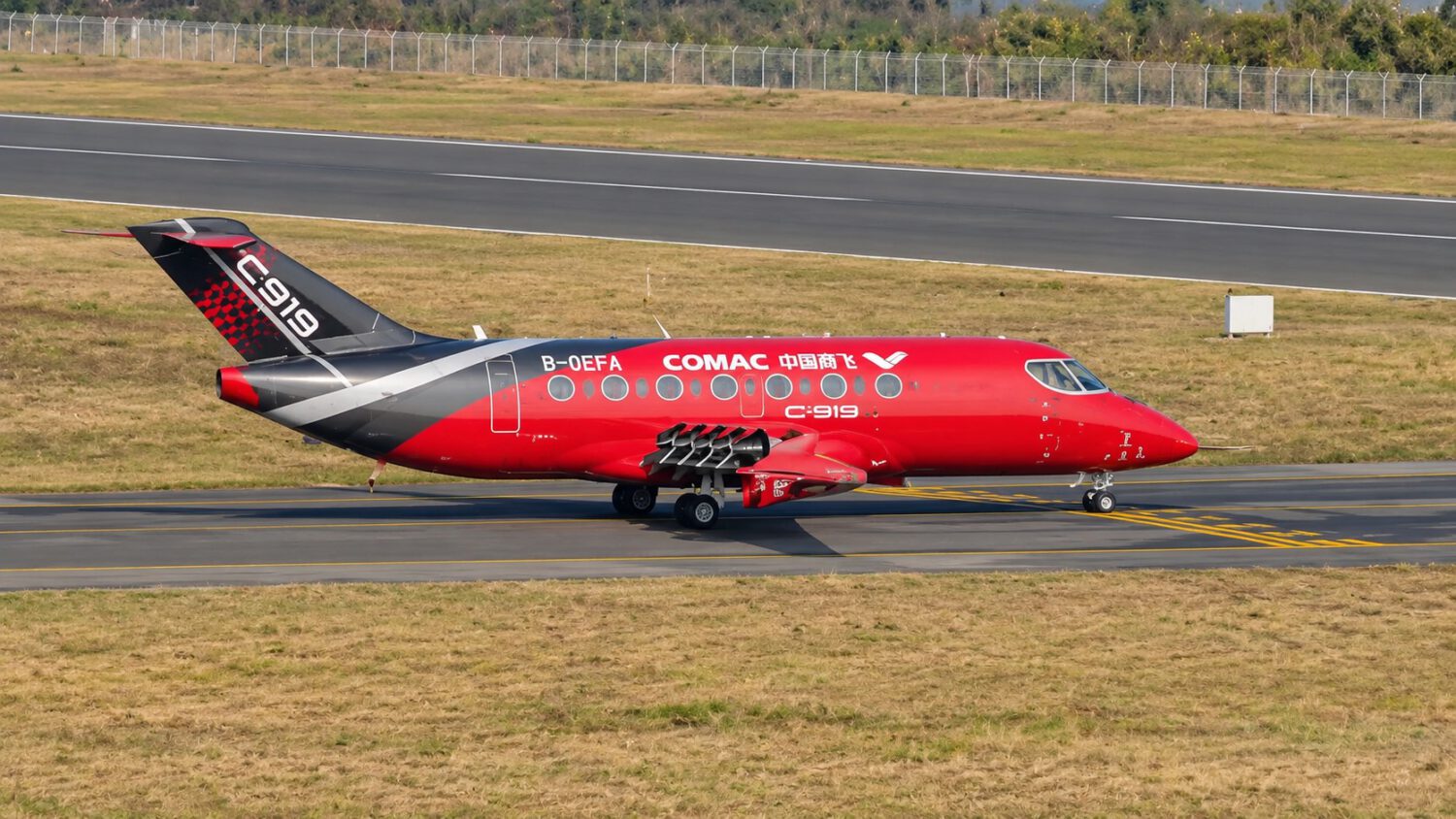
The CE-25A is a commuter aircraft built around 10 electric ducted fans, with 19 passenger seats and a maximum takeoff weight of approximately 10 tonnes. COMAC lists a cruise speed of 300 km/h and a range of 400 km; both figures are manufacturer specifications, not certified commercial performance.
What the Flight Actually Covered
The airborne portion lasted under 17 minutes and covered roughly 60 km, with total test activity running just under an hour.
The aircraft covered approximately 60 km during the airborne portion of the test, according to Chinese state media reports cited by Euronews and Electrek. Total test activity, including ground operations, lasted 57 minutes and 46 seconds. COMAC said performance indicators met expectations.
Nineteen Flights Before a Human Stepped Aboard
The November 14 crewed test followed a methodical sequence of 19 autonomous verification flights stretching back to February.
The crewed flight followed 19 autonomous verification flights, with the first uncrewed flight completed on February 2, 2026. The progression is deliberate: this is a test program, not a product launch.
Accepted Is Not Approved
China’s aviation regulator has opened a formal airworthiness review, which is the start of a certification process, not the conclusion of one.
China’s Civil Aviation Administration has accepted COMAC’s application for a type certificate, initiating the formal airworthiness-review process. The CE-25A is not certified, not approved for passenger operations, and has no announced timeline for scheduled commercial service.
The Gap Between 400 Km and a Real Route Network
The headline range figure will shrink considerably once regulators apply payload, reserve, and operational requirements.
Treating the 400-km design range as an operational route length would be premature. Certified usable range will shrink once regulators account for passenger payload, energy reserves, and diversion requirements. Weather margins, battery degradation over time, and charging turnaround constraints add further pressure on that figure.
A Small Field, With China Ahead on Scale
The CE-25A is among a small number of large electric-aircraft demonstrators to have flown with people aboard, and currently the largest reported at this seat count.
The CE-25A enters a narrow group of large electric-aircraft demonstrators. Heart Aerospace has flown its X1 demonstrator. Its 30-seat ES-30 concept uses reserve turbogenerators to extend range and targets service later than the CE-25A’s current test timeline.
Eviation’s nine-passenger Alice completed flights, but the company subsequently encountered significant business and staffing difficulties, according to Electrek. Among reported crewed battery-electric commercial aircraft platforms, the CE-25A’s 19-seat capacity places it at the front of a small field.
Real Progress, With Harder Tests Still Ahead
The crewed flight confirms that battery-electric propulsion at this scale is no longer theoretical, while the decisive tests remain ahead.
The flight demonstrates that battery-electric propulsion at this aircraft scale is no longer purely theoretical. Short regional routes, where the range constraint is least punishing, represent the CE-25A’s most credible near-term market. Type certification and repeatable flight performance across full payload remain unresolved. Battery durability over an airline service life and charging infrastructure economics add further uncertainty. The first crewed flight is a legitimate milestone in a longer journey, not the destination.