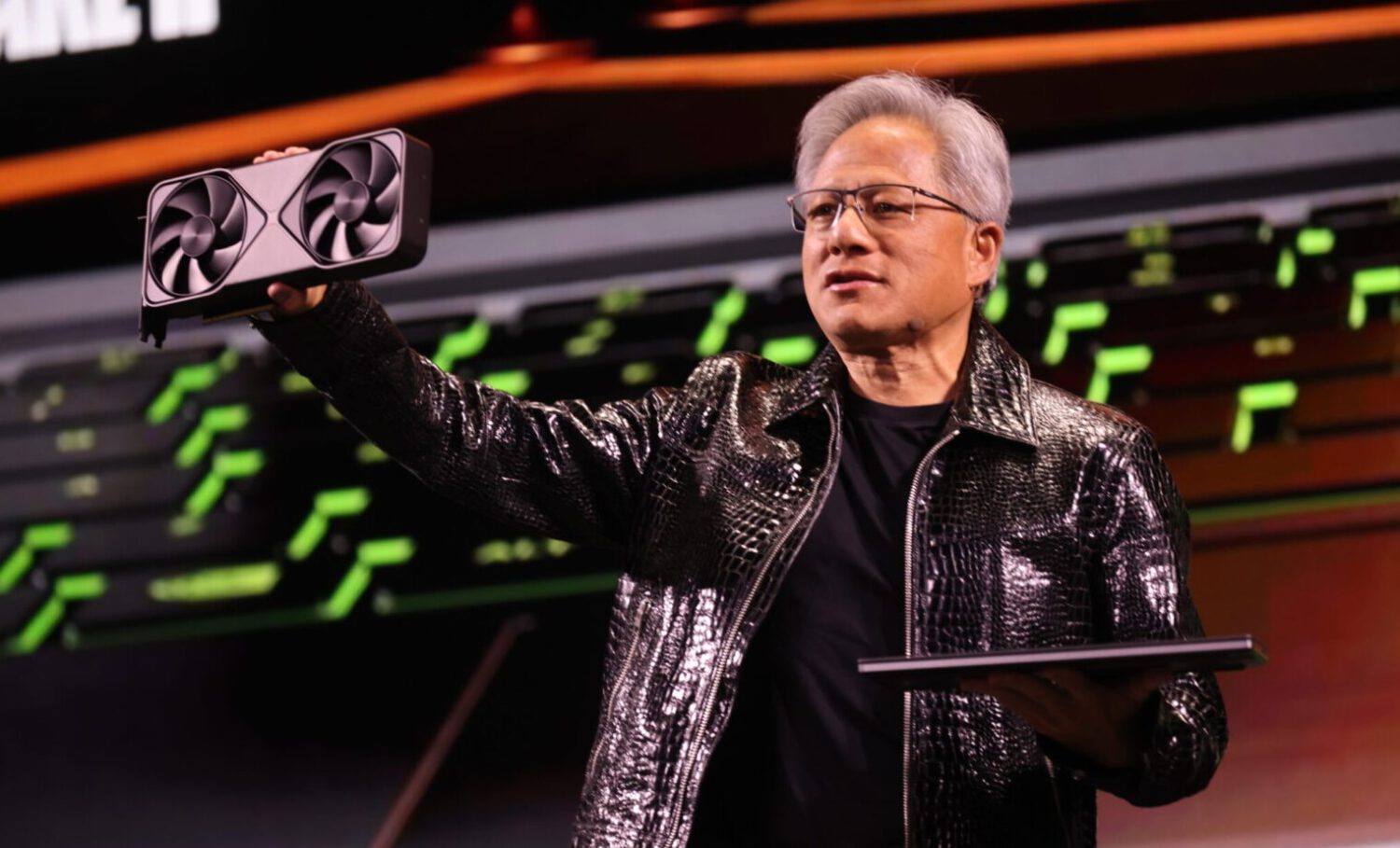
Jensen Huang has resigned as chief executive of Nvidia, ending a tenure that established the company as a central infrastructure provider for the global AI industry. Separately, semiconductor research firm SemiAnalysis published an estimate claiming that more than 1.5 gigawatts of restricted Nvidia AI accelerators ultimately reached China despite U.S. export controls.
These are distinct stories. Conflating their causes would misrepresent what the available evidence actually shows.
What SemiAnalysis Claims
The firm’s estimate relies on power-capacity tracking, not a physical count of individual devices.
SemiAnalysis says its Accelerator Model tracked more than 1.5 GW of restricted Nvidia chips that ultimately ended up in China. The firm also says the Department of Commerce held a similar belief, though no independently linked public enforcement document confirms that characterization, so the claim remains attributed to SemiAnalysis.
The 1.5 GW figure measures power capacity, not individual devices. Converting that figure to roughly 1.5 million GPUs requires assumptions about accelerator model, board power, and server configuration. The result is an order-of-magnitude estimate, not a physical device count.
The Scope Has Its Own Ceiling
SemiAnalysis applies an important boundary to its own numbers.
SemiAnalysis also flags a meaningful caveat in its own estimate: the figure excludes chips Nvidia designed to comply with or circumvent existing U.S. restrictions. The reported total covers restricted hardware, not every Nvidia AI accelerator operating in China.
The Personal Conduct and National-Security Allegations
Multiple allegations involving Huang’s personal conduct and a business associate drew board scrutiny before his departure.
NBC News reported that Huang resigned following allegations involving multiple extramarital relationships. One alleged relationship involved Alice Huang, a businesswoman associated with Singapore-based Megaspeed. NBC reported that Megaspeed and related firms remain under U.S. criminal investigation over allegations that they allegedly diverted American-made chips into China.
BBC reporting described U.S. intelligence officials as having suspected Alice Huang of acting as a Chinese intelligence asset. The same reporting alleged her company helped divert Nvidia chips to China. Nvidia told the BBC the matter had been investigated and debunked, a characterization that reflects the company’s position, not an independent conclusion.
Nvidia’s Stated Position
The company maintains it follows U.S. export law, while allegations involving third parties remain unresolved.
Nvidia has publicly maintained that it complies with U.S. export laws. That position sits alongside the allegations described above. The sources reviewed for this article did not identify court records or regulatory findings establishing Nvidia corporate criminal liability.
The Enforcement Gap Export Controls Created
A chip can cross a border legally and still end up in restricted hands.
A chip shipped to a permitted data center does not necessarily stay there. It may be resold, operated, or accessed by restricted Chinese entities through cloud services, shell companies, or intermediaries. That scenario represents one enforcement challenge U.S. regulators face, and it is the mechanism SemiAnalysis describes in its broader analysis. Huang had publicly advocated for easing export restrictions on Nvidia’s China business. That position now draws additional scrutiny.
Leadership Transition
Nvidia’s board moved quickly to name an interim leader.
Nvidia’s board appointed Chief Financial Officer Colette Kress as interim chief executive following Huang’s departure. Kress will continue to serve as CFO while holding the interim role.
What Nvidia Stands to Lose
Huang’s exit creates uncertainty across Nvidia’s most consequential relationships.
Huang was a prominent public voice on export policy, international partnerships, and AI strategy. His absence may complicate Nvidia’s advocacy and China strategy at a particularly sensitive moment for U.S. semiconductor policy.
Chinese AI developers remain dependent on Nvidia’s software ecosystem and accelerator supply, even as domestic chipmakers seek to build alternatives. Huang’s departure may reshape how Nvidia navigates those pressures, though the underlying demand for its technology is unlikely to disappear.