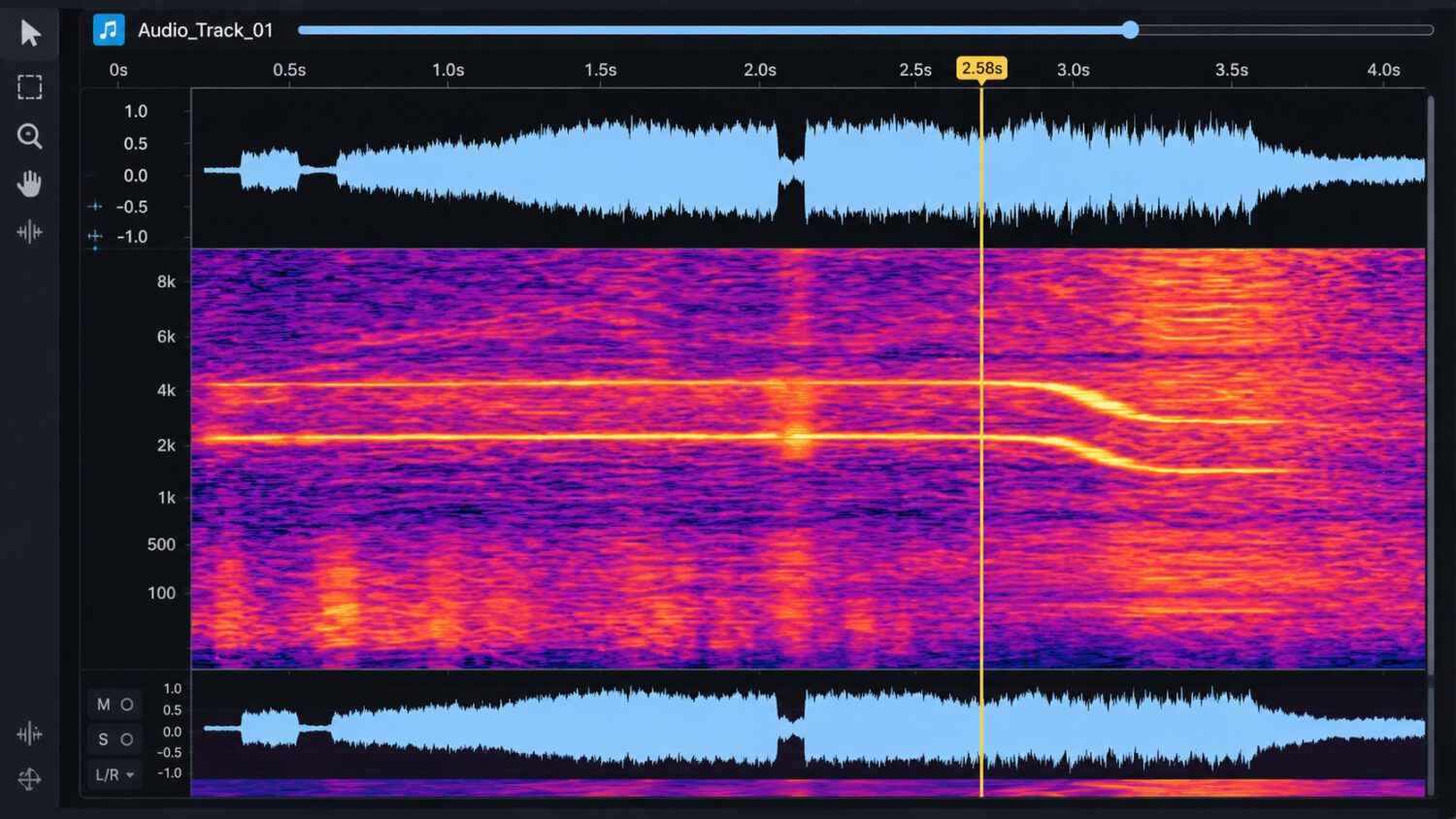
A security researcher and YouTuber known as Colsto demonstrated a technique that extracts faint aircraft signatures from an audio spectrogram and matches them against publicly available ADS-B flight tracking data. The reported experiment produced a location estimate accurate to approximately 100 meters.
How the Doppler Effect Becomes a Coordinate
The mechanic relies on a basic physics phenomenon that affects any moving sound source.
As an aircraft approaches a microphone, its sound waves compress, raising the perceived frequency. As it moves away, those waves stretch and the frequency drops.
That frequency shift leaves a characteristic curve in a high-resolution spectrogram, even when the aircraft is inaudible or barely audible during normal playback.
Matching Curves to Coordinates
Historical flight records and a grid of candidate locations form the backbone of the matching process.
Historical ADS-B records for aircraft operating in the relevant time window were retrieved and fed into a model that predicted Doppler curves each aircraft would have produced at different possible recording sites. Those predicted curves were then compared against what actually appeared in the spectrogram.
Multiple aircraft flyovers strengthen the result. Each signature must be explained by the same candidate location, narrowing the geographic possibilities with every additional match.
A Striking Result With Real Conditions Attached
The demonstrated accuracy is specific to one carefully controlled experiment, not a universal benchmark.
The roughly 100-meter result is not a universal guarantee. It required a recoverable recording timestamp, sufficient air traffic during the recording window, and matching historical flight data. It also required a purpose-built analytical pipeline that reportedly involved substantial computation and significant development time.
A roughly 60-second clip was used in the demonstration, but the method does not apply automatically to every clip of that length.
What Standard Audio Processing Misses
Conventional noise reduction targets what humans hear, not what a physics-based model can read.
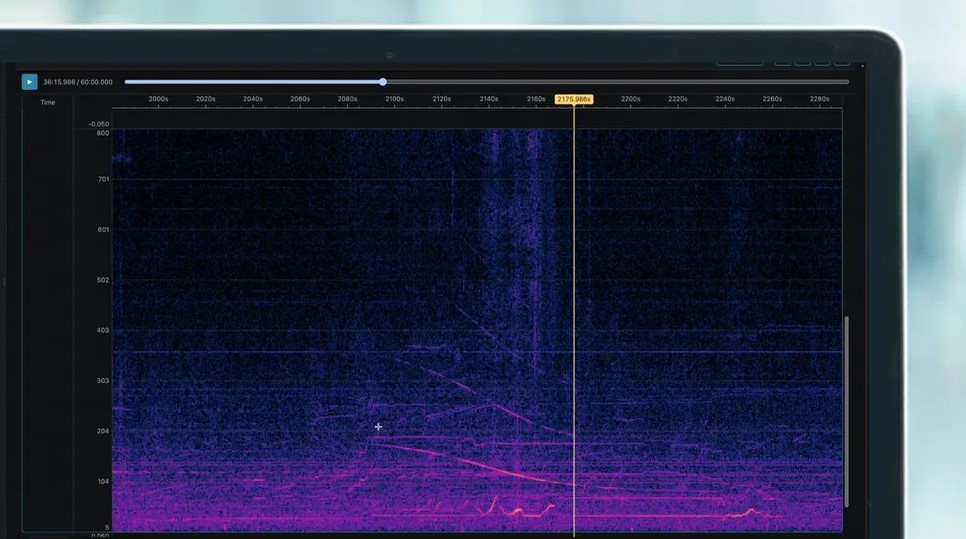
According to TechRadar’s reporting on Colsto’s demonstration, conventional high-pass filtering and standard noise reduction may not remove the relevant frequency information. The identifying pattern exists at a spectral resolution that falls outside ordinary audio review.
Removing sounds audible to humans is not the same as removing sounds readable by a computational model.
A Demonstration, Not a Deployed Tool
No software was released alongside the demonstration, which limits casual reproduction.
Colsto did not release software or operational tools, so replicating the process is not straightforward at present. Colsto also reportedly noted that simpler methods for locating a person typically exist, positioning this technique as a last resort rather than a first step.
The appropriate framing is an OSINT demonstration and a targeted surveillance app warning, not evidence that flight-tracking websites now enable automatic geolocation of arbitrary videos.
What Creators Handling Sensitive Recordings Should Consider
Several precautionary steps can reduce the available signal, though none guarantees complete protection.
For anyone concerned about location exposure, options include replacing ambient audio entirely or recording in acoustically controlled environments. Reviewing spectrograms for distinctive environmental signatures before publication is a reasonable additional step, though it cannot eliminate every possible risk. Guidance on how to stay safe in other digital contexts can also inform a broader approach to reducing personal exposure.
The Larger Pattern
Aircraft Doppler is one instance of a broader class of ambient metadata risk that extends well beyond aviation.
Similar machine-readable traces can in principle arise from other environmental sources, such as traffic patterns or transit sounds, even when nothing on screen reveals a location. Privacy protection is increasingly a question of what a computational model can read, not just what a human listener can hear , a concern underscored by cases of apps secretly tracking users without their knowledge.