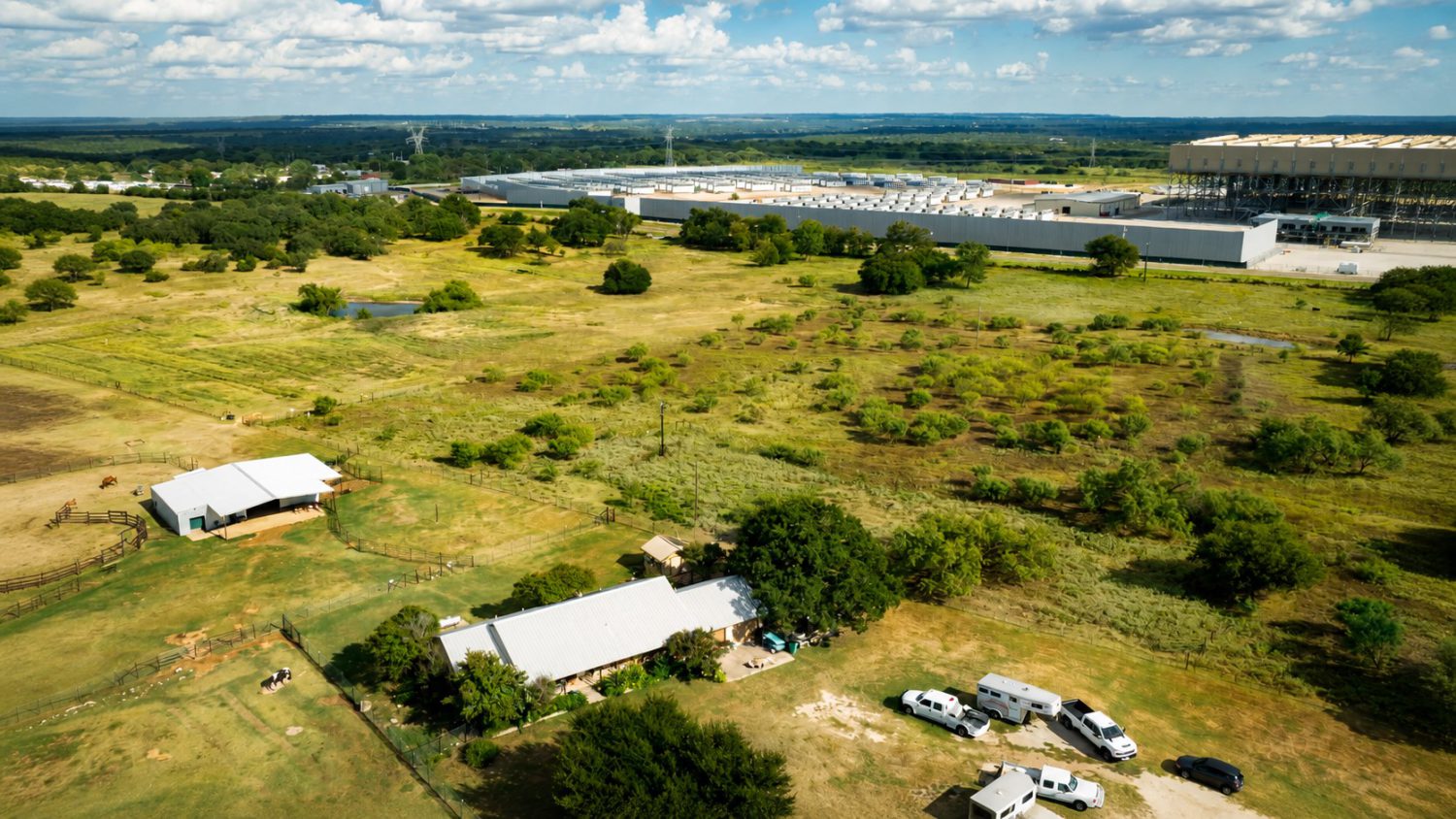
Cheryl Shadden is a lifelong Republican, a nurse anesthetist, and she is now starring in a campaign ad for the Democratic candidate for governor of Texas.
Shadden lives across from a Marathon Digital bitcoin mining facility near Granbury in Hood County. The 24/7 industrial hum from cooling fans penetrates walls, shakes windows, and by her account mimics living adjacent to an airport runway.
Shadden estimates, based on her own assessment, that the noise has cost her roughly $400,000 in property value. Her property taxes were cut by about 50% after she contested them, and the homes nearby, she says, are “unsellable.”
The Sound of a Political Deal Going Wrong
A bitcoin mine near Granbury is turning a lifelong Republican into a Democratic campaign surrogate, one unbearable hum at a time.
According to Shadden, the facility goes quiet within roughly an hour of learning a politician is visiting, including during Democratic gubernatorial candidate Gina Hinojosa’s July stop in the area. The timing has not been independently verified, and Marathon Digital has not publicly commented on the pattern.
Shadden’s explanation for backing Hinojosa cuts through party labels entirely. “This is not about being red, this is not about being blue,” she said in the campaign ad. “This is not about you being purple and pink polka dots. This is about human rights.”
Residents around the facility also report headaches, vertigo, sleep disruption, and stress in animals. Some have filed lawsuits accusing Marathon Digital of creating “intolerably loud” conditions.
Hood County commissioners voted 3-2 to reject a six-month moratorium on new industrial permits, including data centers. A request to Attorney General Ken Paxton for a legal opinion on local authority remains unresolved, leaving residents in a regulatory gray area.
Shadden is not an isolated case. Across Hood County and beyond, conservative voters are responding to data centers by switching parties, running against their own candidates, or quietly deciding to stay home.
When Your Own Party Costs You the Primary
The data center backlash is fracturing Republican ranks from the precinct level up to statewide races.
Rena Schroeder ran as a Republican for a state Senate district that includes Hood County. She opposed data centers, tried to pass a resolution keeping big tech out of local politics, and lost her March primary to David Cook. She now endorses the Democrat running against Cook, arguing Abbott “sold Texas out to big tech” through tax breaks and incentives for data center developers.
Mary Jo Bloomquist, another Hood County conservative, is not switching parties. She is just done. Abbott’s recent pause on new data center approvals reads to her as “too little, too late,” and she is considering sitting out the election entirely.
That is the scenario that worries Joshua Blank, research director at the Texas Politics Project at UT Austin. “In an election environment in which we expect the outcome to be pretty close,” Blank said, “if some share of those rural Republicans stay home, the GOP’s firewall in Texas becomes a lot less formidable.”
The numbers make that warning concrete. Per UT Austin polling, Abbott leads Hinojosa 45-40 in the governor’s race, while Talarico leads Paxton 42-39 in the Senate race. In margins that thin, rural Republican abstention stops being a theoretical concern.
Abbott’s Late Pivot
The governor who spent years pitching Texas as a data center destination is now hitting pause, and not everyone is convinced.
Abbott told Fox News he “pressed pause on any new data center approval” and put guidelines in place for existing facilities. For years before that, he actively promoted Texas as a premier data center hub. UT Austin land-use researcher Robert Paterson argues politicians can no longer simply label these projects as economic development and expect residents not to be upset.
Texas is not a regional outlier. An Annenberg Public Policy Center survey found about 61% of U.S. adults oppose new data centers in their area. Texas just happens to be the state where the political consequences are arriving first.