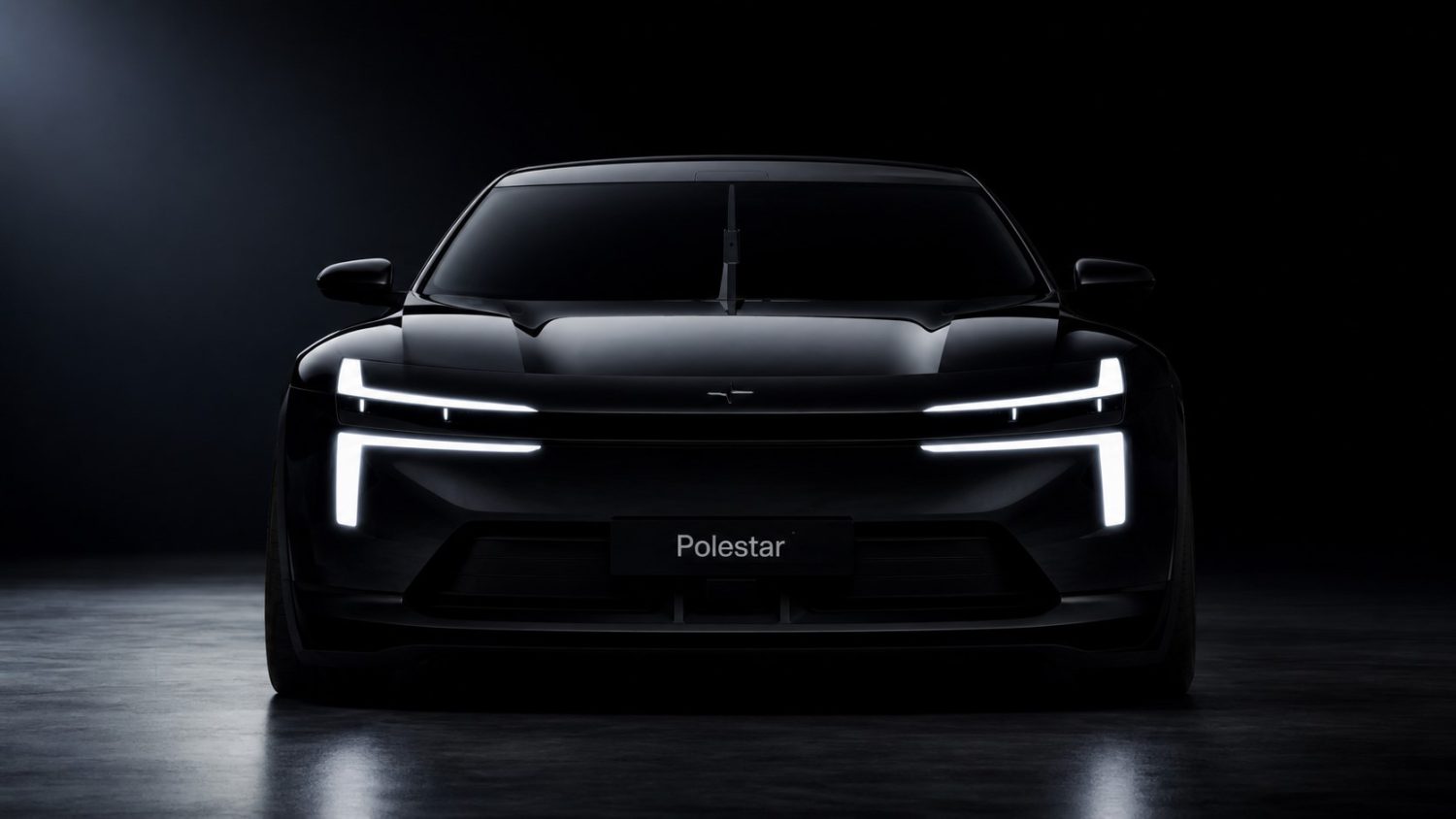
While Polestar sketches its most aggressive design yet, American buyers are quietly being shown the exit. The brand just confirmed the Formula 2030 concept — low-slung, sharp-shouldered, wearing the brand’s signature Dual Blade headlights like a threat — and positioned it as the visual DNA for the next-gen Polestar 2, expected in 2027, and the Polestar 7, reportedly following in 2028. Here’s the problem: the U.S. Commerce Department’s Bureau of Industry and Security denied Polestar authorization under the Connected Vehicle Rule for model year 2027 and newer vehicles, according to Reuters. Polestar is, in effect, writing love letters to a market it may no longer be able to reach — and for buyers weighing their options, the question of gas vs electric ownership costs grows more complicated by the day.
The teaser images show a car with serious intent. Prominent front fenders, an extremely low stance, and those Dual Blade headlights give the Formula 2030 a posture closer to a GT racer than anything Polestar currently sells. Car and Driver notes what appears to be a vertical structural element in the windshield area — though that detail remains unconfirmed, given only partial teaser images exist so far. The full reveal is set for an upcoming Polestar 4 media first-drive event, with VIP customer previews scheduled before the broader public showing.
What the concept locks in so far, according to Polestar’s media release and automotive coverage:
- Formula 2030 previews production design language for the next-gen Polestar 2 and Polestar 7
- Updated Polestar 2 expected in 2027; Polestar 7 reportedly arriving in 2028
- Design features: low stance, prominent front fenders, Dual Blade headlights
- Windshield structural element visible in teaser — unconfirmed
- Full reveal planned at Polestar 4 media first-drive event
The Catch for U.S. Buyers
Every model Polestar is teasing right now lands squarely in a timeline American buyers may never see at a dealership.
Software restrictions under the Connected Vehicle Rule take effect from MY 2027. Hardware restrictions follow later. Every model Polestar is now teasing sits squarely in that 2027-and-beyond window — precisely when the U.S. door slams shut, as Top Gear noted in its coverage of the ban. Meanwhile, developments like the driverless Tesla saga continue to shape how American regulators view the broader connected-vehicle landscape. The concept reveal is aimed squarely at markets where Polestar still operates freely.
The Formula 2030 is genuinely handsome. Sharper, more athletic, and more confident than any Polestar currently in showrooms — recalling the kind of automotive passion found in legendary cars celebrated for their striking design and GT-racer spirit. Revealing it now reads as the automotive equivalent of a restaurant posting its finest dish to a diner whose membership has just been revoked. The brand is clearly signaling a new creative chapter — just not to you, if you’re buying in America.
Whether the Connected Vehicle Rule gets revised, challenged, or simply outlasted is anyone’s guess. The Formula 2030 makes a strong creative argument for Polestar’s future. For U.S. buyers, that future is, for now, somebody else’s.