Average speeds on Portland’s SE Powell Boulevard dropped from 39 mph to the posted 30 mph limit at the first intersection where the city tested its “rest in red” signals. No ticket. No camera flash. Just a red light that stays red until you decide to slow down. That’s the whole trick — and cities from Albuquerque to Long Beach have been quietly running versions of this system for years, because traditional enforcement keeps falling short.
Green Light for Good Behavior
The mechanism is almost insultingly simple, and that’s exactly the point.
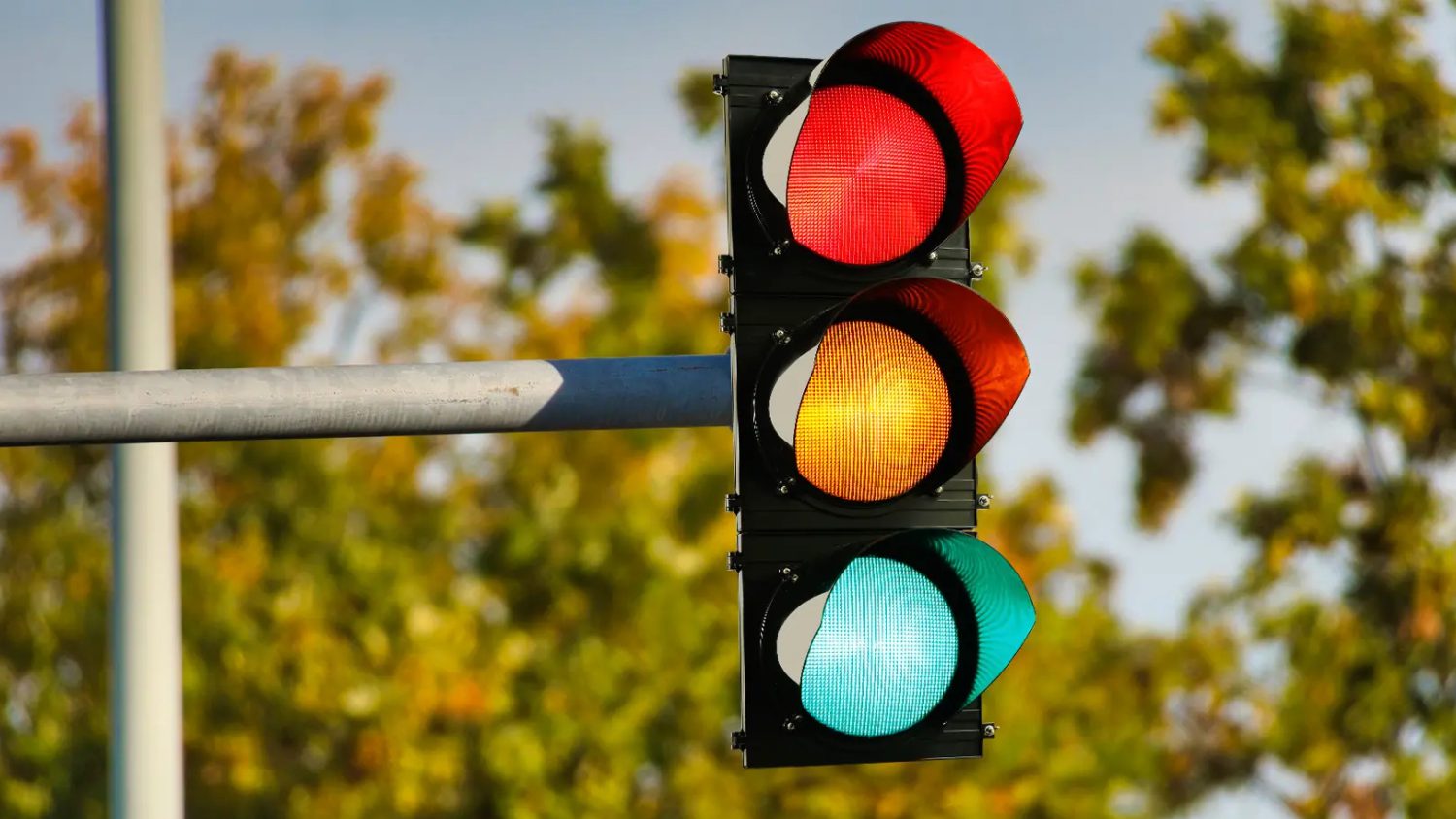
The signal defaults to red in every direction. Speed sensors measure your approach before you reach the intersection. Drive at or under the limit and you get an early green. Drive over it and you wait. It’s the traffic equivalent of Duolingo’s streak system — compliance gets rewarded with something you actually want, which turns out to be more motivating than the threat of punishment.
Here’s how it breaks down in practice:
- Signals hold red until sensors read an approaching vehicle’s speed
- Drivers at or under the limit receive priority green while speeders face extended red holds
- Portland installations run $20,000–$100,000 per intersection depending on existing hardware
No fines change hands. Time is the only penalty. Smooth flow is the only reward.
Portland’s signal manager Peter Koonce calls it a “virtual speed bump.” His agency, the Portland Bureau of Transportation, runs the system on SE Powell Boulevard between 10 p.m. and 6 a.m. on weekdays — the hours when traffic thins out and speeds climb dangerously. Oregon State University is formally evaluating the detection technology as part of a $125,000 project. An 82nd Avenue expansion is also in progress.
Albuquerque’s Numbers Don’t Lie
What drivers actually experience approaching the sensors tells the story better than any chart.
Picture pulling onto Lead and Coal before the sensors went in: roughly half the drivers around you were speeding, many by 20 mph or more. Now, after Albuquerque installed its “Rest on Red” system along that corridor and the stretch from Nob Hill to Downtown, fewer than half speed at all. City officials say the system has “pretty much completely eliminated” drivers going far above the limit. Residents report fewer collisions. Comprehensive crash data analysis is still pending, but the directional signal is hard to ignore.
Long Beach tried a similar pilot on Wardlow Road around 2012, then pivoted to automated speed cameras — a move that eventually helped inspire California’s statewide camera enforcement pilot. That fork matters. As Jalopnik noted, comprehensive comparative data between incentive-based signals and camera enforcement doesn’t yet exist, making it genuinely difficult to declare a winner.
Worth noting: a 1977 Public Works Journal study documented that rest-in-red reduced speeds and accidents at problem intersections. Cities have had this blueprint since the Carter administration. They just needed the sensors to catch up.
If Portland and Albuquerque’s early results hold under formal evaluation, expect other transportation agencies to look seriously at signal timing as a behavior-modification tool — relatively cheap infrastructure doing the work that neither fines nor policing fully managed.