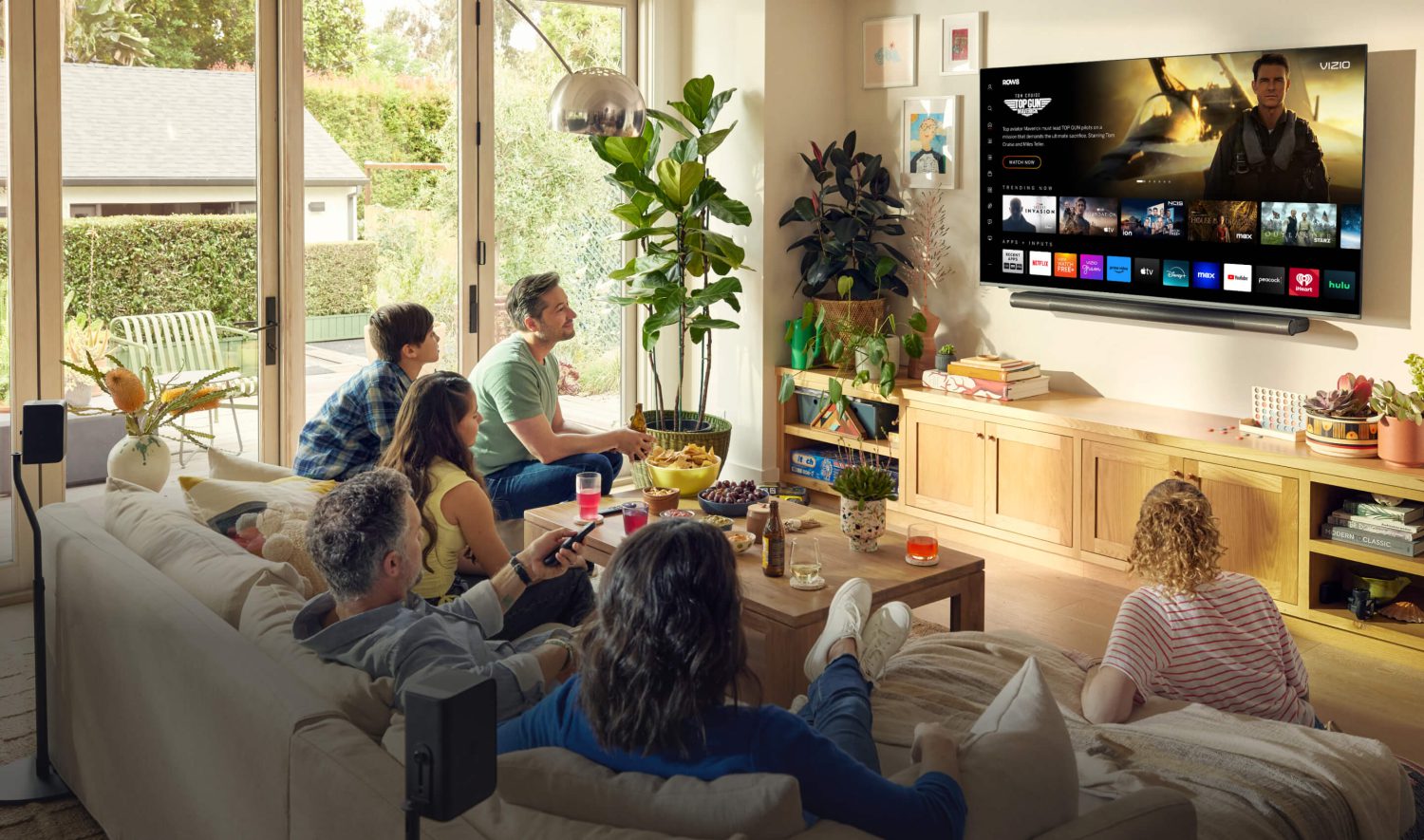
That $500 TV isn’t $500. The hardware is subsidized by something you handed over at setup without realizing it — your viewing history. Automatic content recognition (ACR) is software embedded at the OS level that samples what’s on your screen, generates a digital fingerprint, and ships it to ad servers for matching. Think of it as Shazam running constantly in the background, across every app and every HDMI input, without ever asking. This isn’t an LG problem. It’s the entire industry’s business model — and apps are secretly tracking users across far more surfaces than most people realize.
What ACR Actually Does – And Why Your TV Costs So Little
Cheap panels are subsidized by your viewing data — and the economics are entirely deliberate.
Traditional flat-panel TVs once cost thousands. Now a 65-inch 4K set runs under $500. Manufacturing efficiencies helped, but data revenue closed the gap. Vizio made the math explicit: its “Platform+” business — ads, data, services — generates substantial revenue separate from hardware margins. When Walmart acquired Vizio, it wasn’t chasing display technology. It was buying ad infrastructure attached to millions of tracked screens. Your TV is the razor. Your attention is the blade. Chances are you’re already paying too much in ways that never show up on the price tag.
Every Brand Is Running the Same Play
You clicked “Agree” at midnight during setup — here’s what that actually meant, broken down by brand.
You tapped through the setup screen, half-asleep, and thought nothing of it. Here’s what you agreed to:
- LG (webOS): ACR runs under “Live Plus” and “Viewing Information,” tracking across apps and external inputs by default. Disable via Settings → General → System → Advanced Settings → Live Plus, plus a separate “Viewing Information” toggle under Support → Privacy & Terms.
- Roku TV: Its “Smart TV Experience” collects programs, ads, channels, and viewing duration via antenna and all connected devices. Disable via Settings → Privacy → Smart TV Experience.
- Vizio: Secretly ran ACR on approximately 11 million TVs through “Inscape” software, capturing second-by-second viewing data across every source, until the FTC intervened in 2017 — resulting in a $2.2 million settlement and required opt-in consent going forward.
- Samsung, TCL, Hisense, Sony: Similar tracking operates under labels like “Viewing Information,” “Smart Interactivity,” or “Enhanced Viewing” — buried in privacy submenus, enabled by default.
The FTC’s Vizio case established TV viewing history as sensitive data requiring explicit opt-in consent. Not boilerplate. Not buried policy language. Explicit consent.
What You Can Actually Do About It
Three real options, ranked from blunt to manageable — each with a trade-off attached.
The options are real but involve genuine compromises. The nuclear option: don’t connect the TV to Wi-Fi. No network means no data leaving the house — and also no streaming apps. More practical is hunting down the per-brand ACR toggles listed above and disabling them manually. A middle path is routing your streaming through an Apple TV or similar external box, which concentrates data collection into one vendor with clearer privacy controls. That approach doesn’t eliminate tracking — it redirects it. Advanced users can deploy Pi-hole DNS blocking at the network level to help stay safe, though that requires ongoing maintenance most people won’t sustain.
The Incentives Haven’t Changed
Regulation moved the needle once in 2017 — but the underlying business model is still very much intact.
Vizio’s 2017 settlement was a landmark. Regulators ruled that TV viewing data is sensitive, requiring prominent notice and affirmative opt-in consent — not buried terms. Vizio argued the data wasn’t tied to personally identifiable information. Regulators disagreed on what the consent standard should be. Privacy advocates point out that even anonymized viewing data, matched to an IP address and device ID, builds a detailed profile regardless of what you call it — a technique reminiscent of how a surveillance app can identify individuals without ever using their name.
As long as ad and data revenue subsidizes hardware prices, manufacturers will keep designing setup flows that maximize collection and minimize clarity. Tighter regulation could eventually force ACR off by default — which would likely push TV prices back up. Until then, spend 10 minutes in the settings menu. Or keep paying for that “cheap” TV in a currency that never shows up on the receipt.