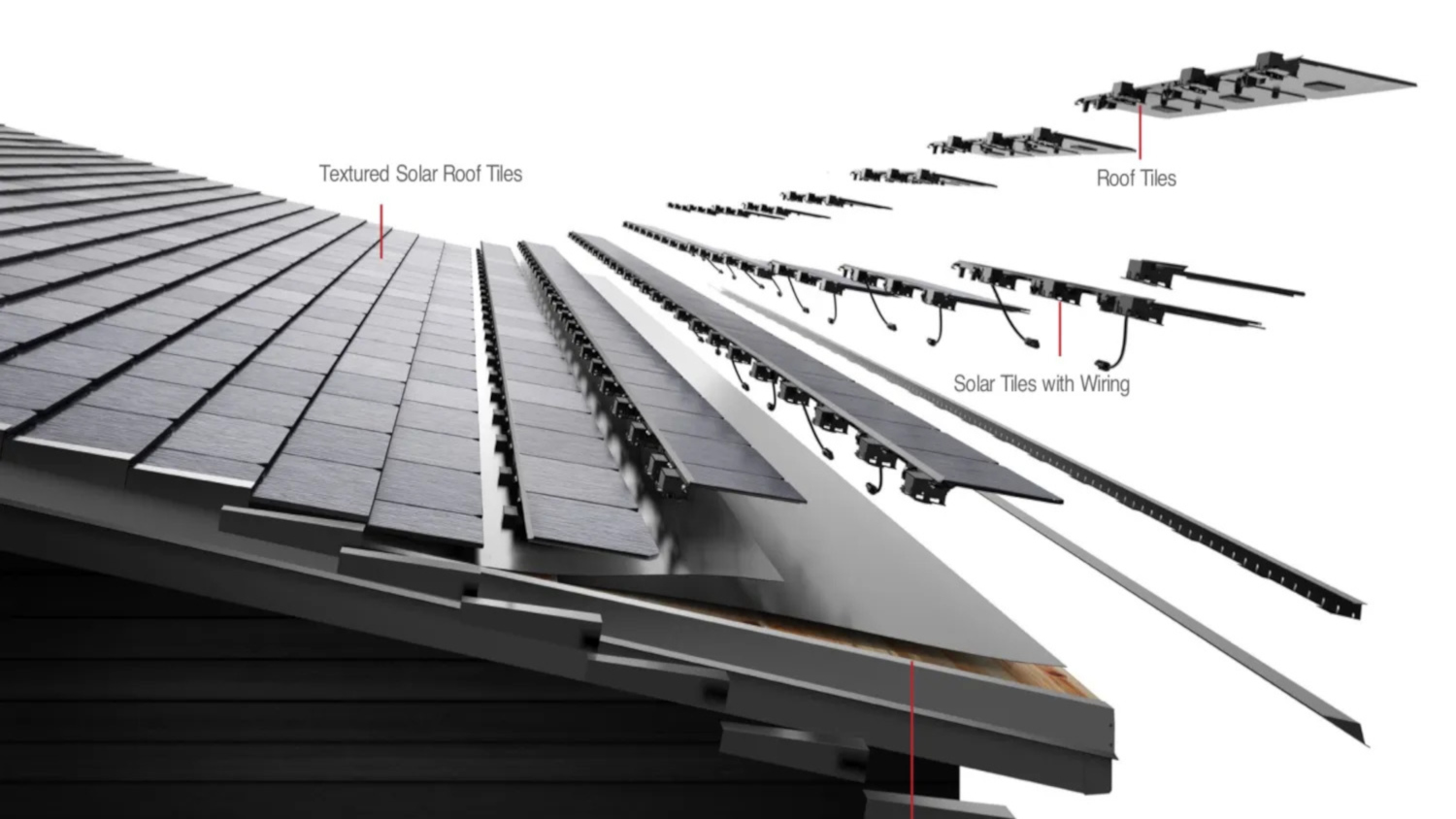
Contractors sent crews across the country for multi-week training, completed three supervised installations before earning certification, and built out specialized teams and tooling — all organized around a single supplier’s proprietary product. Then, in August 2026, Tesla stopped supplying tiles. No warning. No compensation. Just a redirect URL where the Solar Roof page used to be.
That’s the unglamorous ending to a decade of Solar Roof hype, and the part of the story that doesn’t appear in Tesla’s pivot announcement.
A Decade of Promise, 3,000 Roofs
The gap between what was promised and what actually got built is almost difficult to process.
Elon Musk publicly targeted 1,000 Solar Roof installations per week by 2019–2020. Tesla peaked at 21–32 per week. Over roughly seven years, the company installed approximately 3,000 systems total — about 0.17% of U.S. residential solar installations by end of 2022, according to Aurora Solar. Tesla internally concluded the product was “not financially viable,” per Electrek. The confirmation is visible on Tesla’s own website: tesla.com/solarroof now redirects to the standard solar panels page. The pivot to conventional panels and Powerwall is complete.
What Certified Installers Actually Invested
The training requirements alone signal how serious — and how costly — the commitment was.
Becoming a certified Solar Roof installer wasn’t a weekend seminar. It meant:
- Multi-week in-person training at Tesla’s Rancho Cucamonga, California facility
- Three supervised installs before certification
- Two-plus weeks to complete each Solar Roof project — versus roughly two days for standard rack-mounted panels
Some contractors told Electrek they had sunk “hundreds of thousands of dollars” into specialized crews and tooling. Companies like Elevated Roofing & Siding in Ohio, PGT Home Energy Solutions in Arizona, and Westfall Roofing in Florida are now sitting with stranded investments and no product to install.
Ryan Westfall of Westfall Roofing told Roofing Contractor that becoming a Solar Roof installer required “investment in learning the system” — not a weekend course, unlike the skilled trades programs other industries are backing.
Most affected installers won’t criticize Tesla publicly. They still sell panels and Powerwall, and burning that relationship isn’t an option they can afford.
Tesla has said it will honor existing warranties and supply replacement parts. The official Solar Roof Limited Warranty promises 25 years of product and weatherization coverage. But Greg Field of PGT Home Energy Solutions and Aaron Nichols of Exact Solar are skeptical about long-term parts availability — and both warn that service labor costs will be steep, given how complex the tiles are to work on.
BIPV Isn’t Dead – But Trust Is
Tesla’s exit leaves the next integrated solar pitch walking into a much more skeptical room.
Todd Miller of Isaiah Industries, speaking to Roofing Contractor, argued that Tesla treated Solar Roof like a tech gadget rather than a roofing product — underestimating regional building codes, installation logistics, and what roofers actually need from a long-term partner. Building-integrated photovoltaics as a concept survives; other manufacturers are still in it. Some contractors say they’d consider BIPV again, but only with a supplier that commits clearly to long-term parts availability and installer-friendly economics before anyone signs anything.
The roughly 3,000 households with Solar Roof systems have a 25-year warranty on paper. Whether that paper holds across 25 years of parts sourcing and service labor is a question worth asking before your next roof.