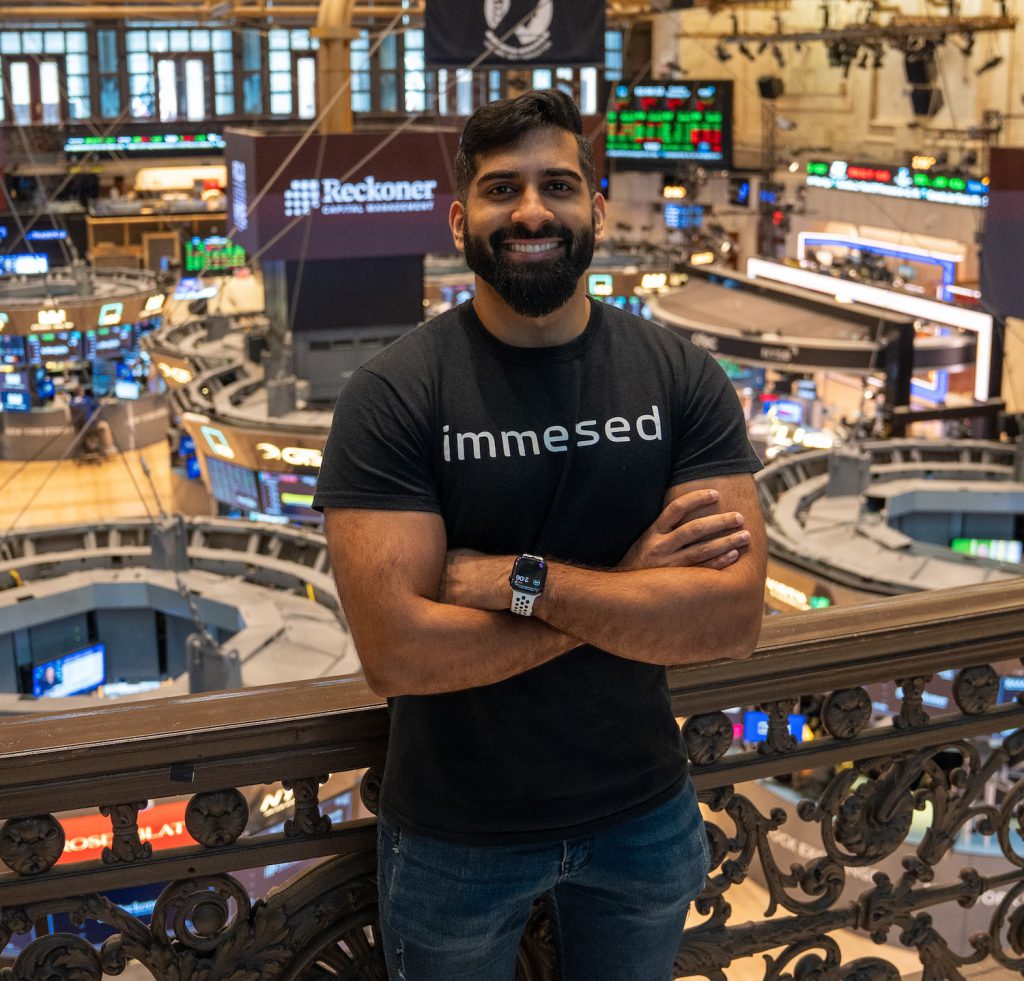
Editor’s note: I recently spoke with Renji Bijoy, founder and CEO of Immersed, about why his startup is taking on Apple and Meta in spatial computing, and why he thinks the tech giants got it wrong.
In February, Meta did something remarkable. It killed Horizon Workrooms, the virtual reality collaboration platform Mark Zuckerberg had championed as the future of remote work.
The shutdown was quiet. A support document. A February 16 deadline. All user data deleted.
Meta’s Reality Labs division had burned through more than $70 billion since 2021 chasing the metaverse dream. Workrooms, launched in 2021, never caught on. At its peak, the platform had maybe 300,000 users.
Renji Bijoy watched all of this happen. His company, Immersed, had 1.5 million.
“After about five years of trying to carve out a path there, I think they had maybe 300,000 users at their peak,” Bijoy told me. “Then back in February, they decided to shut it down because it just wasn’t getting the type of traction that we had.”
Here’s the thing that makes this story strange: Meta actually paid Immersed to help build Workrooms.
“They eventually became like friends because it’s funny. They mentioned to me and my team, ‘We’re thankful that you’re on our store. We’re actually going to create our version of an app since you’re not just going to make everything that we want you to build,’” Bijoy said. “Actually, they had paid us just under a million bucks to help them build that.”
Now Meta is out. And Immersed is shipping its own headset.
The Most Used Work App in VR That You’ve Never Heard Of
Immersed was the first non-gaming app on the Oculus Store. Bijoy founded it in 2017 after dropping out of a Georgia Tech AI PhD program. He went through Techstars that same year. Forbes put him on the 30 Under 30 list.
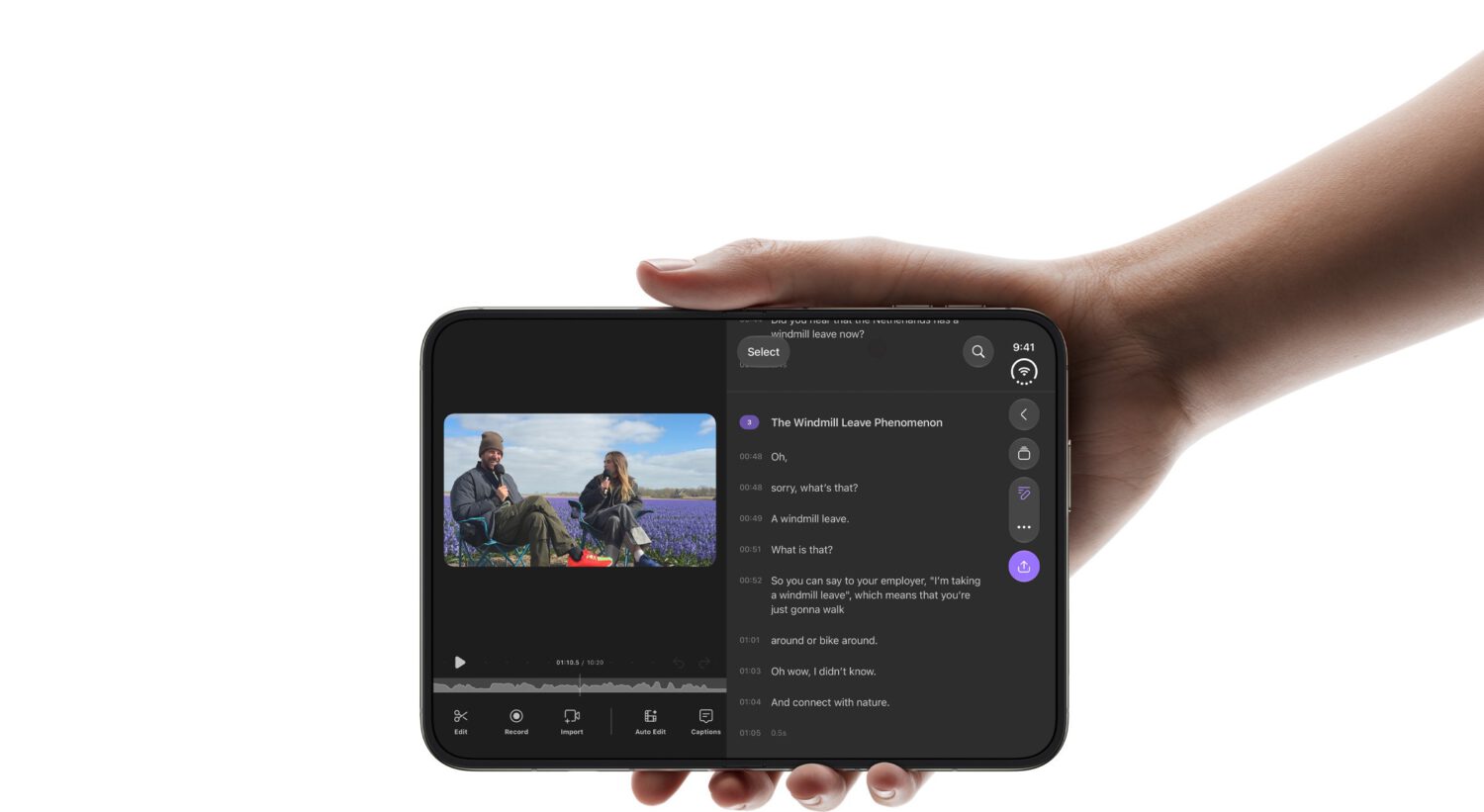
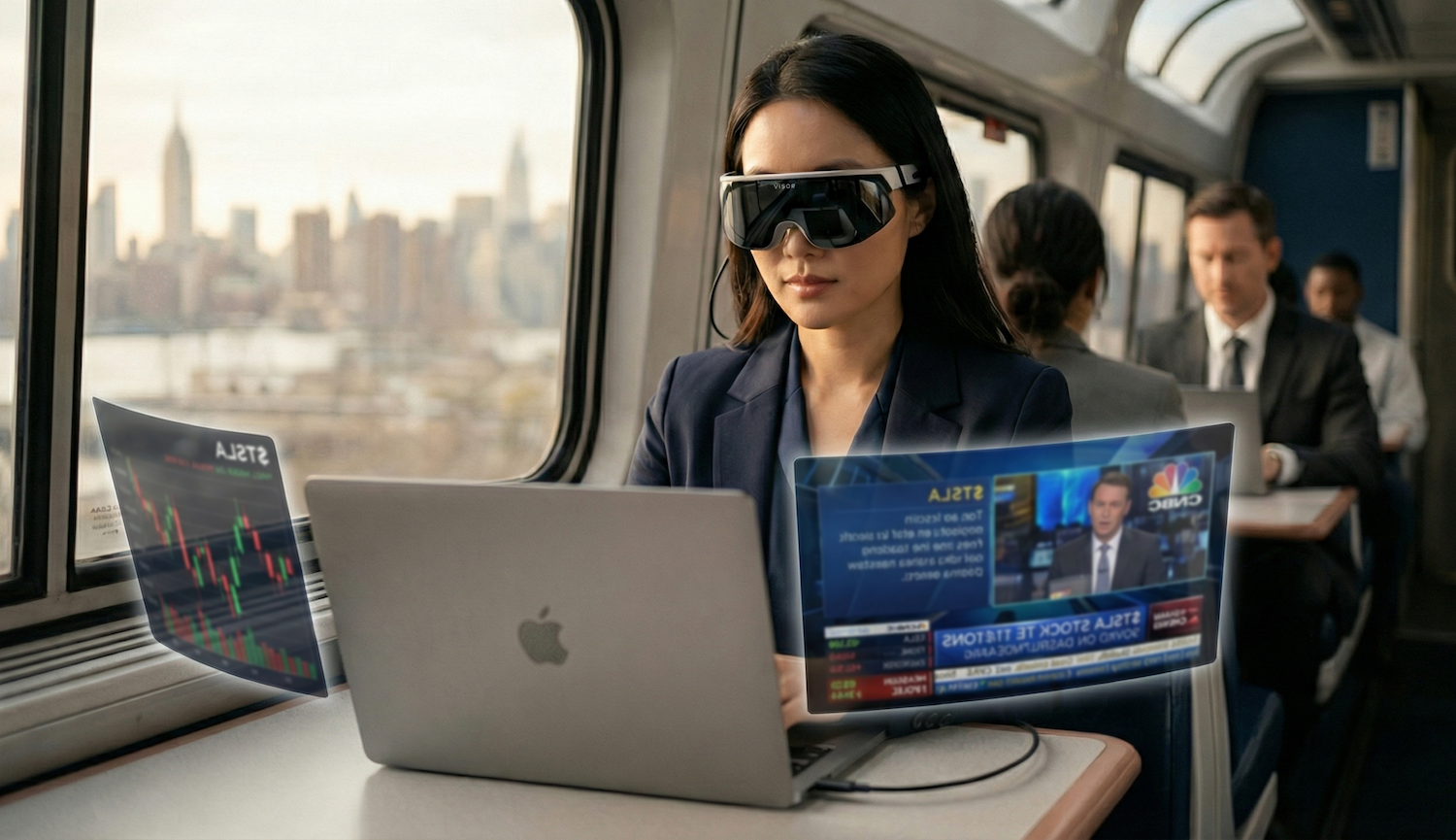
The core product is straightforward: put on a VR headset, connect to your laptop, and get up to five virtual monitors floating in space around you. You can work from a beach. A mountain cabin. A minimalist void. Your coworkers can join you as avatars, coding side by side even though they’re in different cities.
Immersed calls it “noise-canceling for your eyes.” The same way headphones cut out distracting sounds, Visor cuts out distracting visuals. You control everything you see and hear.
“So quite literally recreating the in-office experience for remote engineers,” Bijoy explained. “That’s where we started.”
The user base expanded beyond developers. Designers showed up. Day traders who needed six screens. Legal teams. Finance teams. A 77-year-old grandmother who watches movies with her grandkids in different cities.
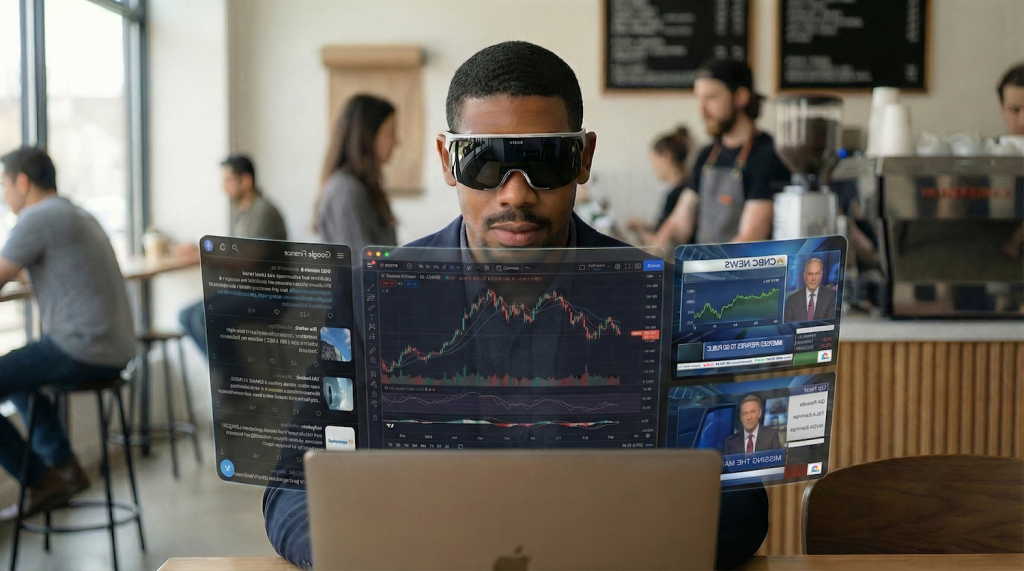
“You have even like, you know, grandparents who watch movies with their grandkids who live in a different city and they’re able to pull up their television screen,” Bijoy said. “They’re able to watch movies side by side and feel like they’re together even though they’re not.”
The app is free to download. A Pro subscription unlocks more screens and collaboration features. But Bijoy realized something: the hardware was the bottleneck.
Why Immersed Is Building Its Own Headset
Every VR headset on the market was designed for gamers. Heavy. Clunky. Strapped to your head. Uncomfortable after 30 minutes.
The Apple Vision Pro costs $3,500 and weighs about a pound and a half. The Meta Quest 3 is cheaper but still feels like a toy. Neither was designed for someone who spends eight hours a day at a computer.
“For example, 98% of our users mute the Meta Quest headset built-in audio, and they just use their AirPods paired to their laptop,” Bijoy said. “That’s why we decided, okay, we’re actually not going to build any audio into this thing because they’re just using their own.”
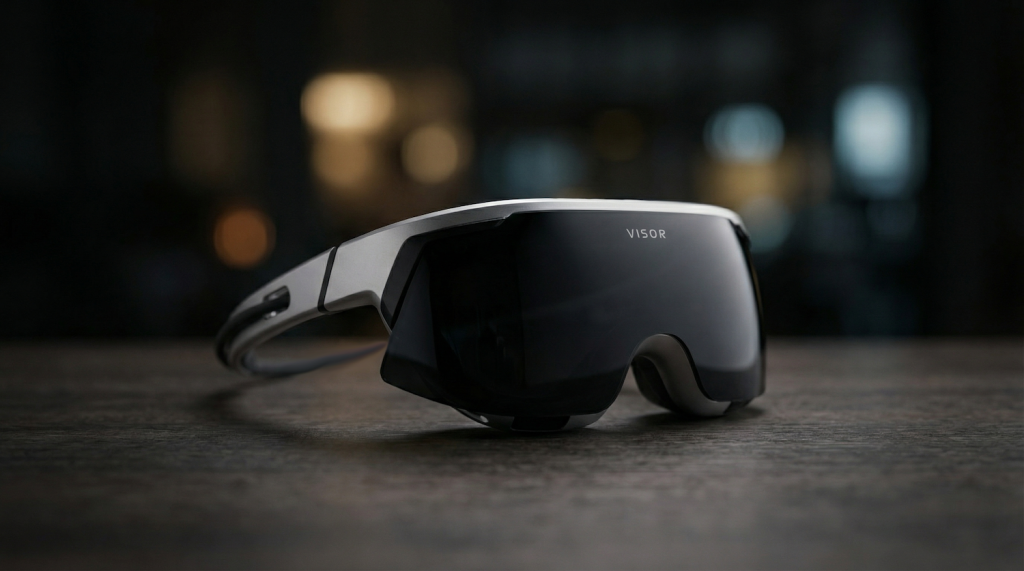
So Immersed built Visor.
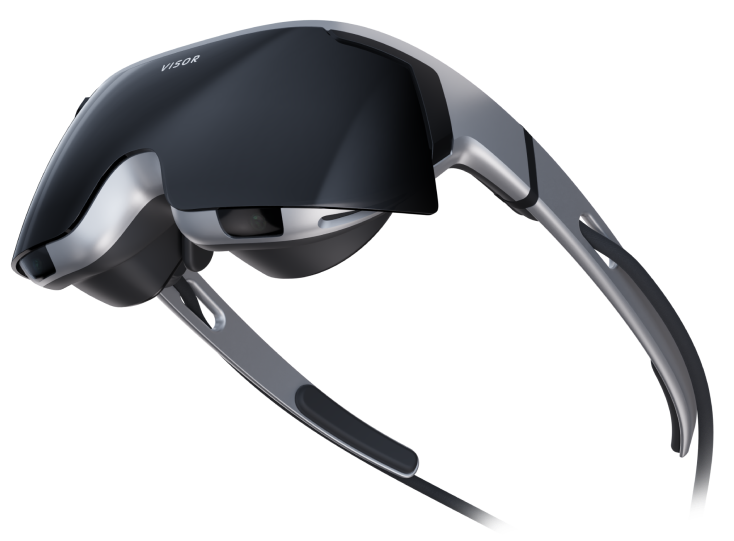
The specs are impressive. Six ounces. Lighter than an iPhone. Twenty-five million pixels across both displays, which is 10% more than the Apple Vision Pro. A price point around $1,000, compared to Apple’s $3,500.
“My iPhone is 7 ounces, right? So this is lighter than an iPhone,” Bijoy said. “And then the Visor headset has 25 million pixels. The Apple Vision Pro only has 23 million pixels.”
The second-generation prototype is down to 4 ounces.
No controllers. Hand and eye tracking. Color passthrough for augmented reality. A 100-degree field of view. Six degrees of freedom. Three hours of battery life, because Bijoy’s team determined you need to be able to watch Lord of the Rings in one sitting.
Palmer Luckey, the founder of Oculus VR, has tried it. His endorsement: “I have literally hundreds of head-mounted displays, so believe me when I say Visor is something special.”
Don McGuire, CMO at Qualcomm, which provides the chip powering Visor: “Looking forward to the launch of Visor.”
The device is also powered by Intel One API.
“When the Apple Vision Pro first came out, the biggest complaint was it had a two-hour battery and you couldn’t even watch Lord of the Rings in one sitting,” he said. “You have to recharge the battery to be able to finish your movie.”
Built by Users, Funded by Users
Immersed has raised roughly $40 million to date. But only $5 million came from venture capital.
The rest, about $35 million, came from retail investors through crowdfunding. More than 10,000 people have invested. The average check is $3,200.
“That has shown us that there’s definitely an appetite for people to get in before IPO, right?” Bijoy said. “If people… That’s the sad reality of the history of angel investing. Angel investors have always been the exit liquidity for these richer VCs or angels.”
The company has backing from the former Intel CEO and endorsements from figures like Tim Tebow. Qualcomm partnered with Immersed on the chip powering Visor.
More than 100,000 people are on the waitlist. One enterprise partner is projecting a million units sold in the first year. Another company has expressed interest in a 50,000-device purchase order, a $50 million deal if it closes.
“We have over ten thousand retail investors in our company and, Lord willing, someday we go public,” Bijoy said. “We want to have maybe 100,000 retail investors in our company who we go public with.”
The Enterprise Angle
Immersed isn’t chasing gamers. The subscription model is designed to filter them out.
You can buy the Visor starting at $699 with a two-year subscription commitment, or pay $1,349 upfront. A Founder’s Edition ships six months earlier at a premium. The 4K model tops out around $1,700 with accessories.
“Part of it is to weed out the gamers in a sense because a lot of the gamers they have… It’s just a bit of noise to be straightforward,” Bijoy said. “They have a lot of feature requests around, ‘We want PCVR integration’ and ‘we want all these other things,’ and ‘we want Immersed to work on building controllers.’”
The real opportunity is enterprise. At least one Immersed user works at every company in the Fortune 500. The sales motion is Slack-style: employees try the app, like it, and ask their managers to pay for the team subscription.
“Because we have a million and a half users, and there’s at least one or more users in 100% of the Fortune 500,” Bijoy said. “So as soon as we want to blast or market to the Fortune 500, we’re one email blast away.”
David vs. Goliath, Except Goliath Just Left
The timing is remarkable. Meta spent a decade and tens of billions trying to make VR for work happen. Apple launched the Vision Pro to lukewarm enterprise adoption. Both optimized for gaming or mixed use cases.
Immersed optimized for the one thing people actually do with computers: work.
“I think a lot of the different… There are a lot of no-name companies who are derivatives of other form factors who they don’t really know what they’re building. They’re just trying stuff,” Bijoy said. “The fact that we have the most amount of user usage in all of AR/VR helps us a lot.”
Memory chip shortages have pushed up costs recently, forcing Immersed to raise prices by $200. But the fundamentals remain: a device purpose-built for productivity, priced at a fraction of Apple’s offering, from a team that’s been obsessing over this problem since 2017.
“For them, they’re looking forward to 4:30 where they can clock out,” Bijoy said, comparing his team to corporate project managers. “Our team obsesses over this thing 24/7. It’s a very easy bet to bet on the startup.”
Visor is available for preorder at visor.com. Immersed is available free on Meta Quest and Apple Vision Pro.
Sources and Links
- Meta Horizon Workrooms shutdown announcement (The Tech Portal)
- Reality Labs $70 billion in losses since 2021 (The Tech Portal)
- Immersed as top productivity app on Quest (Reality Atlas)
- Renji Bijoy background and company funding (Kingscrowd)
- Immersed investment page and CNBC coverage (Immersed)
- Qualcomm partnership and Intel CEO backing (LinkedIn)
- Palmer Luckey and Qualcomm CMO endorsements (Visor website)
- All direct quotes from interview with Renji Bijoy