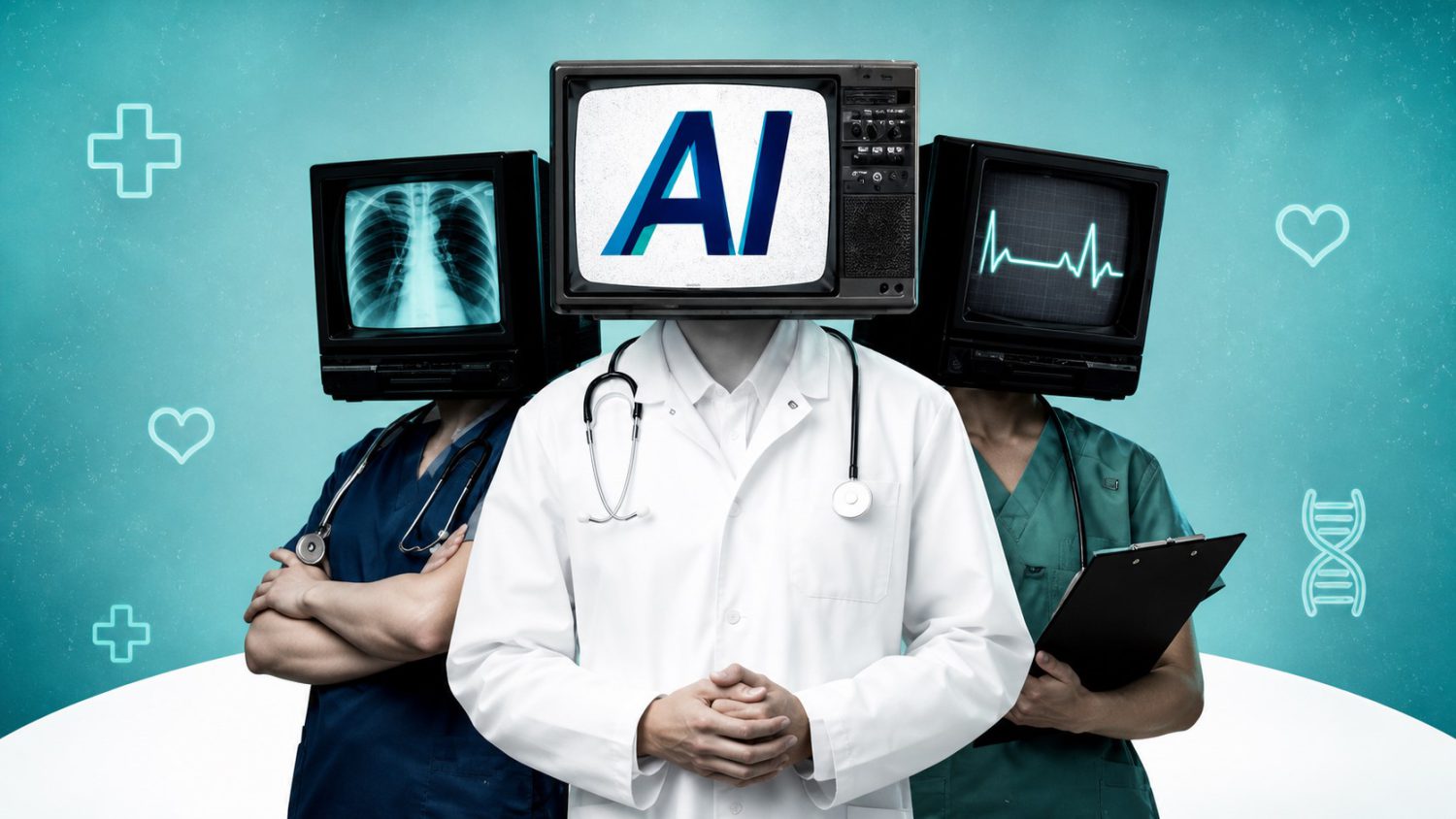
Forty-one days on strike. New contract won. Explicit language in that contract protecting nurses from AI displacement. Then, four months later, termination notices landed across three Bronx campuses. That’s not a cautionary tale about automation creep — that’s a direct stress test of whether labor protections mean anything when a hospital decides the math works out better without you. The nurses who lost those jobs weren’t peripheral staff. They were the people standing between your insurance claim and a denial.
Utilization review nurses — UR, in hospital shorthand — read patient charts, evaluate medical necessity, and argue with insurers on your behalf when a claim needs defending. Not paperwork. Clinical judgment, built over years of knowing which details move an insurer and which get quietly ignored. That distinction matters enormously for what comes next. Much like the rise of the humanoid robot replacing front-desk roles, this case raises urgent questions about where automation’s reach should stop.
[IMAGE PLACEHOLDER — Caption: Nurses represented by the New York State Nurses Association rally outside Montefiore Medical Center in the Bronx, where 12 utilization review nurses were laid off effective July 12, 2026, following the hospital’s adoption of Datavant’s AI-powered platform.]
Paperwork Tool or Job Replacement? Depends Who You Ask
The gap between how Datavant markets its platform and how Montefiore describes it is where this dispute lives.
Montefiore integrated Datavant’s platform into UR workflows after the January 2026 strike, telling nurses it would help clear the case backlog. Once volume normalized, the system kept running. Then the positions didn’t.
Here’s the tension Montefiore can’t quite paper over: Datavant markets its Clinical Insights Platform as featuring “AI-powered workflows and advanced analytics,” according to the company’s own product documentation. Montefiore’s spokesperson described it as a “nonclinical program that helps facilitate the paperwork process” — and declined to confirm whether it uses AI at all. That framing echoes how social media companies once called themselves neutral infrastructure. The label matters far less than what the tool actually does, and what it apparently did here was eliminate twelve jobs.
Marilyn Shuler, who spent nearly four decades at Montefiore before her July 12 layoff, said she couldn’t believe “a machine can replace all the decades of clinical judgment and knowledge” she and her colleagues brought to every case. NYSNA President Nancy Hagans was equally direct: “Artificial intelligence should never replace real human caring from a nurse.”
The union filed a class-action grievance, alleging management never consulted them before issuing notices — a separate contract violation layered on top of the displacement dispute itself. The 12 affected nurses worked across Montefiore’s Moses, Einstein, and Weiler campuses, receiving termination letters dated May 28, 2026, with layoffs effective July 12. Multiple outlets have described this as one of the first documented U.S. cases of licensed nursing roles explicitly replaced by AI-driven workflows — not augmented, replaced.
Montefiore SVP Joe Solmonese called NYSNA’s claims “inaccurate and misleading,” stating the health system invests in technology “to ensure the best care and outcomes for our patients.”
This Isn’t Just a Bronx Problem
What happened at Montefiore is already being read as a template, and that’s the part worth paying attention to.
Joe-Ann Fergus, executive director of the Massachusetts Nurses Association, flags a downstream risk that extends well beyond the 12 nurses already out of work. When younger clinicians lean on AI for chart review and insurance justification, they stop building the independent judgment needed to handle those decisions when the system fails — and systems fail. Think of it the way a firmware update stress-tests your router at the worst possible moment: the failure reveals exactly how much you’d been relying on something you never fully understood.
Fergus also warns that AI tools trained on historically unequal health data can amplify racial disparities, particularly when hospitals choose cheaper products and skip ongoing maintenance and retraining. That risk is sharpest in under-resourced regions where oversight is thinnest and the clinical workforce has the least margin for error.
If Montefiore’s framing holds — AI as nonclinical facilitator, licensed nurses as redundant overhead — the playbook is already written for other hospitals to follow. The next time an insurer denies your hospital stay, the decision pathway may have started with an algorithm, not a nurse with four decades of context and the judgment to push back. The grievance is filed. The outcome remains uncertain. But the precedent, contested or not, is already in place. Some tech firms are taking a markedly different approach, offering a job guarantee to workers displaced by their own automation investments.