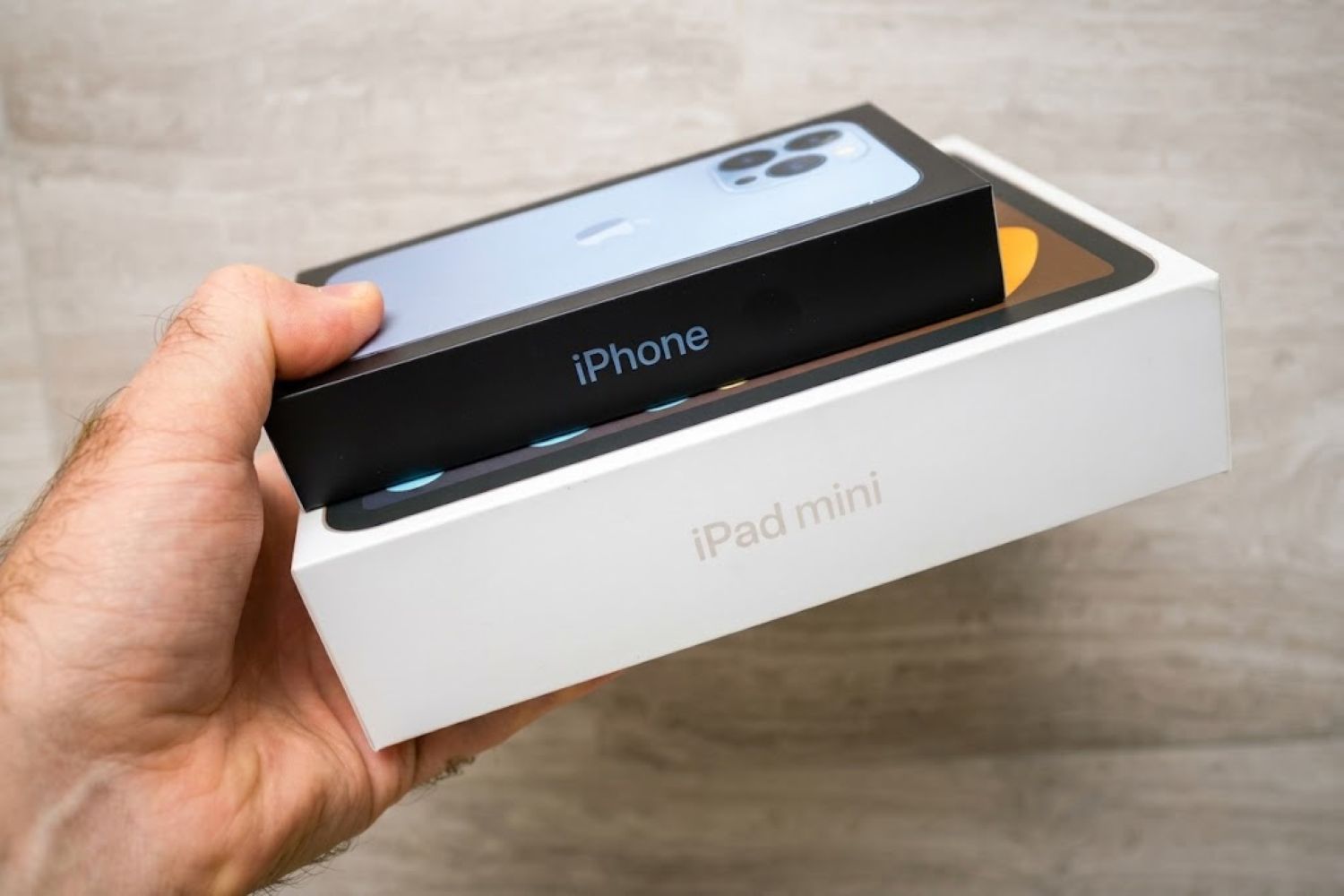
Right now, millions of people carry an iPhone in their pocket and an iPad mini in their bag. It’s an expensive, slightly awkward two-device existence — and a rumored product expected in September 2026 may be about to make it feel redundant. The iPhone Ultra, Apple’s reportedly first book-style foldable, features an inner display described by MacRumors and Macworld as “just slightly smaller than the 8.3-inch iPad mini.” Whether that’s coincidence or strategy, the screen dimensions make a compelling argument on their own. All specs remain unconfirmed until Apple’s announcement.
A Screen That Shadows the Mini
The Ultra’s inner panel is engineered to be the iPad mini you forgot to pack.
Unfold the rumored Ultra and you’re looking at a 7.76-inch OLED panel running 2,713 × 1,920 at a 4:3 aspect ratio — the same proportions that make the mini ideal for reading on a commute or gaming on a couch. Fold it shut and the ~5.49-inch outer screen handles texts, calls, and everything else. Thickness sits around 4.5–4.8mm open, roughly 9–9.5mm closed. Early testers, according to MacRumors, were reportedly wowed by the fold transitions and app scaling on that inner display.
Getting there involves some notable trade-offs:
- Chip: Rumored custom silicon A20 or A20 Pro (2nm) — flagship performance, reportedly on par with iPhone 18 Pro
- Cameras: Dual 48MP rear sensors, no telephoto — early testers flagged camera quality as the main weakness versus iPhone 18 Pro
- Biometrics: Touch ID in the power button; Face ID reportedly absent
- Price: Rumored $1,999–$2,399 — nowhere near iPad mini territory
While the Ultra looks like a consumption machine, the iPad mini has been quietly losing ground as a product priority. Its update cadence has slowed noticeably. Apple has form here — the iPod classic disappeared once iPhones absorbed its purpose; smaller-screened iPhones were phased out once larger displays normalized. No Tier-1 source confirms Apple plans to discontinue the mini. But Apple rarely announces a retirement. It just stops making the case for survival.
The counter-argument holds real weight, though. At $1,999 minimum, the Ultra is a halo product aimed at users ready to consolidate their iPhone and iPad mini into one device. The iPad mini starts under $600 and serves people who simply don’t want — or can’t justify — a premium foldable. Some analysts suggest Apple keeps both, using price segmentation to protect that audience. That logic holds, for now.
One Device, One Question
September 2026 will answer what the display dimensions are already asking.
Production constraints and potentially limited launch availability — similar to Vision Pro’s staggered rollout — may slow the Ultra’s initial reach, according to Macworld. The hinge and thin-glass OLED construction remain unproven at scale; early Samsung Galaxy Z Fold owners learned that lesson at considerable expense. Camera performance is a genuine gap if photography is central to how you use your phone.
Anyone buying an iPad mini today is essentially betting that the Ultra either stumbles on durability, stays too niche to matter, or never convinces enough people that the price premium is justified. Those are reasonable bets. But if the Ultra executes on its reported promise, carrying both an iPhone and an iPad mini starts to feel like owning a DVD player in a streaming household. The screen dimensions say so, even if Apple won’t.