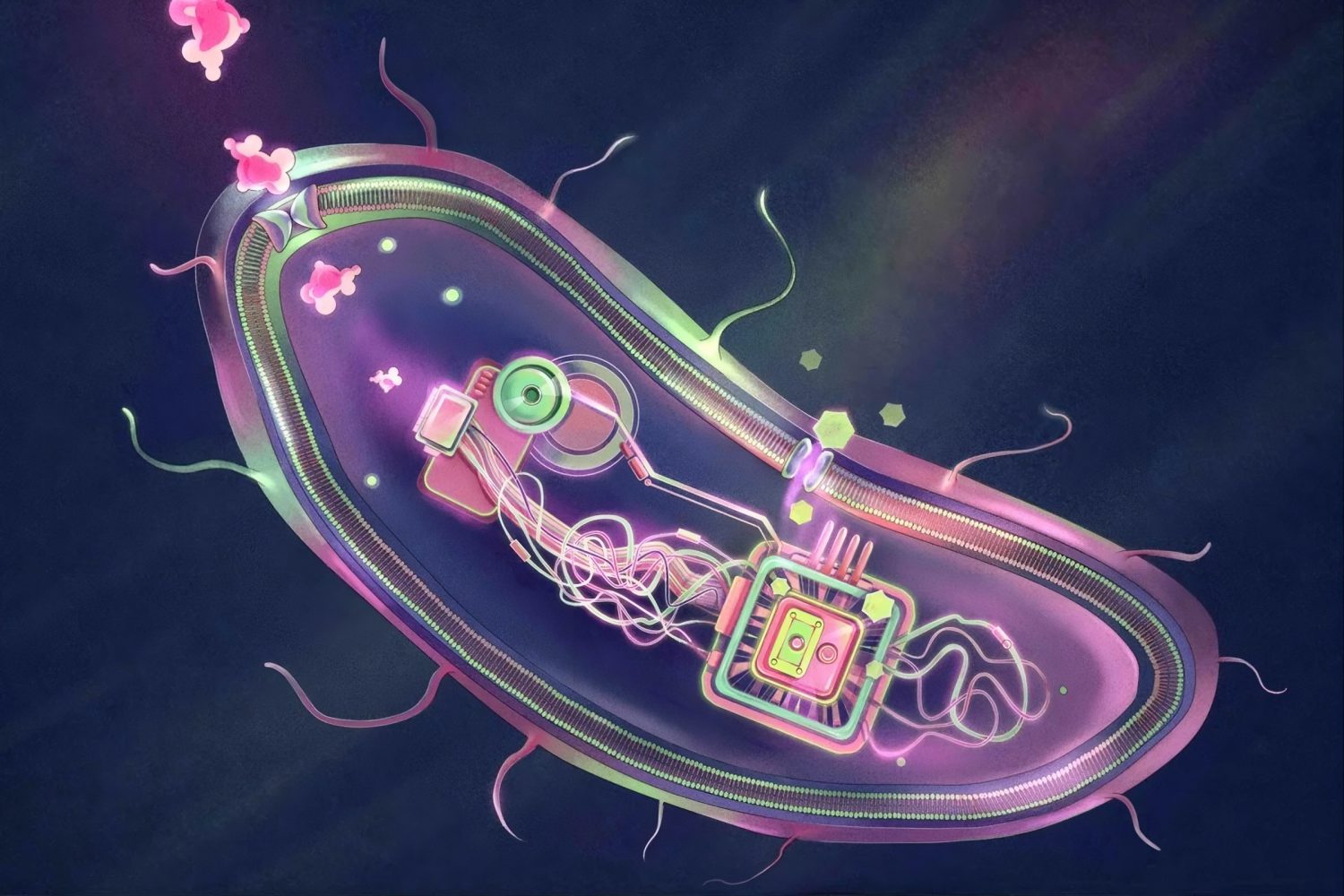
An estimated 530 million adults manage diabetes daily through injections, pills, or both. Now a team at East China Normal University in Shanghai has published results in Nature for something genuinely different: a probiotic that senses high blood sugar and automatically produces a glucose-lowering hormone in response — then shuts off when levels normalize. Lead researcher Ye Haifeng calls it GIFT. In preclinical tests, it reportedly performed on par with Ozempic. No human trials have started yet.
How GIFT Actually Works
A biological thermostat built from bacteria, not a pill engineered in a lab clean room.
When blood glucose spikes after a meal, GIFT’s bacteria — built on E. coli Nissle 1917, a probiotic strain already found in commercial products — detect that spike through a HexR sensor gene circuit. The circuit flips on production of GLP-1, the hormone that signals the pancreas to release insulin (same target as Ozempic). When sugar drops back to normal, the circuit goes quiet. No external trigger. No manual dosing. The bacteria read the room.
Key findings from the Nature study and related reporting:
- In diabetic mouse models: improved fasting glucose, reduced HbA1c, better lipid profiles, and measurably less fatty liver and kidney damage
- In monkeys: a single oral dose raised GLP-1 and insulin within hours, with glucose-lowering effects lasting up to three days
- Head-to-head against semaglutide (Ozempic): comparable glucose-lowering efficacy in animals, per the ECNU team
The Two-Year Promise (and Its Asterisks)
“If all goes smoothly” is doing serious heavy lifting here.
Ye says GIFT could reach US shelves as a health supplement — capsule or yogurt format — within two years, if development proceeds without complications. The team has filed patents and is scaling production to GMP standards for US and EU markets. The fine print: no human clinical trials have been reported. That gap between “works in monkeys” and “approved for humans” has swallowed more than a few promising therapies whole.
The regulatory reality is messier than the yogurt metaphor suggests. A genetically modified organism engineered to produce a therapeutic hormone in the gut is not kombucha. US and EU regulators must determine whether GIFT qualifies as a drug, a biologic, or a supplement — a classification that decides whether full Phase I–III trials are required before patients can use it. Horizontal gene transfer risks, long-term colonization behavior, and environmental containment remain unresolved questions that no amount of GMP paperwork can skip past.
Beyond Diabetes: The Real Stakes
The sensor and the therapy are two separate, swappable pieces — and that modularity is the point.
What makes GIFT more than a single product is its architecture. The glucose-sensing module and the GLP-1 output are independently swappable, according to the ECNU team. Change the sensor, target a different biomarker. Change the payload, treat obesity, fatty liver, or another metabolic condition entirely. If human data eventually confirms what the animal studies suggest, GIFT isn’t just a diabetes therapy — it’s a programmable platform for chronic disease management. That’s a significant “if.” But it’s exactly the right thing to be watching.