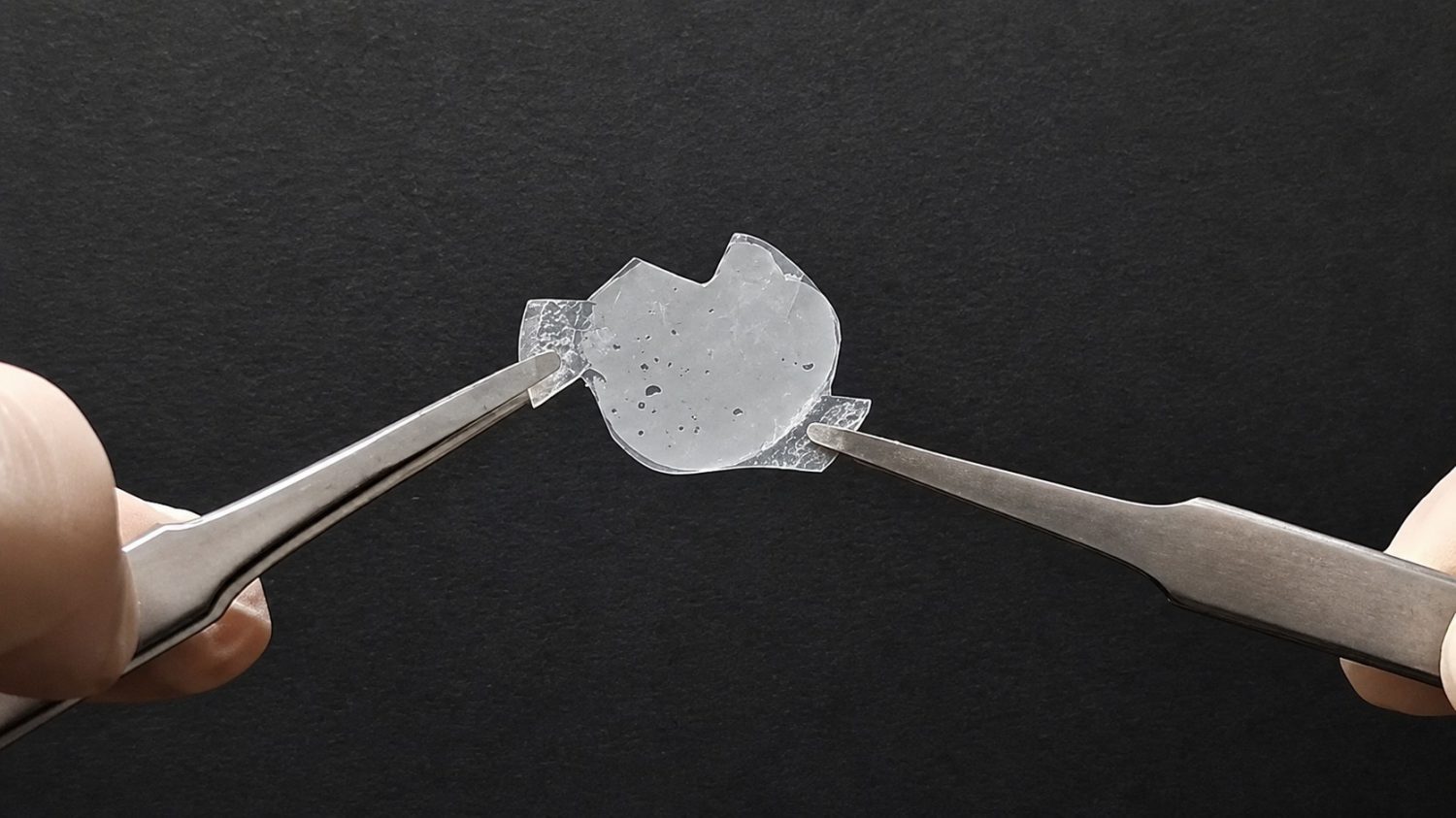
Cooling already accounts for nearly 20% of electricity used in buildings worldwide. That number climbs every summer, and the grid groans louder every heat wave. Researchers at Spain’s Institute of Micro and Nanotechnology (IMN-CNM), part of the national research council CSIC, think there’s a smarter answer — one that requires zero electricity and uses the cold void of outer space as its heat sink. Their PVDF-based nanomaterial kept a Madrid rooftop surface up to 12.9°C cooler than an uncoated reference in full summer sun. No compressor. No refrigerant. No power bill.
Shooting Heat Into Space: How the Physics Actually Works
Earth’s atmosphere has a gap — and this material exploits it to dump heat directly into space.
Think of the material as two things at once: a mirror for sunlight and a radiator aimed at deep space. Earth’s atmosphere blocks most outgoing radiation, but between 8 and 13 micrometers in the infrared spectrum, there’s a natural gap — a window where thermal energy passes through the atmosphere with minimal absorption and escapes to space. The PVDF nanonetwork reflects ~82.4% of incoming solar radiation while emitting ~96.7% of its heat through that window. The result: a calculated net cooling power of 182.3 W/m² cooling power under standard full-sun conditions of 1,000 W/m² irradiance, confirmed in field tests at ~962 W/m². Published in Nanophotonics. Still under development — not a product on any shelf.
How They Built It
The fabrication process matters as much as the material itself — and this one is designed to scale.
PVDF (polyvinylidene fluoride) isn’t a new material. It’s already valued for high infrared emissivity, UV resistance, and hydrophobic self-cleaning that sheds dirt and moisture with minimal maintenance. What the FINDER group at IMN-CNM did was infiltrate PVDF into nanoporous anodized aluminum oxide templates, producing precisely controlled 3D nanonetworks whose geometry optimizes both solar reflection and infrared emission simultaneously. UV treatment then whitens the material further, boosting reflectance. Researcher Cristina Vicente, leading the COOLed project, highlighted PVDF’s combination of IR emission performance, weather durability, and self-cleaning behavior as the core reason for choosing it, according to Euronews. CSIC describes the fabrication as low-cost and industrially compatible — which separates this from exotic photonic structures that look great in papers and rarely leave the lab.
Where This Goes – and Where It Doesn’t
Buildings and EVs are the obvious targets. Humid climates and cloudy days are the honest caveats.
The potential applications are broad:
- Building roofs and façades
- Vehicle cabins
- Outdoor electronics like telecom hardware that currently runs hot in direct sun
EV cabins parked in summer sun routinely exceed 60°C, immediately drawing on battery reserves for pre-cooling — a passive coating on the roof changes that equation without touching the powertrain. Those are realistic targets. What this isn’t: a solution that works equally well in Houston’s humidity or London’s cloud cover.
Passive daytime radiative cooling performs best in hot, dry, clear-sky conditions, where Madrid delivers near-ideal test circumstances. Dense urban environments with limited sky view reduce effectiveness further. Long-term durability data under real-world pollution and mechanical wear doesn’t yet exist publicly, though PVDF’s inherent weather resistance is a credible foundation. Expert consensus in the PDRC field, including review literature from Columbia University researchers, frames these materials as complements to active cooling — not replacements during extreme heat events.
This isn’t something you can order. But it’s a clear signal that passive cooling is maturing fast — and the next generation of buildings, vehicles, and outdoor hardware may run cooler without asking the grid for permission.