Egypt’s farmers are fighting on two fronts simultaneously: brutal heat that scorches crops and water scarcity that tightens its grip every season. The Nile does the heavy lifting for agriculture, but conventional farming is under pressure from both ends. So when a consortium of energy and agriculture groups started mounting solar panels above active farmland, the premise sounded almost absurd — until you realize the shade is the whole point.
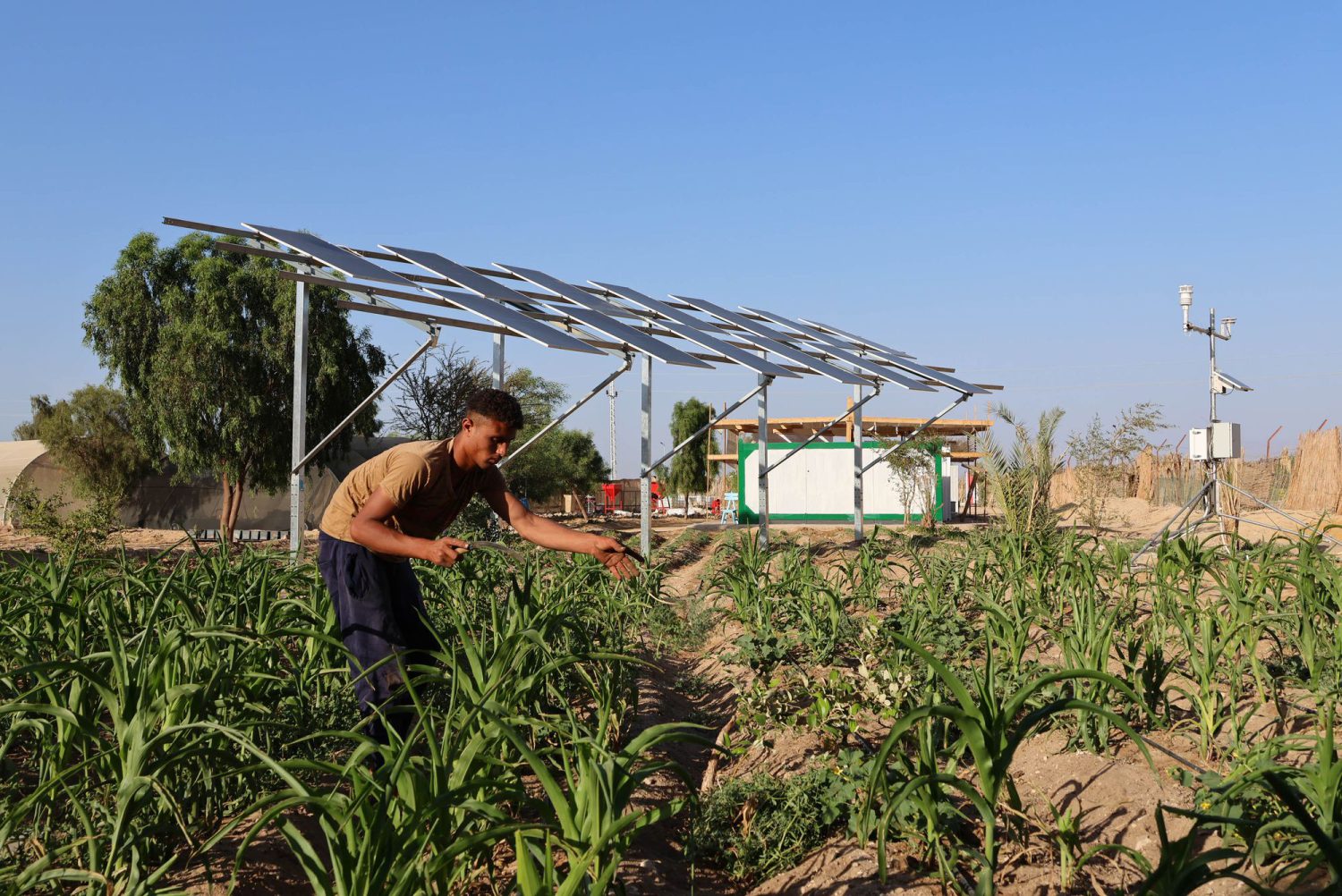
Agrivoltaics places solar panels elevated above crops so the same land generates electricity and supports agriculture at once. In Egypt’s climate, that shade isn’t incidental. It reduces soil evaporation and lowers heat stress on plants — two problems quietly strangling conventional farming here. Two pilot projects are now testing this in the field: a small-scale installation in South Sinai and a larger follow-on in Al Moghra, Marsa Matrouh. The consortium behind both includes 3E, Engazaat, ORG Infrastructure, Habiba Community, and the Alexandria University Center of Excellence for Water.
Key details shaping how these pilots actually operate:
- Electricity generated currently powers irrigation equipment on-site
- Organizers are exploring whether it could eventually run desalination systems for brackish groundwater in the region
- Watermelon is reportedly thriving under the panels at the South Sinai site
- Data on crop performance, panel output, and water efficiency is still being collected — no firm conclusions yet
One farm operator at the South Sinai site is keeping expectations honest: it’s too early to call. That candor matters. The central tradeoff being worked out is straightforward — denser panel coverage means more electricity but less sunlight for crops. Wider spacing helps the plants but reduces power output. The pilots are running different layouts to find where those two curves intersect, collecting real-world data rather than assuming a single design fits every crop or climate condition.
Why This Has to Work Somewhere
Egypt’s combination of high solar potential and severe water scarcity makes it one of the most consequential test cases for agrivoltaics anywhere.
Egypt is close to a perfect stress test: high solar irradiance, severe water constraints, and real farms rather than controlled research stations. According to ICARDA, agrivoltaics in drylands can reduce water consumption, improve yields, and cut irrigation costs. If the model holds here, it travels — to every semi-arid region staring down the same math.
The tension between land for food and land for energy is old enough to feel permanent. These pilots are a concrete attempt to dissolve it. The data isn’t fully in yet, but a watermelon reportedly thriving under solar panels in South Sinai shade may be the most honest proof of concept available right now.