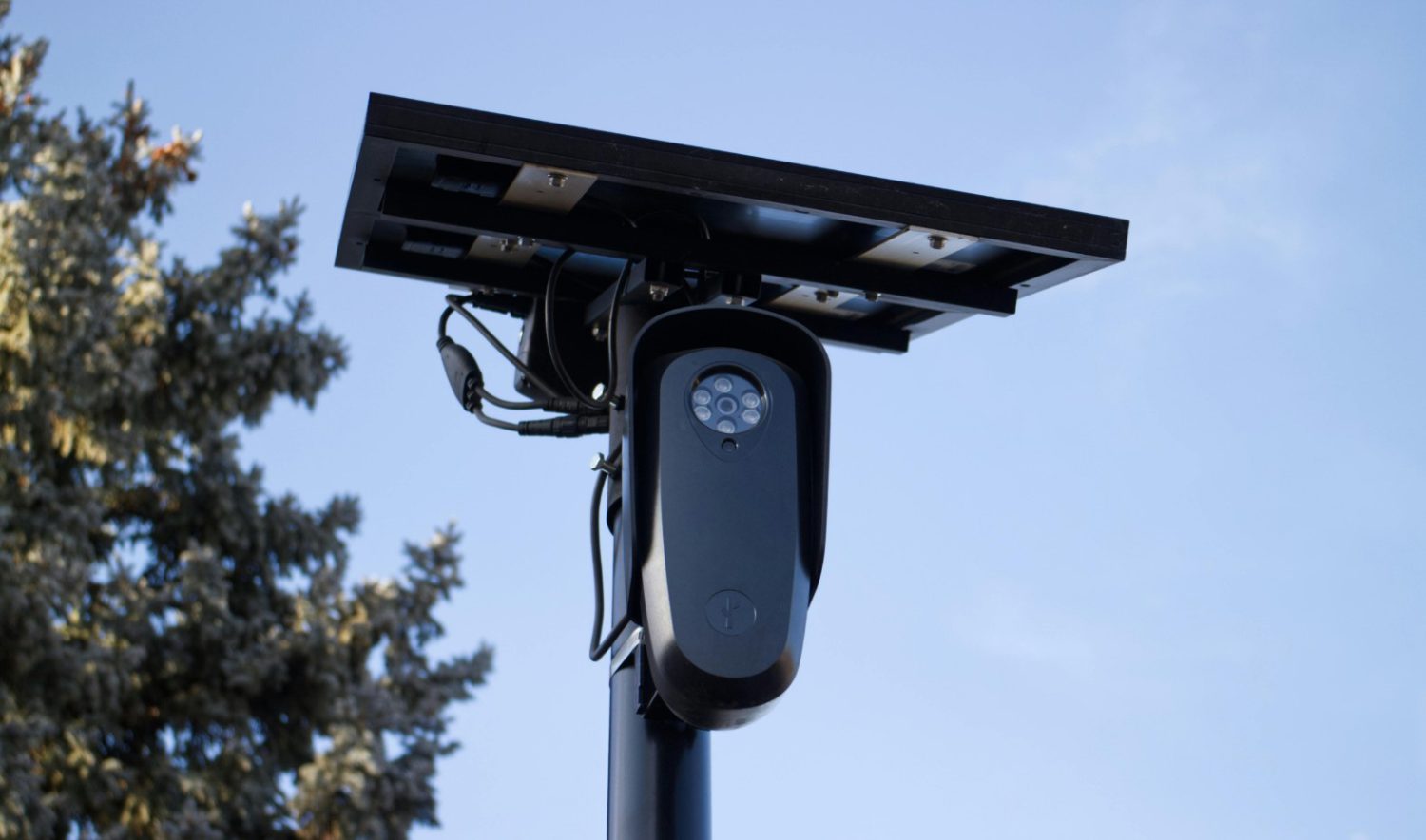
For decades, generating entangled photons meant firing a laser into a special crystal. The crystal splits incoming photons into linked pairs through a process called spontaneous parametric down-conversion (SPDC). Coherent light — tightly ordered, disciplined, expensive to produce — was supposedly non-negotiable. A team from the Max Planck Institute for the Science of Light and the University of Ottawa just proved otherwise, publishing their results in Optica. They concentrated and filtered ordinary sunlight, fed it into a nonlinear crystal outdoors, and produced genuinely entangled photon pairs. Their Bell-inequality violation score hit S = 2.5408 ± 0.2171, clearing the classical limit of 2 — the quantum equivalent of a confirmed result that leaves no room for doubt.
What Actually Happened in That Experiment
Researchers proved that chaotic, incoherent sunlight can pump a crystal to produce high-quality entangled photons — a job everyone assumed required a laser.
Here’s what the numbers look like in practice:
- Concurrence of 0.905 ± 0.053 and Bell-state fidelity of 0.939 ± 0.027 — high-quality entanglement by any standard
- Bell-inequality violation: S = 2.5408 ± 0.2171, above the classical limit of 2
- Generation rate comparable to laser-based systems when normalized for sunlight bandwidth
- Experiment performed outdoors, not in a sealed laboratory
- Current limitations: crystal temperature control and sun-tracking hardware still required
The key insight, according to researchers C. Li, J. Brar, M. Küblböck, J. Upham, H. Fattahi, and R. W. Boyd, is that what matters is the property being entangled — polarization — not whether the pump source behaves like a laser. Think of it like making espresso: the machine matters more than whether your water came from a filtered tap or a mountain spring.
Why This Matters Beyond the Lab
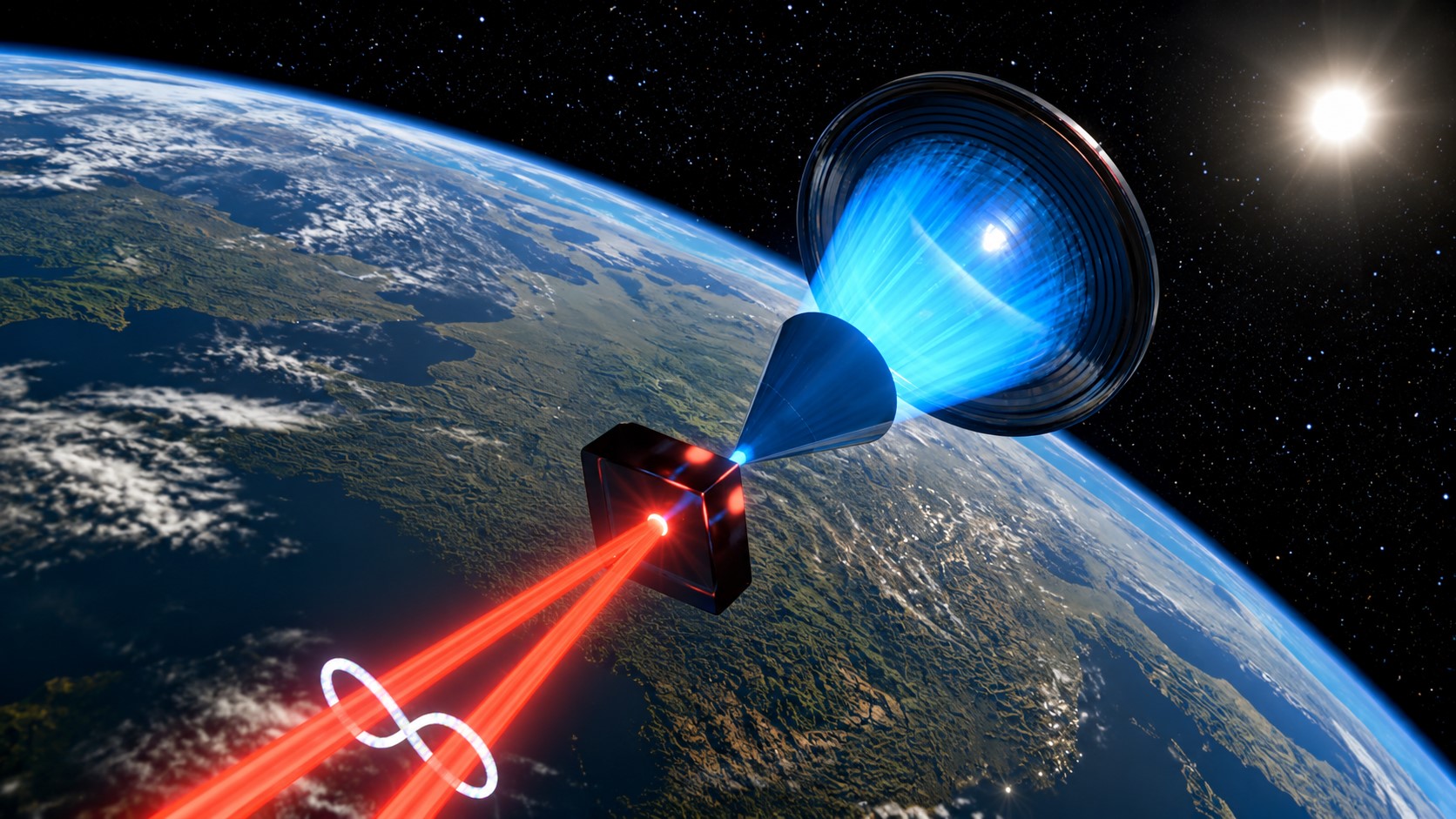
Power budgets on orbital missions leave almost no room for energy-hungry hardware, which is exactly why lasers have long been a liability in space-based quantum systems.
Satellites operate on energy budgets that make economy-class legroom look generous. Interplanetary missions and remote quantum sensing deployments face the same hard constraint. Sunlight, meanwhile, is absurdly abundant in space. If this approach scales, it fundamentally changes where you can deploy quantum communication and sensing hardware — and how much supporting infrastructure you need to bring along.
That single shift — swapping a laser for the sun — could redraw the logistics of orbital quantum networks entirely.
Pump the brakes slightly, though. The current setup still requires temperature-controlled crystals and sun-tracking electronics. This is not yet a fully passive solar quantum device. Researchers attributed entanglement imperfections to hardware alignment and polishing issues, not to sunlight quality — meaning better optics and tighter engineering could raise performance further. That’s a clear roadmap, not a wish list.
The finding doesn’t mean sunlight itself carries entanglement. Sunlight serves as the raw input to a controlled quantum process; the crystal does the quantum heavy lifting. Getting that distinction wrong would be like crediting flour for baking the cake. The question now isn’t whether this works — that’s answered. It’s how quickly the engineering catches up to the physics, and whether the next quantum link beamed between satellites runs on starlight instead of a laser diode.