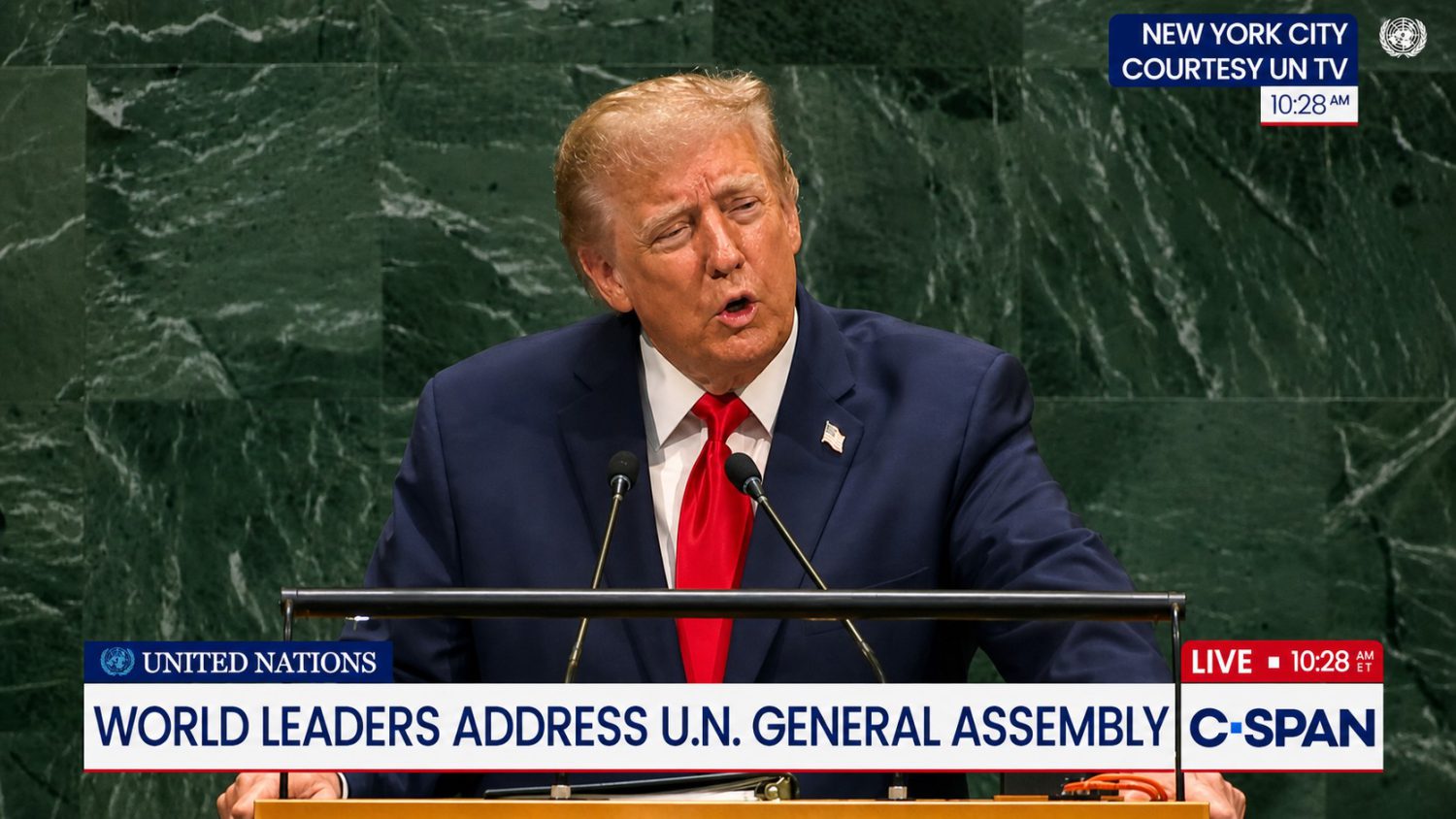
The word changed at the podium. The technology did not. Speaking at the United Nations General Assembly on September 22, 2026, President Donald Trump proposed that the United States replace “artificial intelligence” with “super intelligence” in government documents. No formal executive order or binding federal directive implementing that change had been confirmed in the reporting reviewed at publication time, according to the Independent.
What Trump Said at the UN
Trump argued that “artificial” makes the technology sound fake, and that “super intelligence” better reflects its potential.
Standing at the UN podium, Trump declared that the U.S. “totally rejects” international efforts to create a global scheme controlling AI. He said the technology would “hereinafter” be called “super intelligence,” according to Reuters. Trump expressed hope that other countries and their documents would follow suit.
He called the technology potentially larger than the Industrial Revolution or the internet. Trump also asserted that the U.S. was leading China “by a lot,” though available reporting does not include independent data establishing the size of any such lead. He added that U.S. law enforcement agencies, including the Department of Justice, would intervene where necessary, per the Journal Record. His administration’s primary posture, he emphasized, was to encourage AI development rather than restrict it.
Does Renaming AI Change Anything?
“Superintelligence” carries an established technical meaning that does not describe today’s AI systems.
In technical and research contexts, “superintelligence” generally refers to a hypothetical system whose intellectual capabilities substantially exceed human abilities across most domains. Applying that term as a general synonym for today’s chatbots, recommendation engines, image generators, and automated decision tools conflates what exists now with a speculative future category. That distinction could matter for regulation, safety standards, and public understanding of what these systems can and cannot do.
A speech-based naming preference does not rewrite procurement rules, privacy regulations, copyright law, or cybersecurity requirements. Consider the 2022 rebranding of Twitter to X: the platform’s underlying architecture, advertiser relationships, and content moderation challenges did not resolve themselves the moment the bird logo disappeared. The Independent reported uncertainty about whether a formal implementation order existed; without one, federal agencies, technology companies, and standards bodies would have little basis to reclassify their work.
Trump also rejected what he described as exaggerated fears that AI would destroy society, comparing those warnings to earlier political controversies, per Reuters. That framing is a political argument, not a technical assessment. The open questions around AI safety, bias, and accountability are not resolved by a change in terminology.
What Would Real Implementation Require?
The concrete steps needed to make this stick are still absent from the public record.
Formal adoption of “super intelligence” as official U.S. government terminology could require directives updating federal style guides and procurement documents. Agency communications standards and regulatory language across multiple departments might also need revision. Trump expressed hope that other nations would adopt the terminology, but available reporting from the Independent and Reuters provides no evidence that the United Nations or any government accepted the proposed change.
Watch for whether “SI” appears in official agency documents, federal grant programs, or regulatory filings in the coming weeks. That would be the clearest signal of whether this announcement carries any procedural weight.
What This Means Right Now
The speech itself did not change how AI systems work or what rules govern them.
The announcement did not alter the capabilities of AI systems or the regulations that apply to them. Your data privacy rights, the tools your employer uses, and the products companies build and sell were not changed by the speech itself. One term was proposed from one podium, and the technology’s existing technical and policy questions remain exactly where they were on September 21.