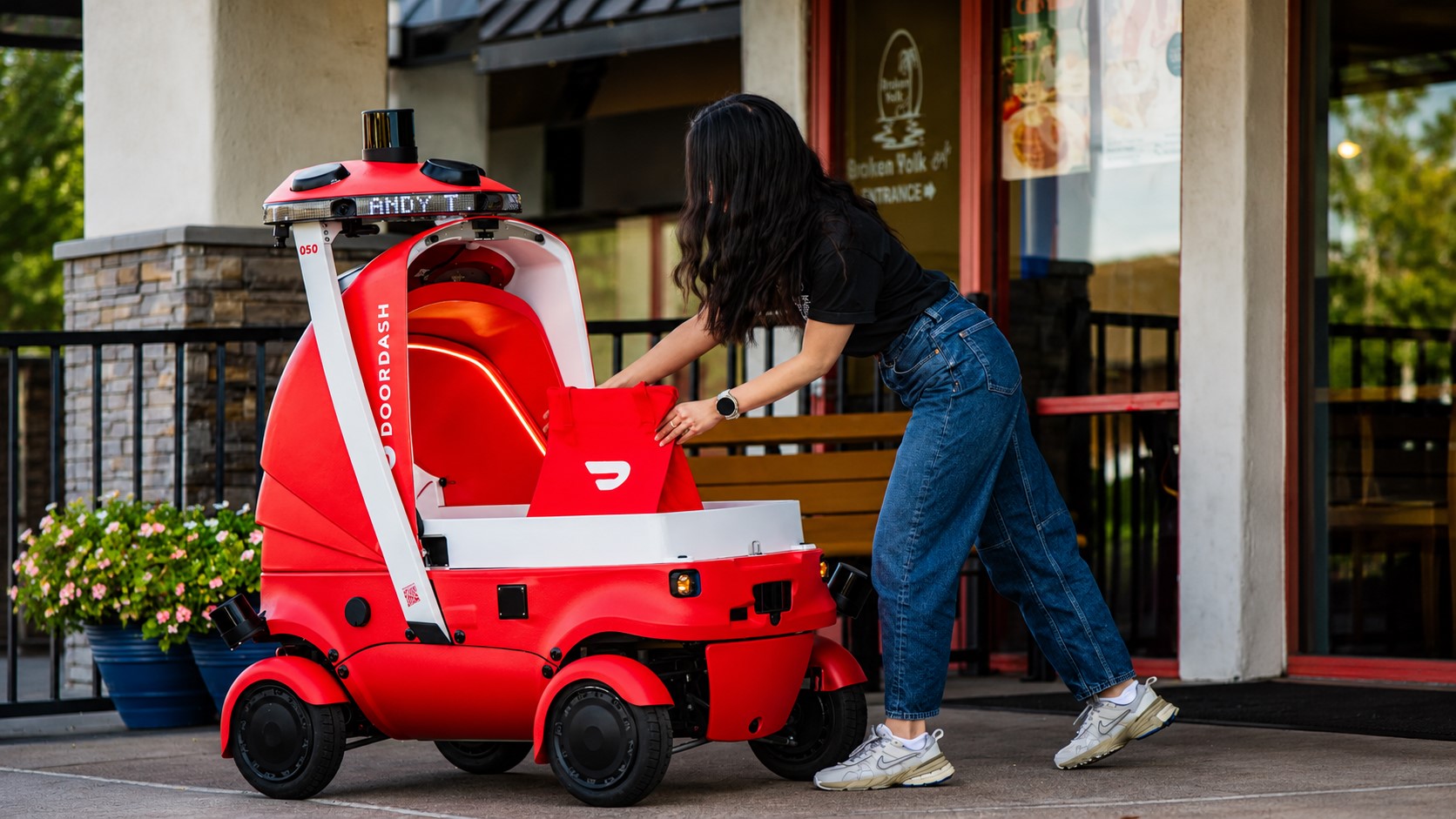
Devena Bybee drove two miles to a restaurant in Mesa, Arizona. She walked inside, grabbed an order, carried it to a stroller-sized robot parked in the lot, placed the food in its compartment, snapped a few verification photos, and earned about $5. The whole thing took five minutes. The robot then rolled off autonomously to complete the delivery. That exchange is a snapshot of DoorDash’s Dot pilot—and it tells you more about the real state of automation than any press release ever will.
A Robot That Needs a Valet
Dot handles the open road just fine; everything that happens before it gets there is another story entirely.
Dot is fully electric, street-legal, and about one-tenth the size of a car. It carries up to 30 pounds and navigates roads, bike lanes, and sidewalks at speeds around 20 mph, according to TechCrunch. Impressive range for a machine that size.
Cannot climb stairs. Cannot use an elevator. And while Dot is compact enough to navigate outdoor spaces, it still cannot handle the physical handoff from a restaurant counter to its own compartment. When it encounters trouble mid-route, it stops and waits for a human to bail it out.
Bybee wasn’t sold on the arrangement. “I just don’t see how it’s efficient,” she told Business Insider. Other Dashers in Facebook groups described accepting the $5 gig purely out of curiosity—not because the math made sense.
The Swan Problem
Beneath the polished surface of “autonomous” delivery, human legs are churning hard to keep the whole thing moving.
This pattern extends well beyond Dot. DoorDash’s human-assisted automation includes:
- In Atlanta, paying workers to close open doors on Waymo self-driving cars—with Waymo later noting it plans to add self-closing doors in the future.
- Launching a separate Tasks app where couriers record themselves folding laundry and washing dishes to generate robotics training data, according to NBC News.
The autonomous future, it turns out, runs on a lot of quiet human effort—like a Spotify playlist that feels purely algorithmic but was hand-curated by someone making $12 an hour.
Labor scholar Robert Bruno points out the economic logic: outsourcing robot-loading to gig contractors who lack benefits or guaranteed wages creates real savings for merchants compared to using their own employees.
DoorDash frames it differently. A spokesperson called Dashers “essential” and described these micro-gigs as creating “more earning opportunities.” Bybee offered a more grounded take: “There’s only so much right now that the robots can do.”
What’s Really Rolling Down Your Street
The real question isn’t whether robots are coming—it’s who’s still doing the work, and for how much.
Nobody disputes that autonomous delivery will keep expanding. The harder question is whether “autonomous” means genuinely replacing human labor or simply slicing it into $5 fragments with no benefits attached. That robot rolling past your house looks like tomorrow. Somebody loaded it for the price of a latte.