MW, a Tokyo startup founded in 2024, is integrating ceiling-mounted robotic arms into residential architecture. CEO Shuzo Narita is betting that home automation belongs in the structure itself, not in a freestanding device on the floor.
The company has already sold its first properties, received more than 1,000 applications, and is targeting a 2028 debut for its first fully functional robot-equipped home.
How the System Works
Ceiling rails, claw hands, and software built directly into the walls form the foundation of MW’s approach.
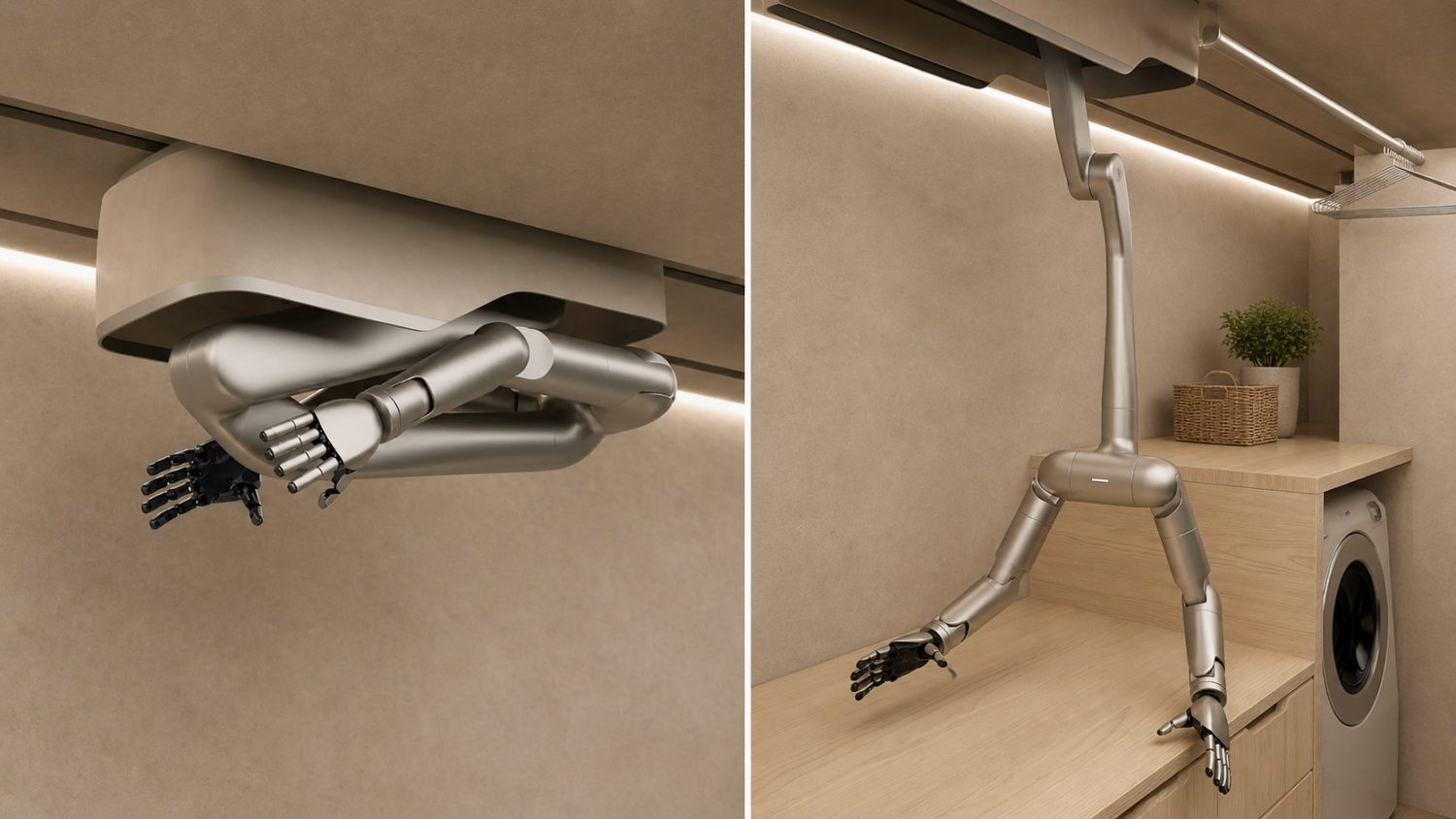
MW’s concept rests on three pillars: custom residential architecture designed around the hardware, the MW bot (a rail-mounted arm with claw-like hands), and MW Intelligence, the proprietary software layer running the whole operation.
The company says compact Japanese homes make bipedal humanoids impractical. Fixed ceiling arms are easier to contain in constrained spaces, and that spatial logic is the core design argument, not just a marketing frame.
In a Tokyo demonstration, the system sorted pantry items from refrigerated goods and folded a hand towel without incident. It struggled to fold a T-shirt, a candid detail that marks exactly where polished concept ends and the harder problem of reliable daily utility begins.
“MW’s first homes and software are complete. More than 1,000 applications have been received, and sales have begun,” Narita wrote in a blog post, according to Interesting Engineering reporting.
What’s Been Built and What It Costs
MW has moved beyond renderings: product has shipped and properties have sold.
MW has sold a three-story house in Meguro Ward, Tokyo, and built additional retrofittable homes in Yokohama and Fukuoka. Reported prices range from 200 million to 400 million yen, placing these properties firmly in premium residential territory, well beyond the reach of a typical first-home buyer.
The Gen1 MW bot is complete and already integrated into a trailer home. MW has also raised a reported 3 billion yen seed round, according to The Bridge, and is targeting a 10 billion yen Series A. Investor identities beyond “multiple Japanese financial and venture entities” are not confirmed in available reporting.
The Road Ahead
Scaling to 10,000 homes a year by 2035 is the stated ambition; consistent daily performance is the real test.
For 2028, MW is targeting a 2028 debut for its first fully functional robot-equipped home in Tokyo. According to Japan Times reporting, Narita’s stated goal is 10,000 homes per year by 2035, roughly 5% of Japan’s current new-home market.
Larger builds are planned for Futtsu and Karuizawa. The company reportedly has international expansion in its sights for 2029, and no IPO decision has been finalized.
Moving from a compelling demonstration to reliable everyday utility at commercial scale is where most robotics concepts stall. If you want a benchmark for how much distance remains, the T-shirt that defeated the arm in a controlled showcase is a reasonable place to start.