A humanoid robot goes down mid-shift at a Tokyo hotel. The lobby is short-staffed, the manager is sweating, and the robot stands there like a very expensive coat rack. Who do you call?
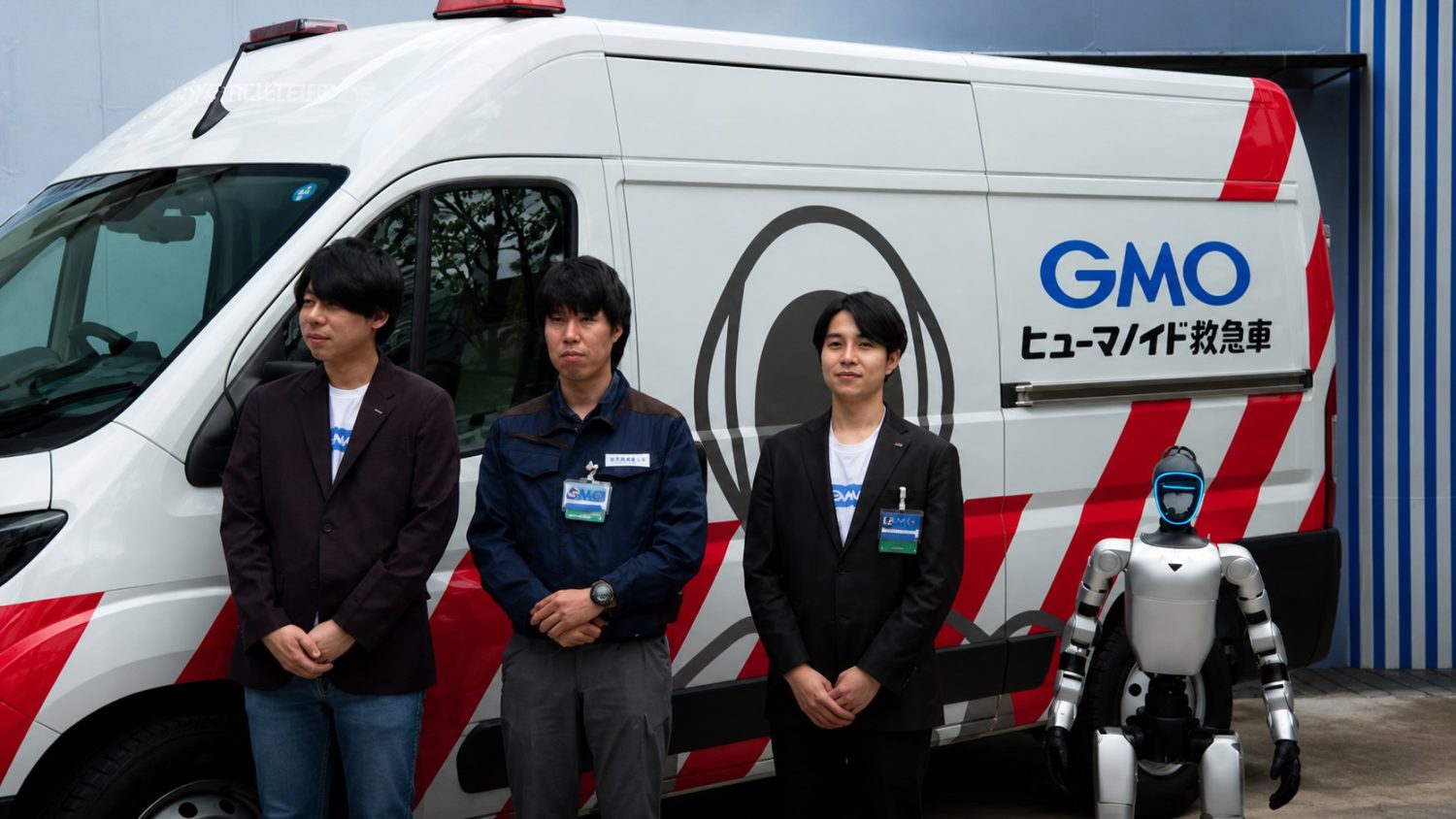
GMO Air, the robotics arm of GMO Internet Group, has an answer: Japan’s first robot ambulance, a support van stocked with engineers, spare parts, and a backup humanoid ready to swap in when the original gives up the ghost.
A Van Full of Engineers and a Spare Robot
The service model is less science fiction than it sounds, and more practical than most people expected.
The vehicle is not autonomous. Human engineers drive it, show up on site, diagnose the problem, and fix what they can on the spot.
If the robot is too far gone for a roadside repair, the broken unit rides back to headquarters while its replacement stays on the job. GMO Air engineer Shota Takizawa explained to Euronews that the ambulance carries a replacement humanoid to the site and swaps it with the damaged one.
The cargo list tells the whole story:
- Human engineers for diagnosis and on-site repair
- Tools and replacement components
- A spare humanoid robot for immediate swap-outs
- Transport capacity to return damaged units to the repair base
Think of it as the Geek Squad, except the distressed client has articulated fingers and a shift to finish.
Why Someone Had to Build This
Selling robots is one business; keeping them upright long enough to earn back the investment is entirely another.
Japan’s Ministry of Economy, Trade and Industry has set a target of roughly 10 million AI-equipped robots deployed across 18 sectors by 2040, covering everything from manufacturing and healthcare to workplace safety and disaster response, per NHK World. That is an enormous ambition built on a fragile assumption: that the robots will actually stay running.
Downtime is expensive. Shipping a broken humanoid back to a service center, waiting days for repairs, and operating short-staffed in the meantime adds up fast. That kind of friction kills enterprise adoption before it starts.
Right now, there is exactly one such vehicle, based at GMO’s Tokyo headquarters. This is a pilot, not a fleet. But the logic it represents scales.
The Unsexy Truth About the Robot Economy
Japan has always had a complicated romance with robots; this van is firmly in the pragmatic camp.
Japan gave the world Asimo, robot hotel receptionists, and enough android demos to fill a decade of trade shows. The robot ambulance is something different: it is the moment the beloved local restaurant installs scheduling software and a proper POS system. The vision is still there; it just has a support contract now.
The unsexy truth is that robot economies run on logistics. Uptime guarantees, service windows, replacement units, and response times matter as much as the hardware. Whoever figures out the service layer first has a real business, not just a headline.
If humanoid robots reach anything close to the scale Japan is planning, the robot ambulance stops being a novelty and becomes a line item in every facilities budget. The future of robotics might hinge less on the robots themselves and more on whoever picks up when they stop working.