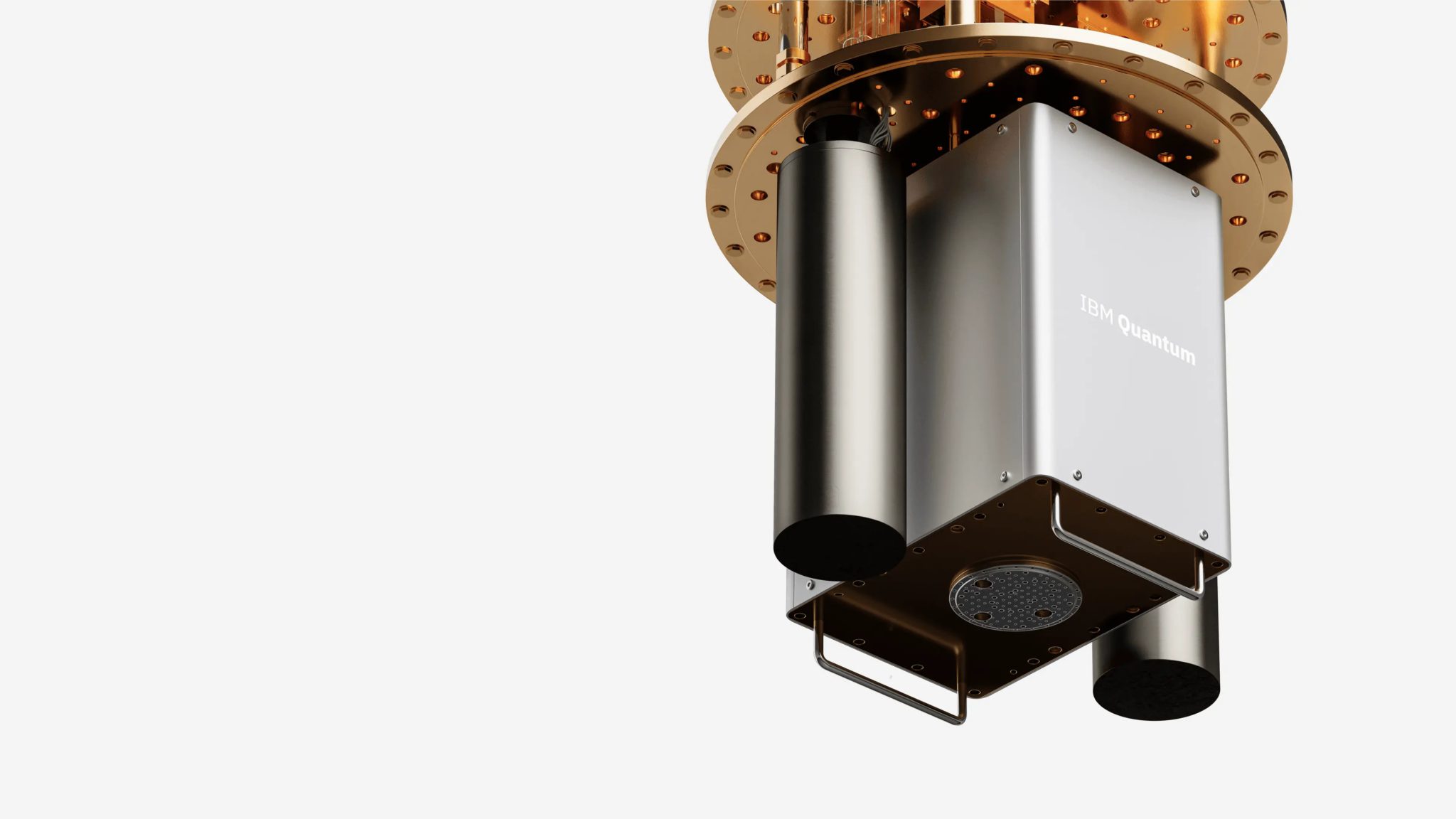
For years, quantum supremacy meant running something fast and hoping no one found a better classical shortcut. That era is ending. The field’s central problem has shifted from raw speed to something far thornier: when a quantum computer produces an answer too complex for any classical machine to check, how do you know it’s correct? IBM’s Jay Gambetta has named this challenge directly — “trusted computing when you can’t do classical simulations,” according to The Quantum Insider. For anyone tracking cryptography timelines or HPC investment, this distinction matters more than any speed record — context well illustrated by the scale of the Stargate Project.
When “Faster” Isn’t Enough
Early quantum supremacy claims looked impressive until classical algorithms started catching up.
Google’s Sycamore processor famously completed random-circuit sampling in 200 seconds versus an estimated 10,000 years classically, according to Nature. Impressive — like bringing a flamethrower to a candle-lighting ceremony. But the estimate rested on complexity-theoretic assumptions, not certainties. Then came the gut check: researchers at the Flatiron Institute showed a classical simulation beating a quantum computer at a task previously believed to require quantum hardware, according to the Simons Foundation. NISQ devices — noisy intermediate-scale quantum processors — carry error rates millions of times higher than standard computer problems chips. Every advantage claim has to survive that reality.
Three strategies researchers now use to make quantum results trustworthy:
- Toy model cross-checking: Run quantum simulations of simple spin systems, then compare outputs across independent hardware platforms like IBM and Quantinuum. When both quantum processors agree, and classical methods diverge, that’s a meaningful signal.
- Hard-to-sample circuits with error detection: Circuits mixing classically simulable Clifford gates with non-simulable T gates create proven classical hardness. Mid-circuit measurements on ancilla qubits flag bad runs and discard them.
- Echo protocols and noise tomography: Apply a gate sequence, reverse it, measure the imperfection. Inject known noise, track its fingerprint, then extrapolate quantitative bounds on residual errors.
“Quantum circuits are computationally more powerful than classical ones of the same structure.” — Complexity theorist Robert König
Daniel Lidar’s 2025 study on IBM hardware demonstrated unconditional exponential scaling advantage on an optimization task, according to ScienceDaily. As problem size grows, the performance gap widens and, in the authors’ words, “cannot be reversed.” That’s a scaling argument backed by error-correction techniques — meaningfully different from claiming a quantum device simply ran faster on a given afternoon. Still, Nobel laureate Frank Wilczek has cautioned that “quantum computing remains a research endeavor, and classical computers will continue to outperform them for the foreseeable future,” according to postquantum.com. The Lidar result is not a finish line.
Where Trusted Advantage Will Actually Land
Quantum machines won’t replace general-purpose computing hardware — they’ll become specialized co-processors for problems classical systems cannot touch.
First practical domains: quantum chemistry for drug discovery, materials simulation for next-generation batteries, and combinatorial optimization in logistics and finance. Think of it less like replacing streaming infrastructure and more like adding a very specific, very expensive turbine to an existing power grid. Security agencies and NIST are already watching scaling results to time post-quantum cryptography transitions, making these milestones directly relevant to enterprise roadmap planning. Practitioners already using AI-powered websites will recognize how quickly specialized tools can reshape workflows once they mature.
The shift from “we ran it fast” to “we can prove it’s right” represents quantum computing’s maturation from headline-grabbing demonstrations toward genuine scientific rigor. The domains where trusted advantage will arrive first — chemistry, materials, optimization — are exactly the areas where classical methods demonstrably hit walls and real-world experimental data can serve as an external check on quantum outputs. That convergence, not any single speed record, is the milestone worth tracking.