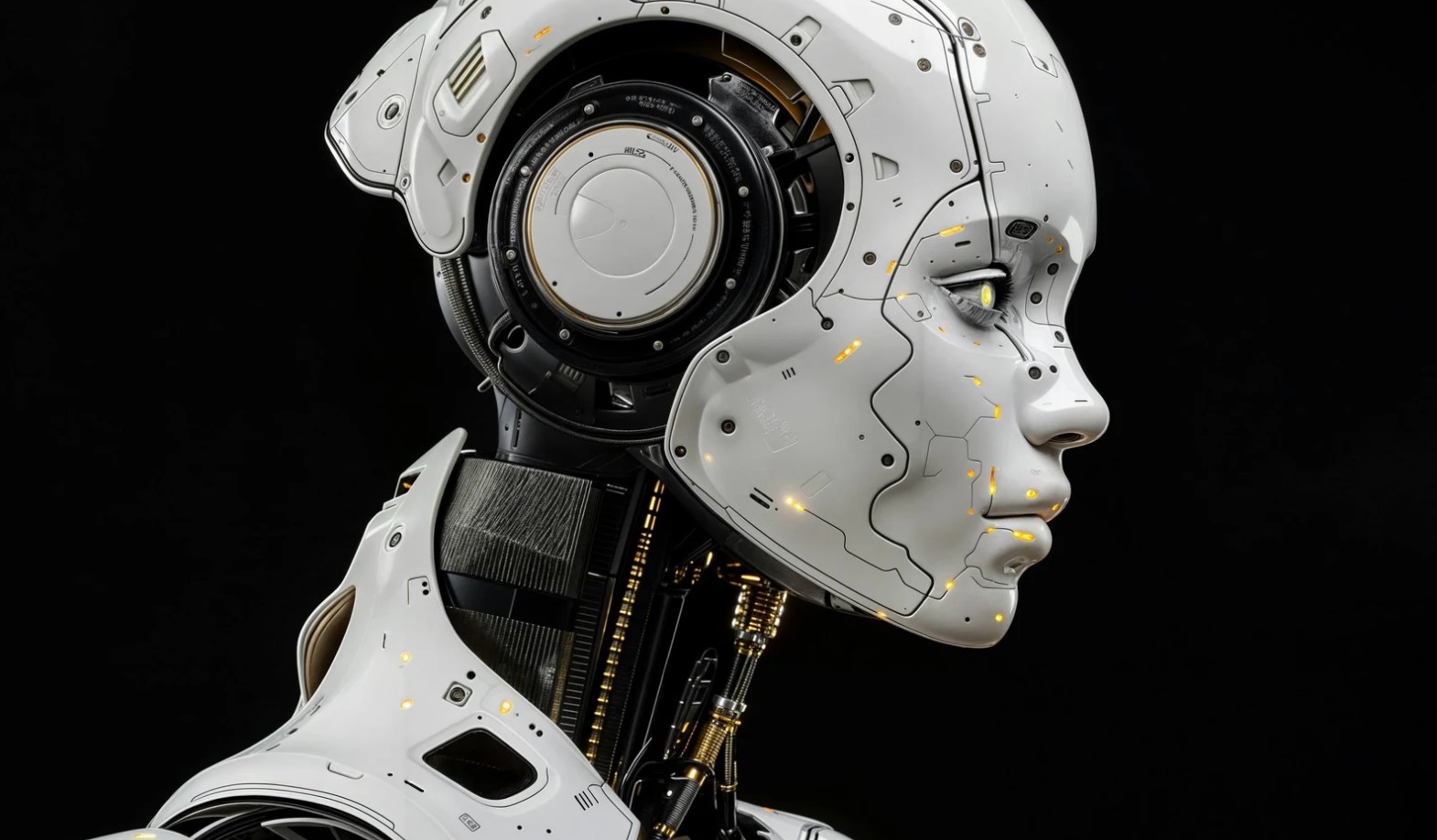
Your grandmother dies in 2030. In 2125, her great-great-grandchildren ask her robot body how to make her pasta sauce. That’s the pitch from Veterans First for America’s QAIAx 4E HRR Model Series — a proposed system claiming to preserve human identity in humanoid robots or holograms for up to five centuries. Licenses reportedly top out at $1 million. No working prototype has been independently verified. The ambition is staggering. So is the gap between promise and evidence.
What “Digital DNA” Actually Means
The term isn’t genetics — it’s a branding label for biometric and behavioral data captured by a sensor suit.
Strip away the marketing language and “Digital DNA“ is a dataset. Not biological DNA storage — which is a real, separate technology for encoding binary data into actual DNA molecules. Here, the term reportedly describes behavioral and physiological information captured by a 40-sensor haptic suit tracking movement, vital signs, and professional skills. That profile would then supposedly be:
- Installed into an Omni-AI humanoid robot body or projected as a hologram
- Managed through family trusts or estates across generations
- Licensed at three claimed tiers: $300,000 for 100 years, $600,000 for 250 years, or $1 million for 500 years
The project is also connected to the QAIAx Clinical Trial (PRS:NCT07661823), a registered health services research initiative reportedly targeting 11 intervention groups — including PTSD, substance-use disorders, autism, and veteran reentry. The proposed infrastructure involves 300 automated “Microcities” on federal and military enclaves, operating under a 90/10 workforce model that would delegate 90% of municipal operations to AI, with licensed human professionals overseeing the rest. These are promotional claims, not independently audited outcomes.
“On the leading approaches to personal persistence, a thanabot would not be a continuation of an actual human.” — Journal of the American Philosophical Association
That quote lands like a cold splash of water. Does any of this preserve you, or just a very convincing impression of you?
Grief Tech’s Most Extreme Pitch Yet
The market for AI replicas of the dead already exists — QAIAx just added more zeros to the price tag and a city-scale infrastructure plan.
This territory isn’t empty. The market already exists. Silicon Intelligence, Super Brain, and LifeNaut have built AI replicas and mindfile archives for years; QAIAx simply scales the concept to city-level infrastructure and multi-century timelines — like someone watched Black Mirror’s “Be Right Back” and thought, “needs a subscription model.” UBTech’s U1 Ultra robot already uses 3D facial reconstruction and voice replication to resemble specific individuals, including the deceased.
References to “quantum-powered” integration with IBM Watson, Google Quantum AI, and Nvidia remain marketing language, not confirmed partnerships. No peer-reviewed evidence validates the system beyond advanced avatar-like simulation. Ethical researchers flag griefbots as carrying “very risky” implications for mourning, arguing postmortem avatars should be “clearly labeled as simulations” and may function better as interactive archives than therapeutic tools, according to Scientific American.
Wanting to keep someone present after death is profoundly human. Whether a million-dollar robot license genuinely serves that need — or simply monetizes it — is a question regulators, philosophers, and families will wrestle with long before any 500-year contract expires.