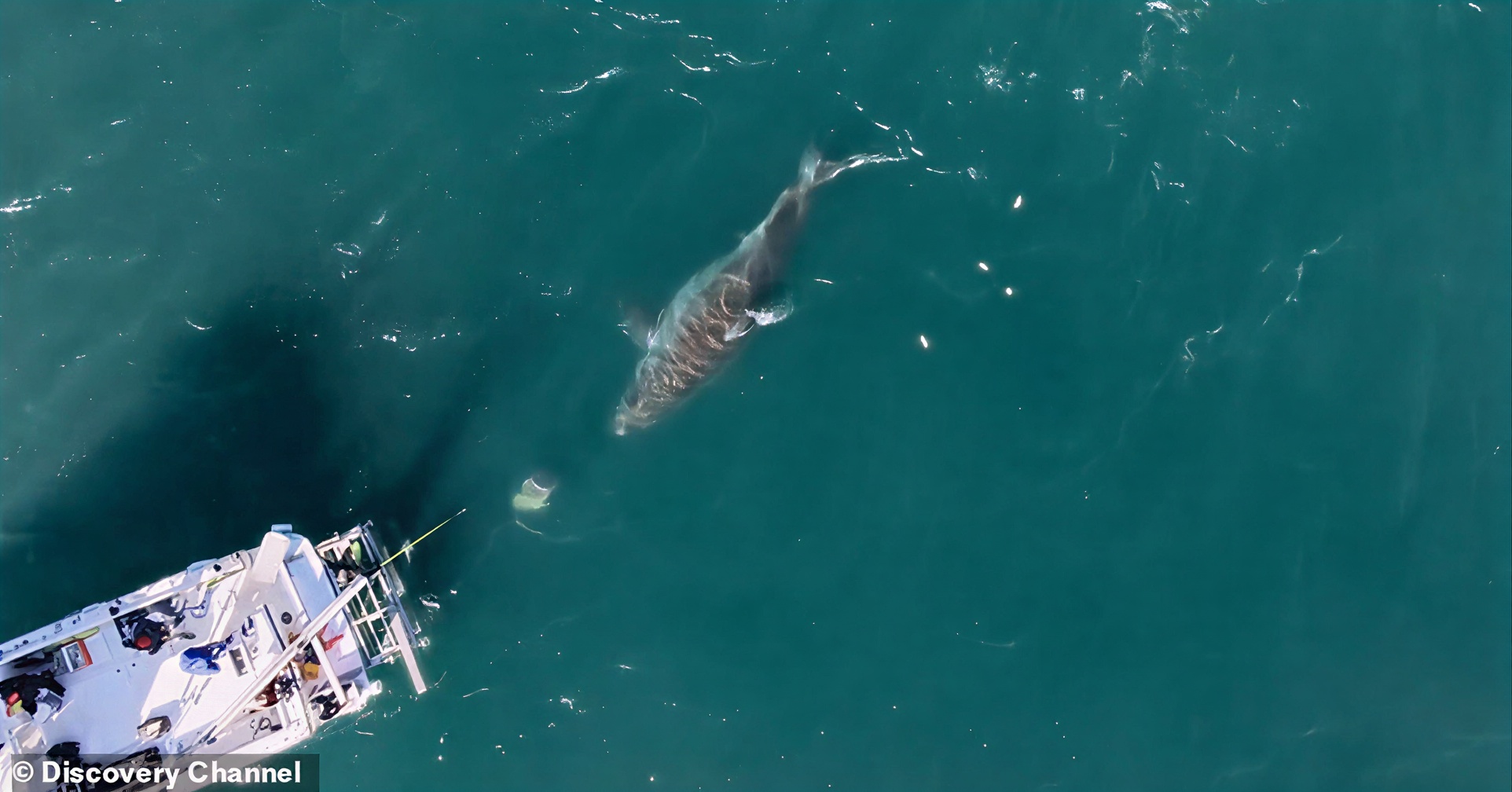
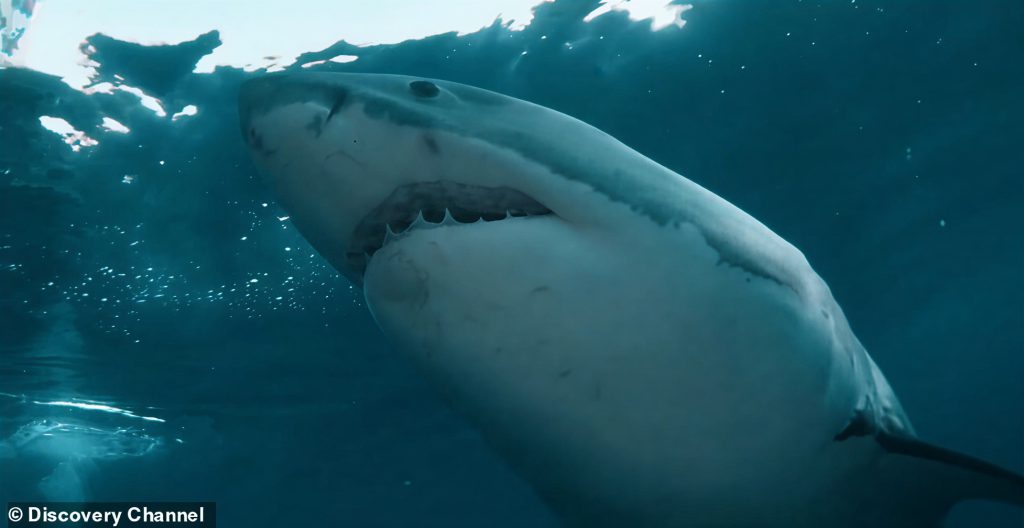
Somewhere off Mud Island, Nova Scotia, a baited cage descended into gray-green water that reportedly holds more oversized great whites per square mile than researchers ever anticipated. Dr. Neil Hammerschlag had been here before. He’d spotted an enormous female — roughly 20 feet long, believed to weigh around three tons — and returned with a Discovery Shark Week crew to find and tag her. The team first encountered three sharks over 14 feet, then a 16-foot female they named Sweetheart.
Then the rose-shaped marking appeared on a flank like a signature scrawled in scar tissue.
The Numbers Behind the Nickname
One month of observation produced a dataset suggesting Mud Island is far more than a rest stop.
Here’s what makes this more than a cool dive story:
- Big Rose: female, approximately 20 feet, roughly three tons
- 109 great whites documented around Mud Island over the following month
- 25 of those sharks appeared more than once, indicating habitual return
- Sweetheart’s satellite tag later tracked her along the entire U.S. East Coast, past Florida, toward Louisiana
- Researchers interpret the pattern as evidence that Mud Island may sit near an ecologically important area — possibly a birthing ground, though that conclusion remains unconfirmed
Great white sightings across the Northwest Atlantic have increased significantly in recent years, with detections documented from Newfoundland to Florida. The species hunts marine mammals like seals in shallow coastal waters, and Canadian species assessments confirm Nova Scotia sits firmly within its seasonal Atlantic range. Hammerschlag’s expedition suggests this particular stretch may be drawing sharks back repeatedly — not just passing them through.
More Sharks Doesn’t Mean More Danger
Rising detections reflect better science and recovering seal populations — not a Jaws reboot.
You might read “109 great whites” and feel your beach vacation plans dissolving like a sandcastle at high tide. Fair reaction. But shark bites remain statistically rare even as encounters climb. Think of it like spotting more coyotes in your neighborhood because trail cameras got cheaper and deer populations rebounded — the animals were always moving through. The difference now is that tags and fieldwork are finally documenting patterns that were previously invisible.
Marine biologists note that prey density and migratory corridors likely play a role alongside any potential reproductive significance, and researchers stress that a single expedition’s data points toward a hypothesis, not a verdict.
If Mud Island is confirmed as critical habitat, it shifts how policymakers and conservation groups approach protecting this stretch of the North Atlantic. That’s the real story — not the size of the teeth, but the size of what researchers still don’t know.