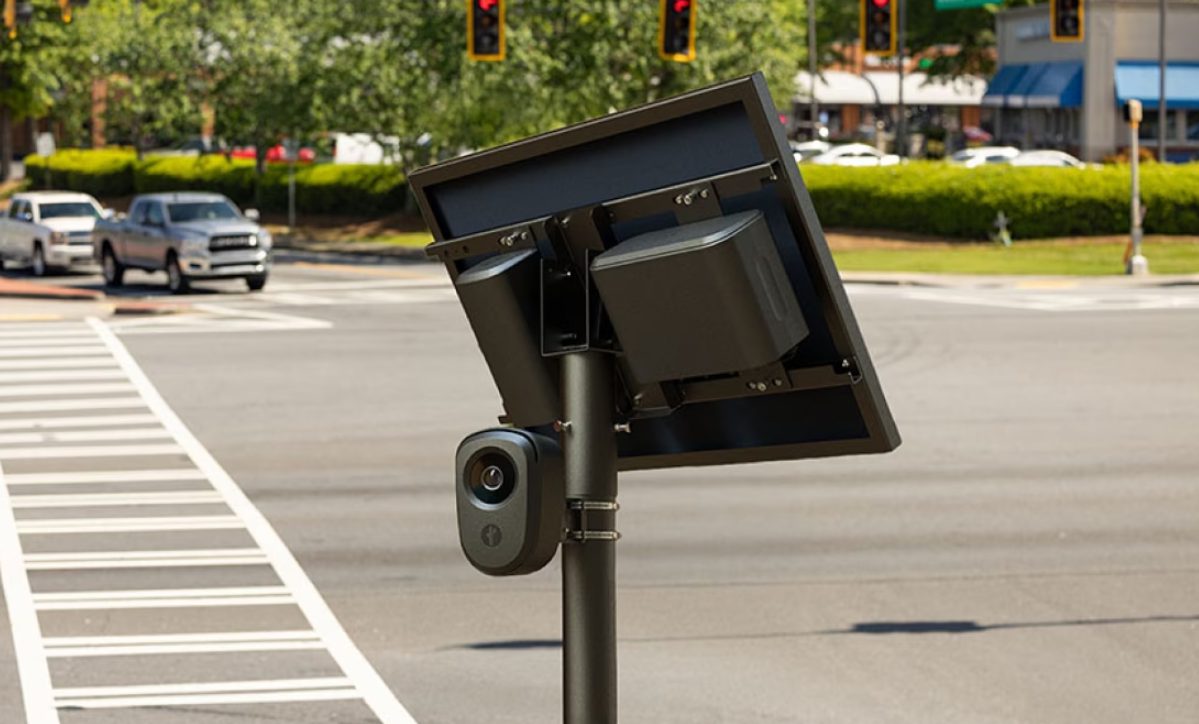
You pull into an Academy Sports parking lot for hiking boots. Before you unbuckle your seatbelt, a camera has already read your license plate, stamped it with a timestamp, and filed it away. That’s the reality of Academy Sports’ documented partnership with Flock Safety, which deploys license plate recognition (LPR) cameras as a “virtual security perimeter” around stores.
According to Flock’s own case study, the system is designed to “detect and deter bad actors” — meaning organized retail crime rings, not you grabbing a fishing rod. The stated results include improved case closure rates and better employee morale. On paper, it’s straightforward loss prevention.
Here’s what the cameras collect by design:
- License plate numbers from every passing vehicle
- Timestamps tied to each read
- Location metadata linking plates to specific store visits
- Stated purpose: theft deterrence and a virtual security boundary around the store perimeter
Think of it like a bouncer with a photographic memory stationed at every entrance — except this one logs every vehicle, not just the suspicious ones.
Here’s where things get more problematic. This x post from Wall Street Apes shows what appears to be a Flock camera installation, where the camera is facing the store door, underlying the broader concern of expanded tracking, not just basic storefront protection.
The Question Nobody’s Asking at the Register
Your plate enters Flock’s system whether you shoplift or simply pick up sunscreen.
What happens to your plate data after it’s captured? Wny do they need it pointed at the door?That’s where things get murky. Whether Academy Sports’ specific deployment shares footage with law enforcement remains unverified in available sourcing. The broader context, however, is worth noting. CNBC has reported that Flock Safety is expanding video-sharing integrations with police departments — a company-wide trajectory, even if this particular retail partnership hasn’t been confirmed as part of it.
There’s also no posted notice requirement, no opt-out mechanism, and no disclosure at checkout explaining how long your plate data sits in a database. According to the Electronic Frontier Foundation, most U.S. states still lack comprehensive LPR data-retention laws, meaning retention periods and access policies vary widely by vendor and jurisdiction. You don’t have to be stealing anything to end up in the log. The growth of secretly tracking users across different platforms and contexts underscores just how normalized this data collection has become.
Academy Sports sells everything from yoga mats to firearms, and Flock’s system reportedly treats all customers identically. That sounds reassuring until you consider that “treating everyone the same” means logging everyone the same — the digital equivalent of Ring doorbell culture scaled to commercial real estate, minus even the pretense of a neighbor asking permission.
What This Means for Your Next Parking Lot
LPR technology is expanding faster than the privacy frameworks designed to govern it.
Knowing this won’t stop you from buying camp chairs. But it should sharpen your awareness. Retail LPR deployments are growing, privacy rules are lagging, and the next parking lot you pull into probably already has a expanding faster than the privacy frameworks designed to govern it. The question isn’t whether to be alarmed — it’s whether you want to understand the system before it understands your comings and goings better than you do.