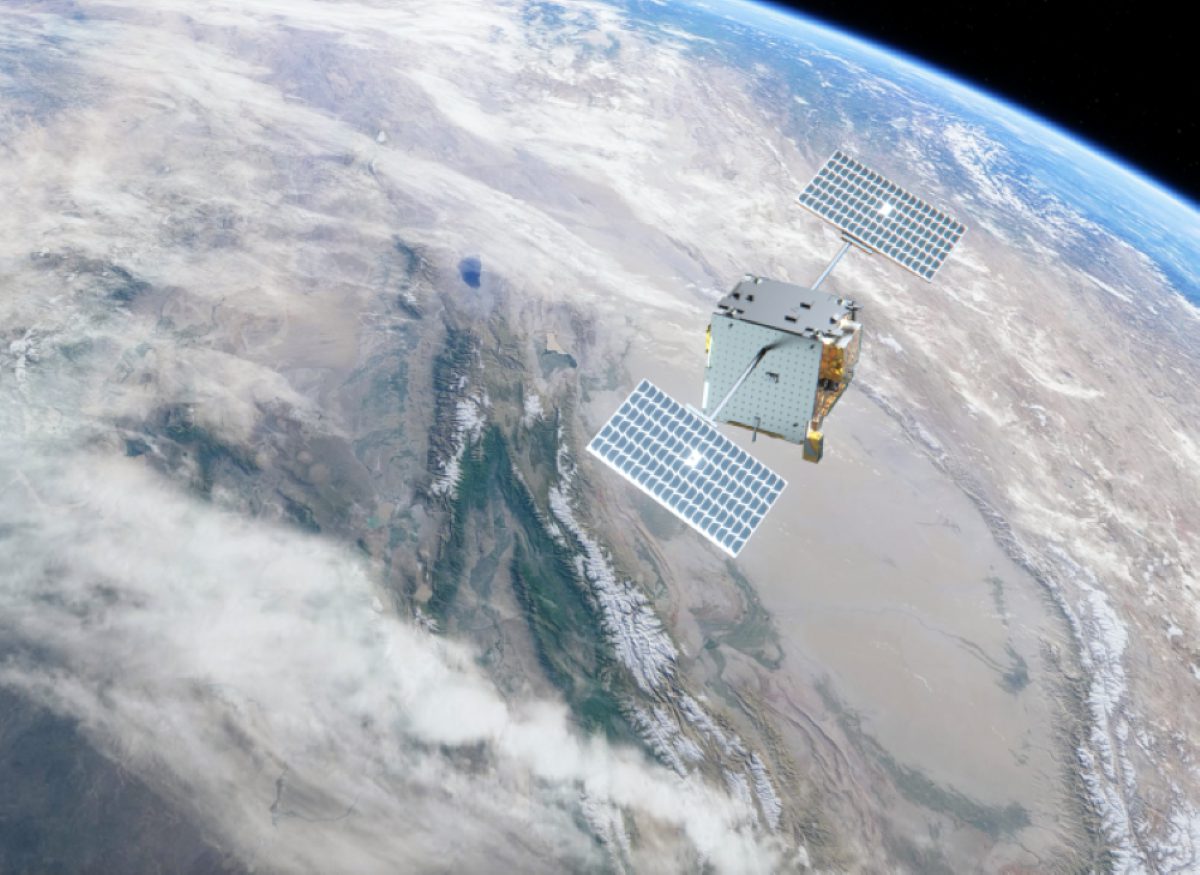
Until April 2026, Earth-observation satellites worked like security cameras with no one watching the monitors. They captured everything, dumped terabytes of raw imagery to ground stations, and waited for humans to sift through the pile. That model just broke. Loft Orbital’s YAM-9 became the first satellite to run a vision-language model in orbit — meaning operators typed plain-English requests and got back classified, actionable answers instead of pixel floods. Think of it as the same on-device AI trend powering your phone’s photo search, except running 500 kilometers straight up.
How the Stack Actually Works
Three tightly integrated components turned YAM-9 from a passive camera into an orbiting analyst.
NASA JPL’s NAVI-Orbital software translates natural-language queries into onboard classification tasks. Google DeepMind’s Gemma 3 — a vision-language model optimized for hardware with tight power and memory budgets — does the seeing and understanding. An Nvidia Jetson Orin AGX GPU provides the compute muscle. A VLM, in plain terms, is what happens when you give a large language model eyes: it processes images and text together, then answers like a very focused analyst.
Here’s what YAM-9 was actually asked to do during the demonstration:
- “Classify sensor data in regions where natural environment meets human development”
- “Identify infrastructure around railway hubs”
- The satellite classified imagery and flagged areas of interest in near real time
- Only distilled, AI-filtered insights got sent back to Earth — not raw pixel dumps
Fitting NAVI-Orbital into the satellite’s brutal resource constraints required a full software strip-down. This was not plug-and-play. “This opens the door to always-on, patrol layers in space.” — Paul Lasserre, Head of AI, Loft Orbital.
The practical payoff is speed. Picture a wildfire response team receiving AI-flagged damage zones within minutes, rather than waiting hours for analysts to comb raw satellite passes. YAM-9 sends conclusions, not footage — like the difference between getting a text summary and being handed every email your company ever sent.
From One Satellite to a Patrol Layer
Scaling from a single demonstrator to global coverage is where the real engineering challenge begins.
Loft estimates real-time global coverage would require 50 to 100 satellites of this class, according to TechCrunch. They currently operate 12. Planet Labs runs Jetson Orin chips onboard but reportedly sticks to simpler detection tasks, with VLM research ongoing. Kepler Communications claims the largest GPU cluster in space and confirms undisclosed AI workloads — though NDAs keep the details locked.
JPL researcher Juan Delfa Victoria traces NAVI’s origins to a different problem entirely: building AI assistants for suited astronauts who can’t use keyboards on the Moon. Same tech stack, wildly different destination.
Always-on orbital AI is genuinely powerful for disaster response and infrastructure monitoring. But who controls what gets watched — and how — remains an open question that the industry has not answered yet. The next milestone worth tracking: whether any operator announces a constellation-scale VLM deployment. That’s when demonstration becomes infrastructure.