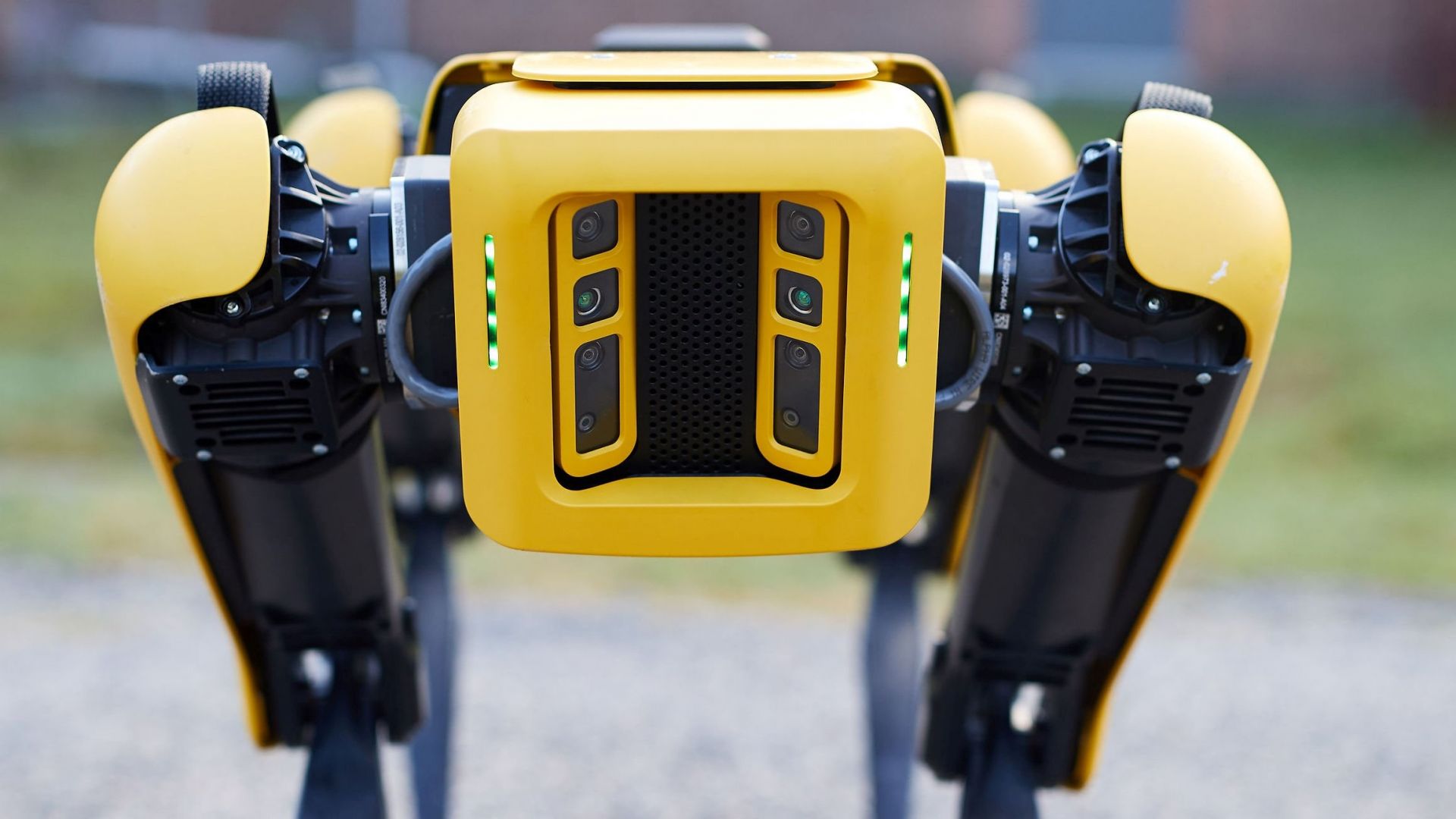
The robot that did backflips on YouTube is about to clock in at an EV factory in Georgia. Hyundai Motor Group is paying $325 million to acquire SoftBank’s remaining stake in Boston Dynamics, bringing ownership to 100%. The board is expected to approve the deal on June 22. Full ownership removes minority shareholder friction and lets Hyundai treat Boston Dynamics not as a venture bet but as a core manufacturing arm — the company that builds its future workforce. Humanoid robots are increasingly moving from research labs into commercial deployment, and this acquisition accelerates that trend significantly.
From Research Lab to Assembly Line
The electric Atlas humanoid has real specs, a real factory, and a real deadline.
You’ve seen the parkour clips. Here’s what Atlas looks like now: a fully electric humanoid unveiled in 2024 after the hydraulic original was retired that April. Key specs include:
- Standing 6.2 feet tall and weighing 198 pounds
- Human-scale tactile fingers capable of picking small parts
- Lifts up to 110 pounds
- Reaches 7.5 feet with arms extended
The deployment target is Hyundai’s Metaplant near Savannah, Georgia, by 2028 — starting with parts sequencing, essentially bipedal warehouse logistics on an assembly line.
The scale ambitions are significant. Hyundai reportedly plans to deploy more than 25,000 Atlas robots across its plants globally, with a dedicated humanoid factory targeting 10,000 to 30,000 units annually by around 2030. Boston Dynamics CEO Robert Playter has set a demanding benchmark: Atlas must learn new factory tasks in a day or two and hit 99.9% reliability before it earns a permanent spot on the line.
Full ownership also changes the engineering equation. Hyundai Mobis, the group’s components arm, already produces actuators for Atlas — the joints governing strength, speed, and durability. That’s vertical integration applied to humanoid robotics: controlling the hardware stack from joint to finished robot, the way a carmaker controls its own powertrain.
“Robots are going to take the dull, dirty, dangerous parts of the jobs — humans are still going to do the high-level cognitive, high-value tasks.” — Robert Playter, Boston Dynamics CEO
SoftBank Cashes Out, Chases Bigger Numbers
Masayoshi Son isn’t abandoning robots — he’s betting they should build data centers, not cars.
Boston Dynamics has moved through several corporate owners:
- DARPA-funded research
- Google in 2013
- SoftBank in 2017
- Hyundai’s controlling 80% stake in 2021 at roughly $1.1 billion
The $325 million SoftBank receives now is modest compared to where Masayoshi Son is pointing next: Roze AI, an infrastructure venture reportedly targeting a $100 billion valuation, focused on using robotics and AI to construct data centers at massive scale.
The strategic divide is clear. Hyundai wants robots assembling electric cars. SoftBank wants robots assembling the buildings that run AI. Neither direction is wrong — they’re just playing entirely different games. Meanwhile, Tesla’s Optimus is working Fremont, Figure AI is trialing humanoids with BMW, and China’s Unitree keeps pushing lower-cost alternatives into the market. Hyundai’s answer is to own its entire robot stack outright, removing any outside influence over long-horizon bets whose payoff may only become clear after 2028.
The backflip videos were the audition. Savannah is opening night. If Atlas hits that 99.9% reliability bar at scale, Hyundai becomes one of the clearest proofs yet that humanoid robots can hold down a real job.