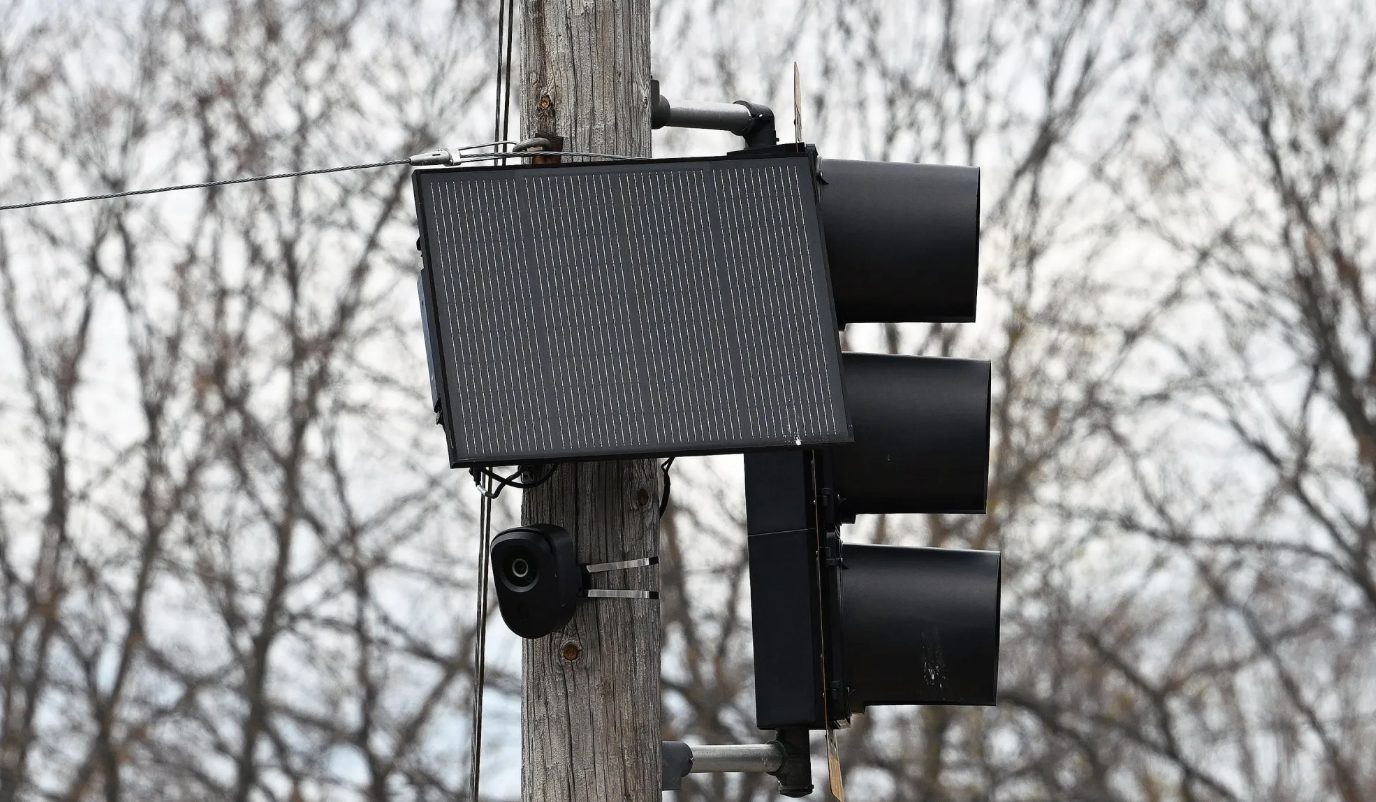
When you can’t track where your data goes, the safest choice is not to collect it at all. South Portland’s City Council just proved this point, voting 5-2 to immediately terminate their contract with Flock Safety’s AI-powered license plate cameras—despite the system helping catch child predators and solve bank robberies.
The decision dumps seven cameras that had been logging every vehicle passing through key intersections since installation. Flock’s AI captures more than license plates: vehicle models, colors, even bumper stickers get stored in a network that claims local control but operates with disputed transparency. Police Chief Daniel Ahern called the technology “one of a kind” and credited it with cracking serious cases, including identifying an online child predator and locating shooting suspects.
But residents organized under the banner “No Flock for SoPo” weren’t buying the trade-off. More than 75 people rallied outside City Hall, while a petition against the cameras collected 590 signatures statewide. Their concern wasn’t the local police—it was everyone else with potential access to South Portland’s data through Flock’s cloud platform.
A city audit revealed the scope of that access. Nationwide, Flock’s network processed roughly 1,800 immigration-related searches, with the Department of Homeland Security conducting over 1,450 of them since February 2025. Two unnamed federal agencies ran searches using terms related to immigration and reproductive health enforcement.
The kicker? South Portland couldn’t determine whether any of these searches actually accessed their cameras’ data.
“We don’t know enough about this stuff. We don’t know where the data is going to go,” Councilor Misha Pride explained, summarizing the majority’s reasoning. Like deleting TikTok over Chinese data concerns, the council chose elimination over mitigation.
City staff had recommended keeping the cameras with additional safeguards, but residents in the chambers cheered when councilors rejected that middle ground. The contract runs until 2027, but City Manager Scott Morelli promised to remove the hardware “as soon as possible” and confirmed South Portland’s system no longer shares data with other agencies.
South Portland’s move sends a message to other municipalities weighing similar contracts: citizens can successfully push back against surveillance infrastructure, even when it works exactly as advertised. The question isn’t whether these cameras solve crimes—they do. It’s whether local communities can maintain meaningful control over their data once it enters a private company’s network.
The answer, apparently, is no.