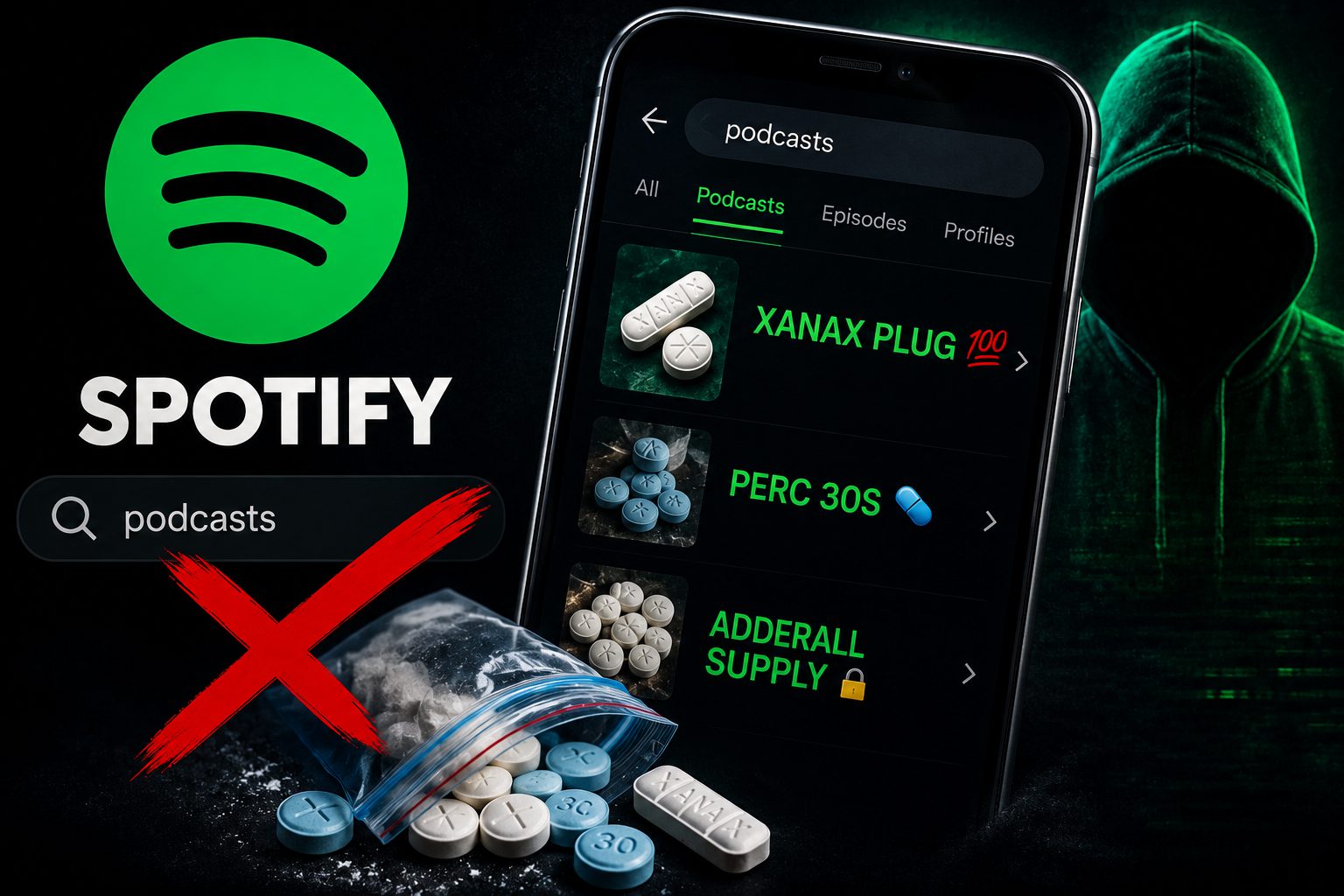
Spotify just removed more than 57,000 podcast episodes that weren’t trying to entertain you—they were trying to sell you drugs. These fake shows exploited the platform’s search algorithm like digital drug dealers gaming Google, embedding pharmacy links in episode descriptions and cover art while the actual audio sat empty.
The scheme worked like a TikTok hack gone wrong. Bad actors flooded Spotify with AI-generated podcasts featuring health-related keywords, knowing your searches for “anxiety relief” or “weight loss tips” would surface their content. Once there, links hidden in metadata directed users to illegal pharmacy sites selling everything from modafinil to benzodiazepines using cryptocurrency. The kicker? According to Senator Maggie Hassan’s office, 94% of these fake episodes had zero plays. Nobody was listening—the audio was just search bait.
Platform Whack-a-Mole Gets Serious
Spotify’s enforcement came only after sustained Senate pressure and outside reporting.
Spotify only acted after sustained pressure from Hassan’s committee, removing 3,000 shows and taking enforcement action against 3,500 accounts. The company’s defense reads like every platform’s playbook: the content was spam, not direct drug dealing, and older enforcement numbers aren’t comparable because tracking users methods changed. Yet none of this content got referred to law enforcement, despite at least one flagged podcast linking to Opioidstores.com—a domain later seized by federal prosecutors working with the DEA.
The problem spread beyond Spotify to iHeart, Amazon Music, and Podchaser, revealing how podcast distribution systems became unwitting drug-market infrastructure. While Spotify deploys AI filtering and keyword detection for drug names, it maintains no specific policy against AI-generated podcasts—unlike its aggressive stance on AI music spam.
Search Rankings as Drug Trafficking
This represents search manipulation weaponized for illegal pharmaceutical commerce.
This isn’t just content moderation failure; it’s search manipulation weaponized for illegal commerce. When AI makes fake content cheaper than detection systems can handle, your trusted podcast app becomes another vector for pharmaceutical fraud. The next time you search for health content, remember: somewhere in those results, algorithms are still playing catch-up with creativity that would make Walter White proud.