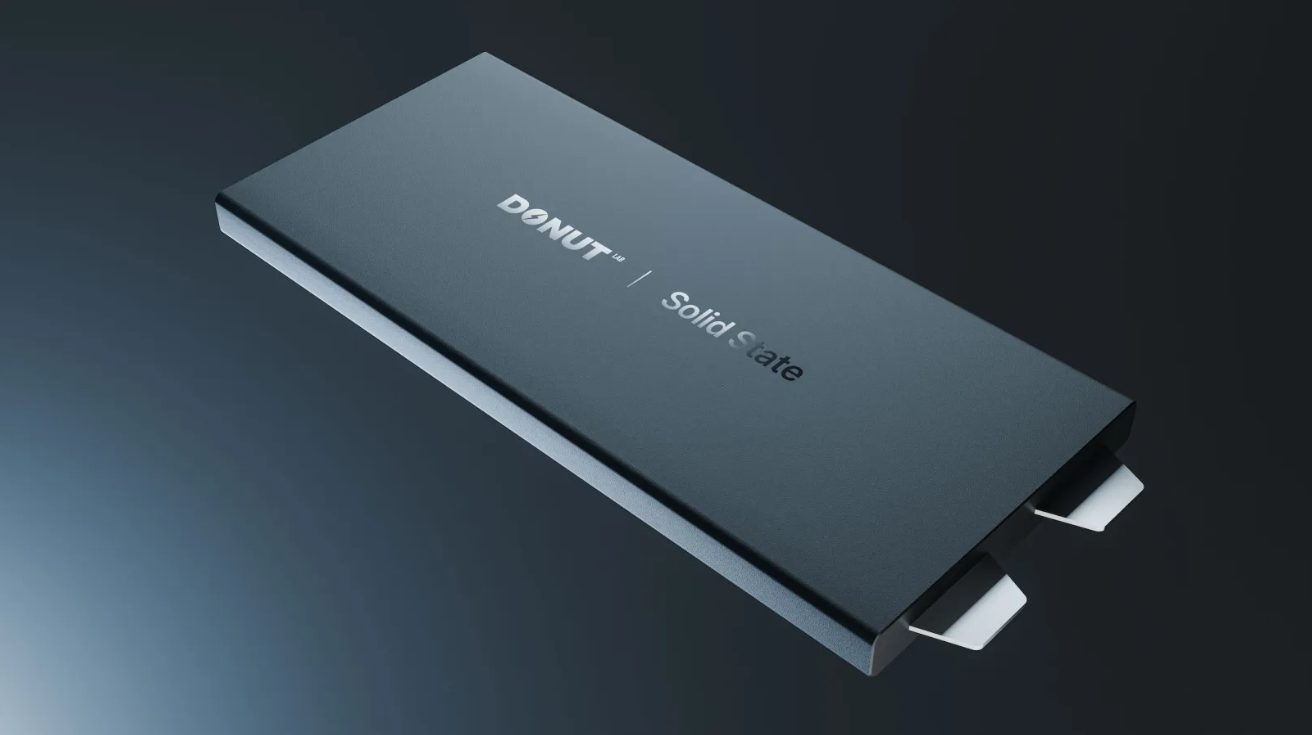
Dead giveaways hide in voltage curves. When Donut Lab’s “miracle” solid-state sodium-ion battery hit 3.7 volts at half charge, battery researchers knew they were looking at lithium-ion chemistry—not the revolutionary electric tech promised to over 1,300 investors.
Technical Evidence Demolishes the Claims
Independent analysis of Finnish research institute VTT’s test reports exposes Donut Lab’s deception through what investigators call “electrochemical fingerprints.” The voltage signature matches high-nickel NCM lithium-ion cells perfectly, while sodium-ion batteries typically max out around 3.5 volts.
Even more damning: cell expansion measurements show the distinctive “kink” around 50-70% charge that only occurs with graphite anodes—sodium ions are simply too large to intercalate into graphite’s layered structure.
VTT measured 94 Wh capacity in a 315-gram cell, yielding 298 Wh/kg—solid performance for modern lithium-ion, but nowhere near the advertised 400 Wh/kg. Battery researcher Ziroth, who led the investigation with input from over 20 experts, calls the combined evidence equivalent to “having both a fingerprint and a facial photo” of the real chemistry.
A Corporate Shell Game Worth Millions
The web of companies reads like a startup thriller gone wrong:
- CT Coatings, a German firm with patents spanning “screen-printed paving slabs” and “warning triangles,” supplied the underlying technology
- Nordic Nano supposedly manufactured cells but never actually made a single battery
- Donut Lab handled marketing and fundraising
- Verge Motorcycles provided the production vehicle showcase
This structure enabled Donut Lab to raise approximately $25 million from retail investors—over 900 holding small stakes between $3,000 and $23,000 each. CEO Marko Lehtimäki promised “10x returns in 12-18 months” while the company’s valuation inflated to $1.25 billion after CES 2026.
When confronted about technical details, Lehtimäki admitted to Finnish media that “the 400 Wh/kg cells were not in the bikes” and the VTT-tested cell “is not even the cell that’s going to be shipped to customers.”
The Donut Lab scandal adds to the growing list of tech scandals that have exploited investor trust and highlights the importance of independent verification in breakthrough technology claims.
Real Solid-State Programs Continue Despite the Fraud
The Donut Lab scandal threatens to damage public trust in genuine solid-state development, where major players invest billions in realistic roadmaps. Toyota has committed over $15 billion to battery technology with production targets around 2027-2028, while Samsung SDI operates the world’s largest solid-state pilot line.
Finnish financial and criminal authorities are investigating potential securities violations, armed with whistleblower complaints from Nordic Nano’s former chief commercial officer. Your takeaway for evaluating future battery breakthroughs: extraordinary claims demand independent validation—not self-reported test results wrapped in corporate NDAs and crowdfunding hype.