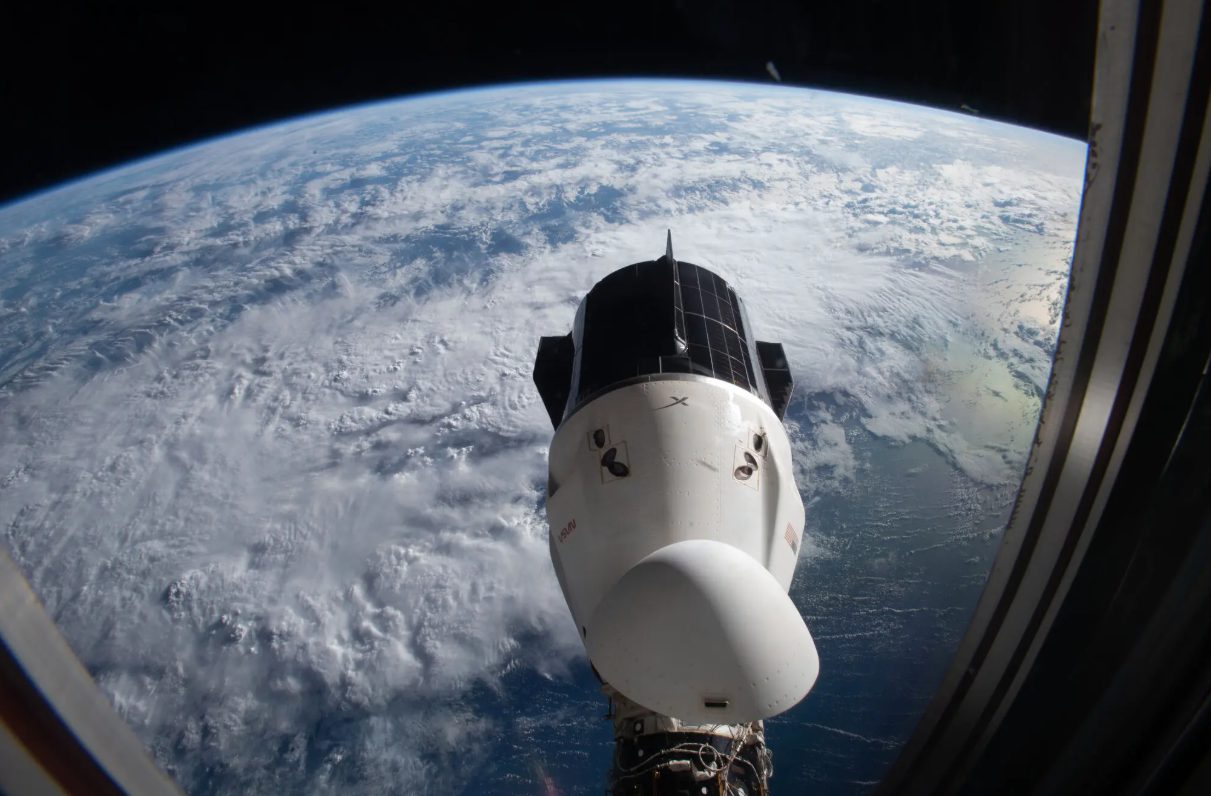
Four astronauts grabbed their spacesuits and prepared for emergency evacuation Friday morning when air leaks erupted in Russia’s aging Zvezda service module during repair work.
Crew Dragon Becomes Emergency Lifeboat
At 9:04 a.m. ET, NASA ordered the four Crew-12 astronauts—two Americans, one French ESA astronaut, and one Russian cosmonaut—to immediately enter their docked SpaceX Crew Dragon spacecraft and don their spacesuits. The trigger: Roscosmos controllers detected two new air leaks in the Zvezda service module’s transition chamber during pressurization for structural repairs. You know that sinking feeling when your car starts making a weird noise on the highway? Imagine that, but you’re 250 miles above Earth with nowhere to pull over.
Russian Ground Control Patches the Problem
Russian mission control quickly sealed the first leak using a hermetic compound and began preparations to fix a second leak located on the transition chamber’s conical section. According to Roscosmos statements, station pressure remained stable throughout the incident—no immediate threat to crew safety. After assessing the situation and pausing repair activities, NASA spokesperson Bethany Stevens announced that crews could “end the safe haven procedures and return to planned operations aboard the International Space Station.” The astronauts climbed out of their spacesuits and got back to work.
Aging Infrastructure Shows Its Cracks
This emergency follows months of NASA-Roscosmos debates about recurring small leaks in the Zvezda module, a critical life-support and structural component that’s been in orbit for over two decades. Like that apartment building where something’s always breaking, the ISS increasingly shows its age through these maintenance crises. The safe-haven protocol mirrors recent procedures used during debris incidents—astronauts temporarily sheltered in spacecraft last summer when a Russian satellite broke up in nearby orbit.
Commercial Spacecraft Prove Their Worth
Friday’s incident reinforced the value of having multiple crewed vehicles docked as lifeboats—a deliberate risk-mitigation strategy that’s becoming more crucial as ISS hardware ages. Stevens emphasized that NASA continues working with international partners toward “a more permanent resolution” for the Zvezda leak issue. Expect more creative engineering solutions while everyone quietly accelerates planning for commercial space stations that won’t require decade-old repairs to keep the air inside.