




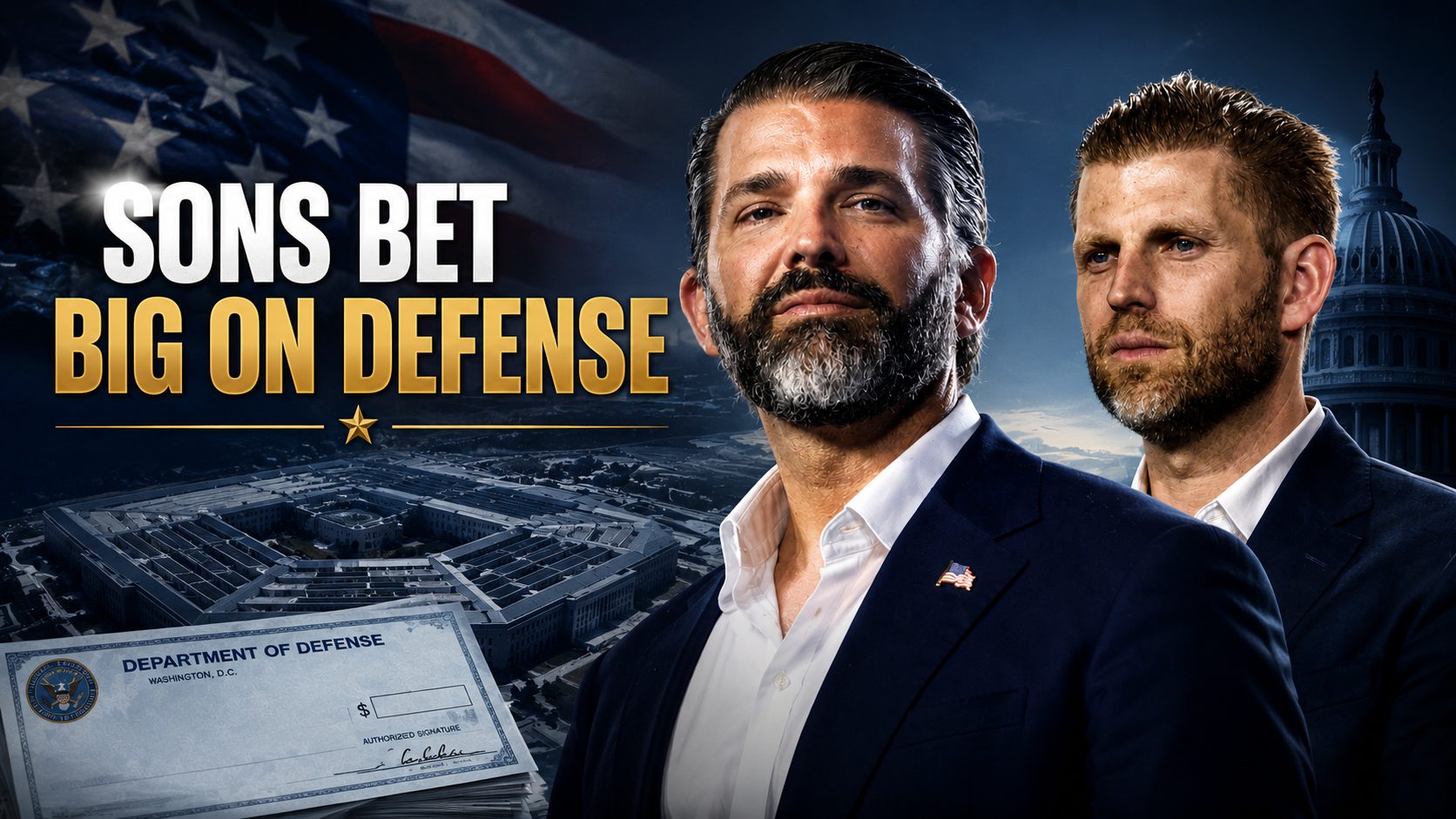
Companies linked to Donald Trump Jr. and Eric Trump have generated at least $3.2 billion in direct government business since the brothers invested, according to a Washington Post analysis. Another $3.1 billion sits in future contract options. Most of these investments landed after the 2024 election, flowing through vehicles like 1789 Capital and American Ventures/Dominari into more than a dozen defense-tech firms. Critics argue the arrangement raises questions about whether taxpayer funds are being directed toward companies with financial ties to the president’s family.
The Numbers Behind the Bets
The scale of this portfolio — and its alignment with Pentagon priorities — makes the numbers difficult to dismiss.
The portfolio reads like a Pentagon wish list: SpaceX, Anduril, Hadrian, Unusual Machines, Firehawk Aerospace, PsiQuantum, Cerebras, and others. 1789 Capital alone backed 11 of the 15 companies the Post tallied. The concentration is striking.
- $3.2 billion in direct government business since the sons invested
- $3.1 billion in additional future contract options
- Five companies received their first-ever government contracts only after the brothers invested and Trump returned to office
- SpaceX and Anduril account for roughly 97% of direct cash
- Excluding those two, remaining firms still collected approximately $1.8 billion in long-term federal commitments
The administration’s policy priorities happen to point in exactly the same direction as the family’s portfolio. Restrictions on Chinese drone imports, accelerated U.S.-made drone development, AI prioritization, and a broader “reindustrialization” push — all of it reportedly benefits the same companies. Trump Jr. has publicly framed his involvement as patriotic alignment with national-security goals, invoking the kind of “America First venture capitalism” language that blurs the line between private interest and public mission.
“It is reasonable to doubt whether policies benefiting companies tied to the Trump family are entirely in the public interest when the family also profits financially.” — Kathleen Clark, government ethics lawyer, according to reporting by The Washington Post.
Merit or Access?
The official answer is merit — but ethics watchdogs say the structural arrangement itself is the problem.
Company officials and the White House say every contract was won through standard procurement processes, with no special treatment. Ethics critics counter that proof of direct favoritism isn’t the point — the arrangement itself corrodes public trust in the same way structural conflicts erode confidence in institutions long before any single decision can be proven improper. Several firms reportedly held government contracts under the Biden administration, which complicates any straightforward narrative of cronyism. Still, five companies landing their first federal deals only after the brothers invested and Trump returned to office is a data point the Post’s analysis flags as notable.
Pentagon spending keeps tilting toward drones, robotics, and AI, and every current signal suggests that trajectory holds. Whether that scrutiny translates into formal oversight remains an open question. The companies in this portfolio stand to benefit from both public contracts and private-market enthusiasm simultaneously — and the arrangement, along with the questions surrounding it, shows no sign of fading.


























