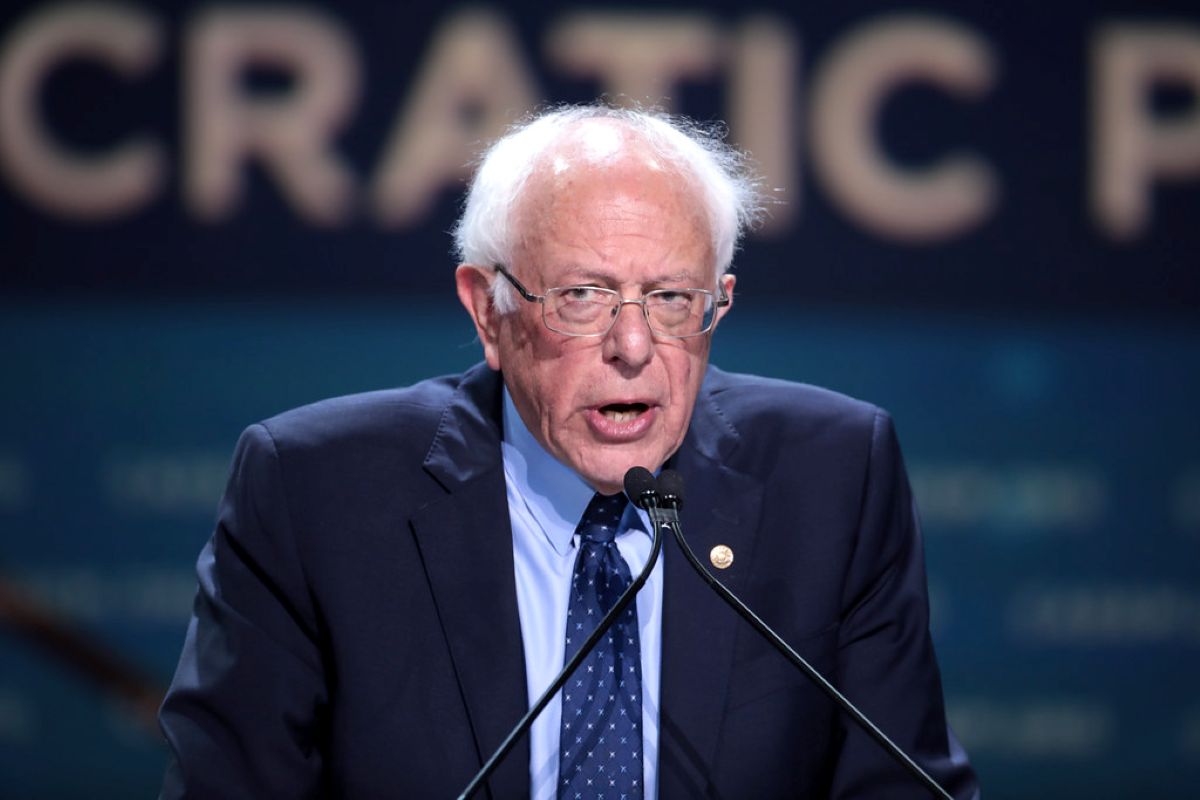
Bernie Sanders just dropped the most audacious AI policy proposal yet: a mandatory 50% public stake in America’s biggest AI companies, complete with voting rights and board seats. While tech leaders debate AI safety behind closed doors, Sanders wants to hand you the keys to those boardrooms—literally.
Your Equity Stake, Whether Companies Like It or Not
The Vermont senator proposes a one-time stock tax that would transfer half of major AI firms directly to public hands.
The mechanism reads like financial fan fiction, but Sanders means business. His American AI Sovereign Wealth Fund Act would impose a one-time 50% tax—not on profits, but on the actual stock of companies like OpenAI, Anthropic, and xAI. Think of it as forced public ownership: these firms would hand over half their equity to a federally managed fund, making you and every other American a co-owner of the AI revolution.
Unlike traditional corporate taxes that companies can write off or minimize, this equity transfer would be immediate and irreversible. The acquired shares would flow into an American AI Sovereign Wealth Fund, managed by the federal government on your behalf.
Government Board Seats and Voting Power
Public ownership means actual control, not just dividend checks from the sidelines.
Here’s where Sanders’ plan gets interesting: the government wouldn’t just collect passive dividends. Public representatives would hold voting shares and claim equal board representation, giving them power to block harmful decisions and push for policies that benefit citizens over shareholders.
Imagine government board members weighing in on OpenAI’s next model release or Anthropic’s safety protocols. Your stake wouldn’t just generate Alaska-style annual payments—it would give the public a voice in shaping AI development itself, from safety standards to labor practices.
Silicon Valley’s Own Ideas, Turned Mandatory
AI leaders have endorsed wealth-sharing concepts, but Sanders is making participation non-optional.
The twist? Tech leaders have been floating similar ideas for years. Sam Altman has advocated for AI-linked wealth funds, Anthropic has called for national sovereign wealth funds, and Elon Musk regularly promotes universal high income tied to AI advancement. Sanders essentially took their voluntary suggestions and made them mandatory.
Sanders justifies this by arguing AI models were built on “collective human knowledge”—every book, article, code repository, and creative work that trained these systems without permission or payment. If your writing helped train GPT-4, shouldn’t you share in the profits?
The details remain murky. Sanders admits that applying this to companies where AI is just one division—like Google or Microsoft—is “complicated.” Many targeted AI companies aren’t consistently profitable yet, raising questions about near-term dividend potential. Constitutional challenges over property seizure seem inevitable.
But here’s the real question: if this passes, you’d become a co-owner of the companies reshaping civilization. Ready for that responsibility?