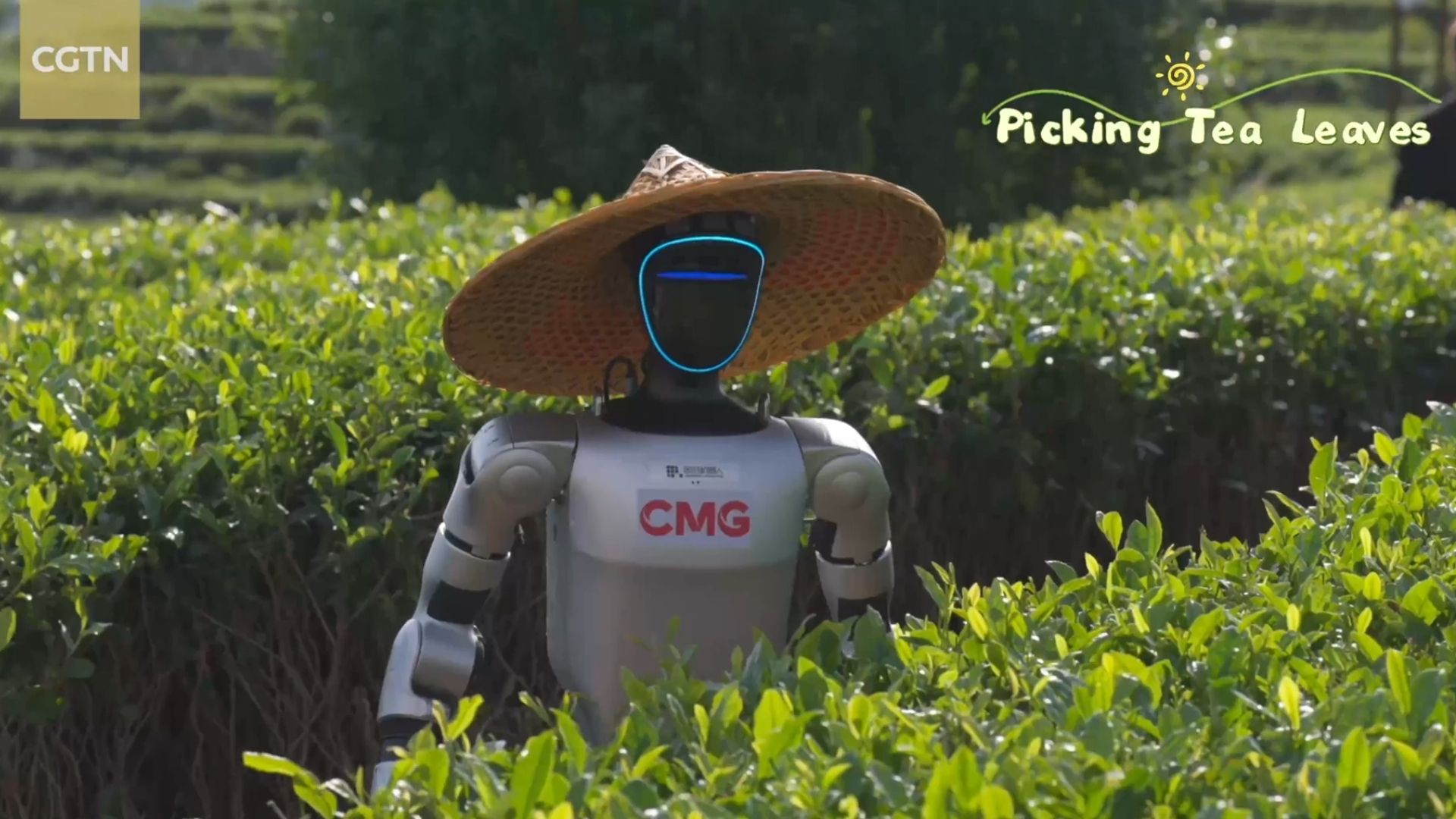
Ancient tea traditions meet cutting-edge robotics in Fujian Province, where humanoid robots are picking leaves alongside seasoned tea masters. This isn’t another polished tech demo—it’s a messy field trial designed to push robots beyond controlled lab conditions into the unpredictable world of actual work. The May 10 challenge in Fuding’s tea gardens serves as the opening act for China’s 2026 World Humanoid Robot Games, where agricultural complexity becomes the ultimate stress test for embodied AI.
From Lab to Leaf
The trial threw humanoid robots into every stage of white tea production, according to China Daily. Tasks ranged from:
- Identifying and picking leaves at different maturity stages
- Hauling loads across hilly terrain
- Assisting with sun-drying and processing steps like roasting
Tea leaves don’t follow factory specifications—they vary in size, ripeness, and placement, creating exactly the kind of chaos that breaks current vision systems and robotic grippers.
Why Tea Farms Matter
Tea gardens represent a harder benchmark than Amazon fulfillment centers because nothing stays uniform. Variable lighting, uneven ground, and delicate manipulation requirements stress balance, perception, and dexterity simultaneously. CGTN reports this trial aims to gather data for general-purpose AI systems that need to adapt to unstructured environments—the kind of messy, human-centered spaces where most actual work happens.
Games Beyond Competition
Next year’s World Humanoid Robot Games will feature 32 events split between athletic competition and real-world scenarios, according to Global Times. The scenario categories include:
- Homes
- Hospitals
- Factories
- Emergency response situations
This represents a significant expansion from the 2025 Beijing games that already attracted 280 teams and over 500 robots from 16 countries. China is using cultural touchstones like tea production to make robotics development more relatable than standard industrial showcases.
The Bigger Picture
Whether robots can handle the adaptive problem-solving that human labor requires remains the central question. These agricultural stress tests push humanoid systems beyond scripted demonstrations into environments where variables constantly shift. Success here could signal meaningful progress toward robots that actually complement human workers rather than just replacing them in controlled settings.