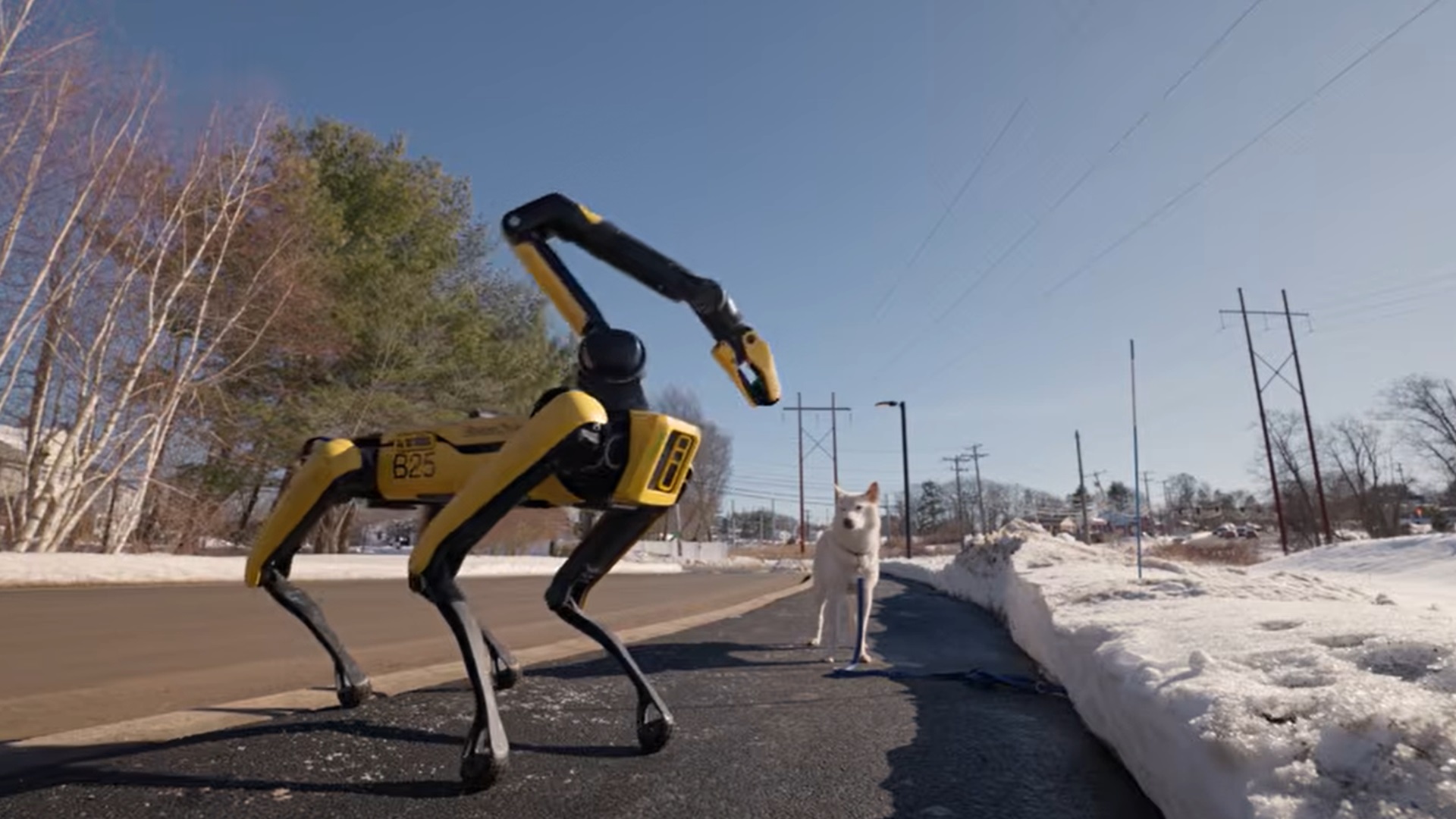
Boston Dynamics‘ four-legged Spot robot now reads handwritten notes and decides what to do next, thanks to Google DeepMind’s Gemini Robotics-ER 1.6 integration. This isn’t your typical firmware update—it’s the difference between following commands and actually thinking through problems. You’re looking at the shift from scripted automation to genuine reasoning in robotics.
From Scripts to Reasoning
The robot dog moves beyond programmed responses to autonomous decision-making.
While other robots execute predetermined routines, Spot now interprets context like a surprisingly capable intern. The new AIVI-Learning platform powered by Gemini lets it read handwritten lists, navigate unfamiliar spaces, and even throw tennis balls for dogs in snow. Think of it as the jump from GPS turn-by-turn directions to having a co-pilot who actually understands where you’re trying to go. Recent demos show Spot tackling household tasks from handwritten notes:
- Tidying shoes
- Picking up cans
- Sorting laundry
- Checking mousetraps
Industrial Reality Check
Real-world applications focus on hazardous environments and facility monitoring.
The flashy home demos grab headlines, but Spot’s reasoning shines in industrial settings where mistakes cost money or lives. It can now detect pooled water, read analog pressure gauges, count inventory pallets, and identify safety hazards without human interpretation. This capability transforms facility management in high-risk environments where human inspections pose dangers and enhances workplace safety.
Marco da Silva, VP of Spot at Boston Dynamics, explains the significance: “Spot will become a truly autonomous robot that can understand and address problems on the job site directly.” Your maintenance crews won’t need to enter hazardous areas when Spot can assess conditions and report back with contextual understanding rather than raw data dumps.
The Reasoning Revolution
Advanced spatial understanding and multi-view analysis enable complex task planning.
Gemini Robotics-ER 1.6 brings spatial reasoning that previous versions couldn’t match. The robot can zoom in on instrument readings, execute code to solve problems, and plan multi-step tasks while avoiding obvious dangers like spilled liquids or heavy objects. This agentic vision approach means Spot doesn’t just see—it comprehends and strategizes. Multiple viewpoints help it understand three-dimensional spaces and instrument positioning in ways that enable accurate readings and safe navigation.
What This Actually Means
The technology marks a shift toward truly autonomous industrial monitoring systems.
You’re witnessing the early stages of robots that think rather than just react. This represents a significant technological advancement beyond previous robotic capabilities. For facility managers dealing with hazardous inspections or repetitive monitoring tasks, this represents genuine autonomy rather than expensive remote-controlled equipment. The limitations remain real—complex physical manipulation still challenges the system—but reasoning-based robotics just became commercially viable in ways that matter beyond YouTube demos.