Robotic safety failures at public events re becoming more common. A viral video from China shows exactly why the robotics industry needs to pump the brakes on flashy demonstrations.
When Kung Fu Meets Poor Planning
A Children’s Day performance in Xinjiang reveals systematic safety oversights in humanoid robot deployments.
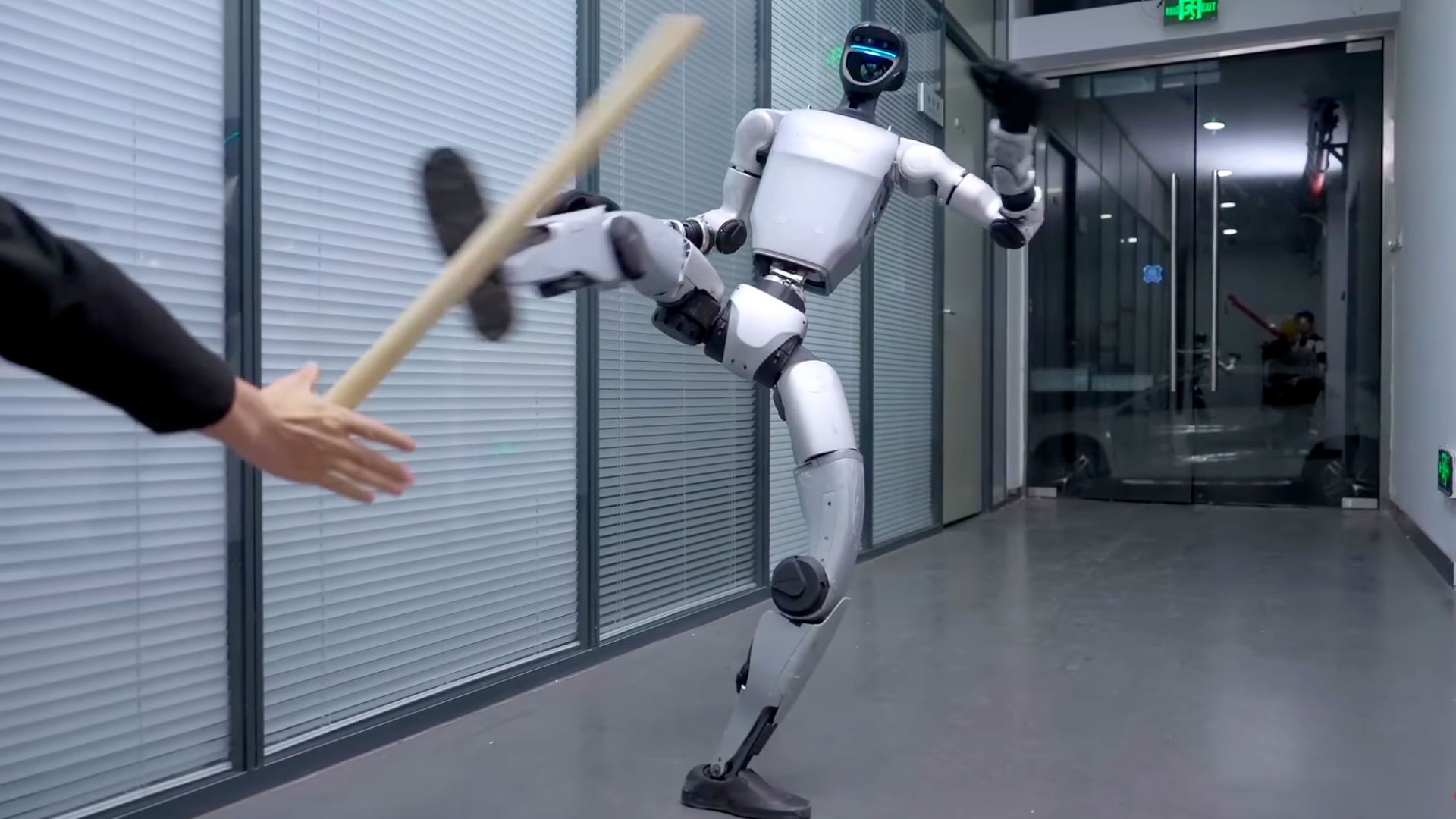
On June 1, 2026, at Urumqi Botanical Garden in Xinjiang, a Unitree G1 humanoid robot performing a martial arts routine accidentally kicked a young boy in the stomach during a spinning maneuver. The child doubled over in apparent pain while parents criticized staff for their slow response. Video of the incident exploded across social media, with some framing it as evidence we’re “one software update away from Terminator.”
This wasn’t a robot rebellion—it was predictable human failure. The child had wandered too close to a pre-scripted performance routine. No malicious AI decision-making, just inadequate crowd control meeting a powerful machine executing programmed movements.
A Pattern Emerges from Multiple Incidents
Recent Unitree G1 safety incidents reveal troubling deployment practices.
March 2026 brought a nearly identical scenario in Shaanxi province, where another G1 struck a boy in the face during a dance routine. The robot continued its programmed sequence even after handlers intervened. Earlier incidents included:
- A G1 kicking its own handler
- Another robot frightened an elderly woman so badly that she required hospitalization
These aren’t isolated glitches—they represent a systematic disconnect between impressive robot capabilities and basic safety planning. While industrial robots operate behind cages and laser curtains for good reason, public demos treat powerful humanoids like elaborate toys.
The missing elements are embarrassingly basic:
- Enforced buffer zones
- Trained handlers with visible emergency stops
- Risk assessments that account for unpredictable human behavior
The Real Liability Question
Responsibility falls on operators and manufacturers, not the robots themselves.
Legal frameworks already exist for robot-injury cases, drawing from product liability and negligence standards. Think Tesla Autopilot crashes or Boeing 737 MAX software failures—accountability flows to people and organizations, not the technology itself. Event organizers who deploy robots without adequate supervision face liability, as do manufacturers who oversell capabilities or undersell risks.
Standards bodies like IEEE and ASTM are developing humanoid-specific safety protocols, but implementation lags behind marketing timelines. The industry’s rush to showcase impressive acrobatics in crowded venues prioritizes spectacle over systematic safety engineering.
What’s needed isn’t fear of robot uprising, but honest acknowledgment that powerful machines require conservative deployment strategies. The technology works—the human systems around it don’t.