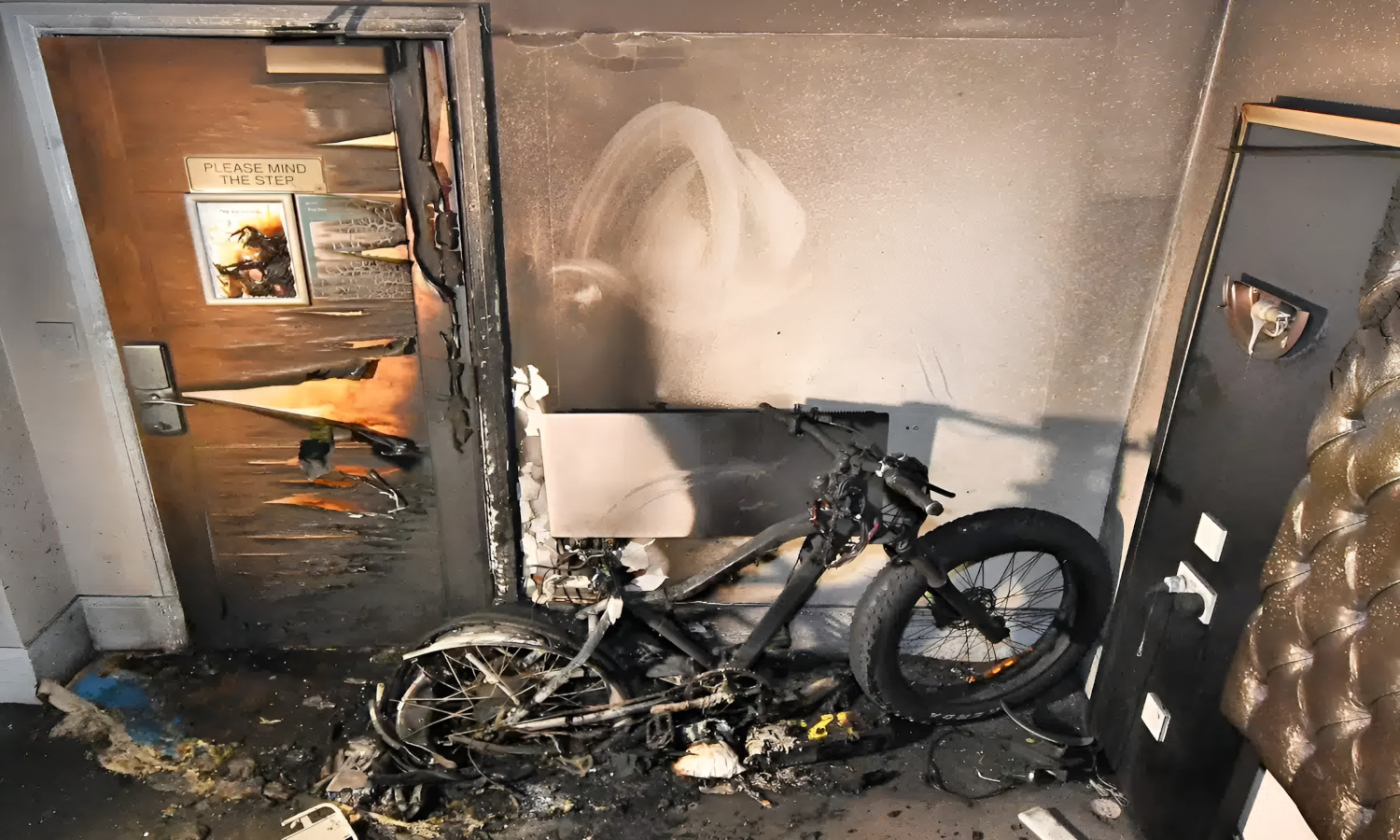
Jahmell Campbell described it as “the loudest explosion I’d ever heard.” His e-scooter caught fire near his grandmother’s front door in Hither Green. He escaped through a window. His grandmother was thrown from a window onto a blanket below. The flat was destroyed.
That’s not an outlier. BBC Verify’s FOI analysis of UK fire and rescue services found more than 2,000 fires linked to e-bikes, e-scooters or their batteries between 2019 and 2025 — 18 deaths, nearly 700 injuries, and a near-20-fold rise in incidents over six years. Nearly half started inside homes. Follow safe charging tips to reduce your risk.
Why These Fires Are Different
A standard house fire gives you minutes. These give you seconds.
When a lithium-ion battery fails, it doesn’t smoulder — it undergoes thermal runaway. Dr Simon Jones of the University of Warwick, who led safety research for the Office for Product Safety and Standards, describes faulty or overcharged batteries venting energy as “flame jets and burning projectiles.” A room can be engulfed in seconds. Toxic fumes kill before the flames reach you.
That’s how eight-year-old Luke Albiston-O’Donnell died in Birkenhead in 2024 — smoke inhalation from an e-bike battery charging inside the family home. Coroner Anita Bhardwaj was unambiguous: “The general public do not appreciate the life-threatening risks” of storing these batteries in domestic properties.
Don’t try to fight a lithium-ion fire. Evacuate. Call 999.
What’s Actually Causing Them
The risk factors are specific — and mostly avoidable.
- Conversion kits bought online without safety certification. Mohsin Janjua, 28, died in Bradford in 2023 after investigators concluded a “catastrophic failure” in a kit bought from China was “more likely than not” responsible.
- Batteries lacking UKCA or CE marking — the minimum legal safety standard for devices sold in the UK.
- Third-party or incompatible chargers pushing wrong voltages into cells not designed for them — understand those charger risks before plugging in.
- Charging overnight, unattended, in hallways or bedrooms — blocking your only escape route.
- Second-hand or modified devices. London Fire Brigade investigations found many of its fires involved exactly these.
The Market Problem Nobody Wants to Fix
Certified e-bikes are generally safe — the problem is what’s undercutting them.
Around 153,000 new e-bikes hit UK roads every year since 2020, according to the Bicycle Association. Reputable retailers sell certified models from roughly £400. Online marketplaces list conversion kits for £150, with no meaningful safety checks attached.
For gig-economy riders managing tight margins — charging intensively in shared housing — the economics push hard toward the cheap end. Bicycle Association policy director Steve Garidis puts it plainly: legitimate retailers are “undermined by illegal and unsafe products often sold through online marketplaces to unsuspecting consumers.”
London Fire Brigade Assistant Commissioner Pam Oparaocha says the brigade is “increasingly concerned by the significant fire risk” posed by second-hand and modified devices. Five Prevention of Future Deaths reports have been filed by coroners since 2023. The government says it is strengthening marketplace responsibilities — progress, reportedly, is ongoing.
What You Can Actually Do
Practical steps exist right now, and they work.
Buy from retailers participating in the Bicycle Association’s “E-Bike Positive” certification scheme — or explore certified bike gadgets as safer alternatives. Always check for UKCA or CE marks — no mark, no purchase. Charge on hard, ventilated surfaces away from exit routes, never overnight, never unattended. If your battery swells, hisses, smells odd, or runs hotter than usual, stop using it immediately.
Certified technology, correctly used, is demonstrably safe. The gap lies in enforcement — and in the choices you make before you ever plug in.