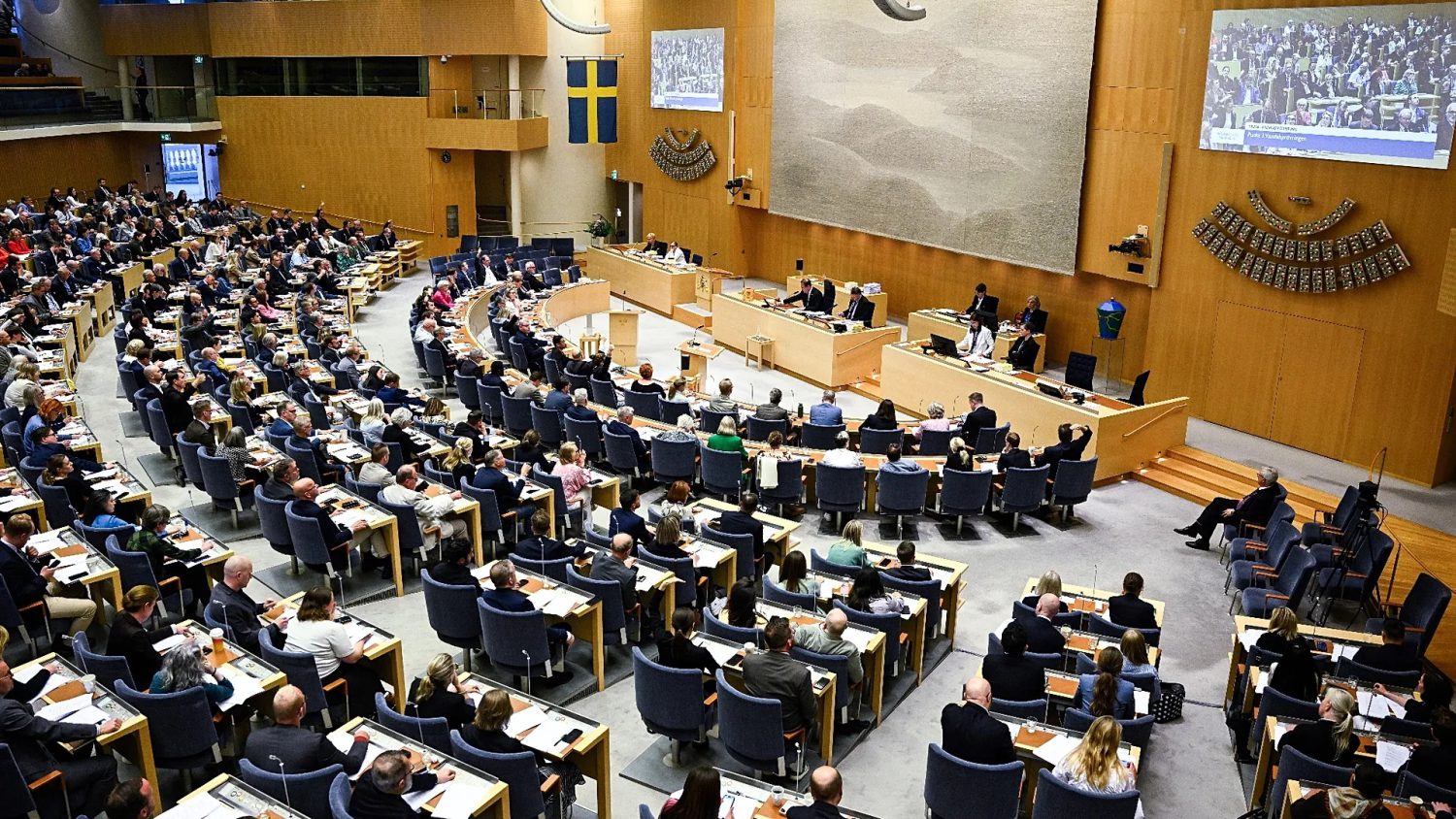
By 2026, roughly 15% of UK parliamentary statements contained at least one AI-generated paragraph. Not in a simulation. Not in a think-tank thought experiment. In the actual House of Commons. Researchers from Chalmers University of Technology in Sweden and Edinburgh Napier University in the UK scanned 13,565 Swedish parliamentary motions and 4,209 British statements filed between 2021 and April 2026. Their finding wasn’t just that AI is writing laws. Not one flagged document disclosed it.
The Numbers Don’t Creep – They Sprint
Sweden’s trajectory tells you everything about how fast this is moving.
- In 2022–23, 0.1% of Swedish motions were fully AI-written; 1.7% contained AI-assisted paragraphs
- By 2025–26: 6.5% fully AI-written; 9.4% — roughly 300 motions — containing at least one AI-assisted paragraph
- In the UK, 2.1% of 2026 texts were classified as predominantly AI-written; 15% flagged at the paragraph level
- Zero. Not one flagged document carried any disclosure of AI involvement
“Regardless of the extent to which AI has been used, there may be risks associated with a lack of transparency.” — Minerva Suvanto, lead researcher, Chalmers University of Technology
The detection method is worth understanding. Researchers trained custom AI detectors — separate models for Swedish and English — on pre-ChatGPT parliamentary texts versus LLM-generated political content, then applied them to documents from 2021 onward. The detectors registered only one false positive per country on pre-AI material. Chalmers professor Mattias Wahde notes that “individual words are not AI words” — the system reads statistical patterns across whole passages, not suspicious vocabulary. It can show where AI influence appears, but cannot identify which tool produced the paragraph.
Meanwhile, Swedish Prime Minister Ulf Kristersson openly admitted in August 2025 that he uses ChatGPT and French chatbot LeChat as a “second opinion” on political questions. Green Party MP Jan Riise said he wasn’t surprised by the study, confirmed his party uses AI for research, and called for mandatory labelling. The gap between those voluntary, high-profile admissions and routine, anonymous AI drafting buried inside legislative documents is where democratic accountability quietly erodes.
The Real Risk Is the Polish
Well-written AI text doesn’t just slip past readers — it can slip past the politicians who submitted it.
Suvanto warns that AI-generated passages are “often very well-written and persuasive,” meaning errors “will not even be spotted by the writers themselves.” That’s a specific kind of danger: polished prose that looks authoritative while concealing flawed reasoning or factual gaps. Europe’s AI regulatory frameworks are still catching up, and separate research has already flagged LLMs spreading election disinformation.
When elected representatives’ voices blend imperceptibly with a language model’s output, the question isn’t just who wrote the speech. It’s whether anyone is accountable for what it says — and until disclosure requirements, audit trails, or watermarking standards arrive, voters have no reliable way to find out.