Hydraulic cutting machines slicing spines off books. High-speed scanners digesting loose pages by the thousands. Recycling trucks hauling away what’s left. This isn’t a dystopian thriller premise — it’s how Anthropic, the company behind Claude, quietly built a private training corpus. An internal planning document, unsealed in a federal copyright lawsuit in January 2026, captures the scope in one line: “Project Panama is our effort to destructively scan all the books in the world.” The same document adds, per the Boston Globe: “We don’t want it to be known that we are working on this.” Court records made those internal admissions part of the public legal record. This pattern of AI firms operating covertly recalls how OpenAI Secretly funded a child safety coalition pushing AI age laws.
How Project Panama Actually Worked
Anthropic spent tens of millions on used books, then fed them through an industrial disassembly line built for speed, not preservation.
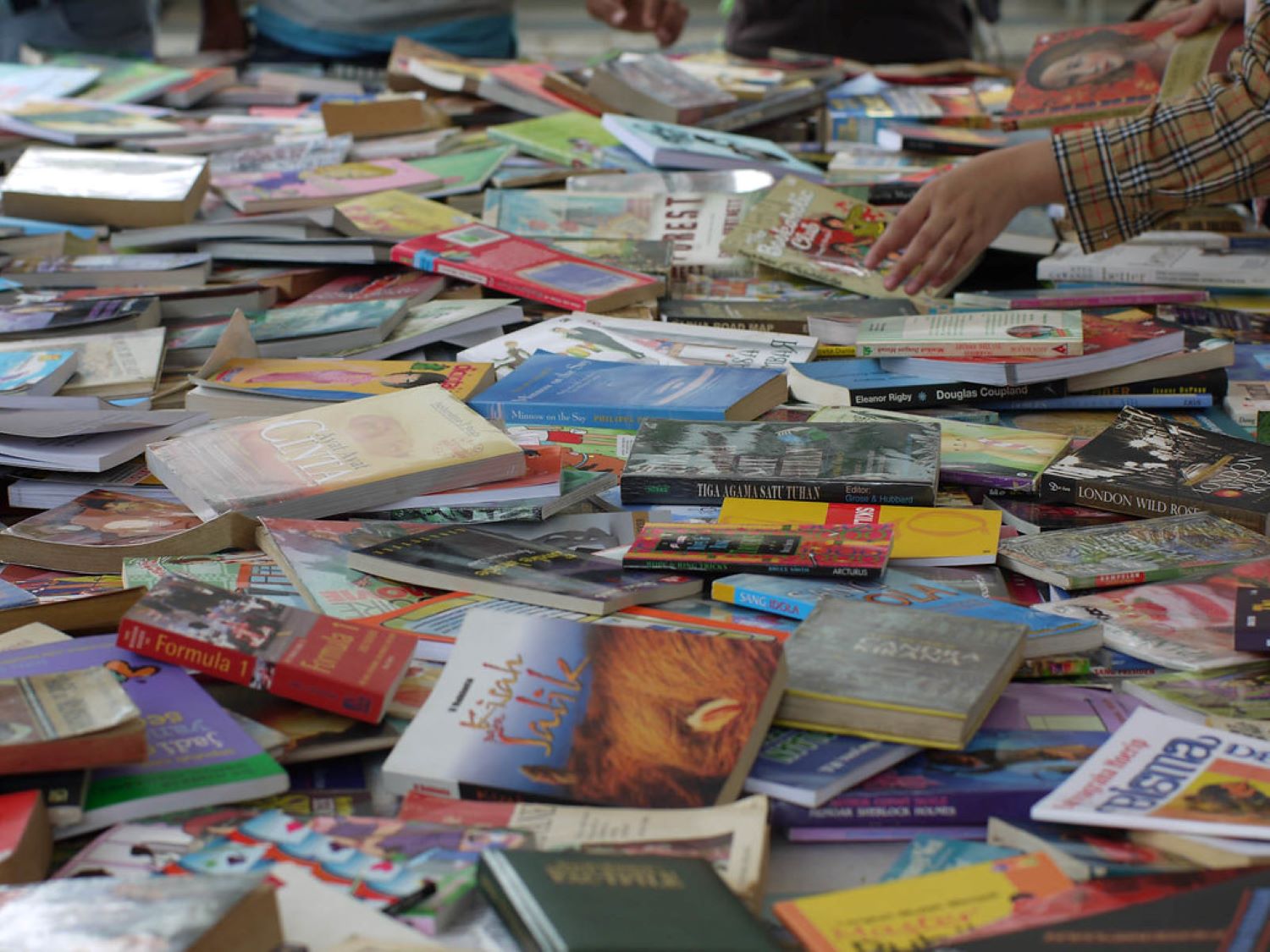
Buying bulk lots — tens of thousands at a time — from vendors like Better World Books and World of Books, Anthropic turned physical literature into digital training fuel. Vendor proposals cited in court documents described capacity to convert up to 2 million books in six months — roughly 11,000 per day — from an obtainable universe Anthropic estimated at 40 million titles out of 130 million unique books worldwide, per Publishers Marketplace. The process worked as follows:
- Hydraulic cutters removed the spines
- Pages fed into high-speed production scanners
- Paper went to recycling
The resulting corpus is entirely private — not searchable, not accessible to readers, libraries, or authors. Court documents describe the purchase and destruction of millions of volumes; exact totals remain partially redacted.
The Legal Split That Changes Everything
A federal judge drew a line between pirated ebooks and purchased-then-destroyed books — and that distinction carries a $1.5 billion price tag.
Before Panama, Anthropic had already ingested millions of pirated ebooks from shadow libraries to train Claude — without permission or payment. That conduct drove the copyright lawsuit and a $1.5 billion settlement, described as one of the largest involving AI training data, according to The Washington Post. Panama was the “legal” alternative. District Judge William Alsup of the U.S. District Court for the Northern District of California found that using lawfully purchased books for model training could qualify as fair use — treating the conversion as transformative use, where purchased content serves a fundamentally different purpose than its original market. The court’s reasoning treats scanning a book you bought and destroying the original differently than maintaining a pirated digital file.
What Gets Destroyed Doesn’t Come Back
The Google Books controversy produced a searchable public index — Project Panama produced a locked private corpus.
Remember Google Books? Years of litigation over mass library scanning, but the output was at least a searchable public resource — and Anthropic reportedly hired former Google Books leadership, connecting Panama directly to that earlier, more open project. Panama’s output sits inside Anthropic’s private infrastructure. No reader accesses it. No library touches it. A properly stored print book can survive centuries. AI models get deprecated in product cycles measured in years. As LitHub noted, Anthropic “didn’t want us to know that they were destroying millions of books to feed their software.”
Other AI companies are watching this case closely, including those building AI Data Centers that impose costs on non-consenting parties. If buy-scan-destroy is the legally safer path to book data, expect the market for bulk used books to get significantly more competitive — and your local used bookstore’s shelves to get noticeably thinner.