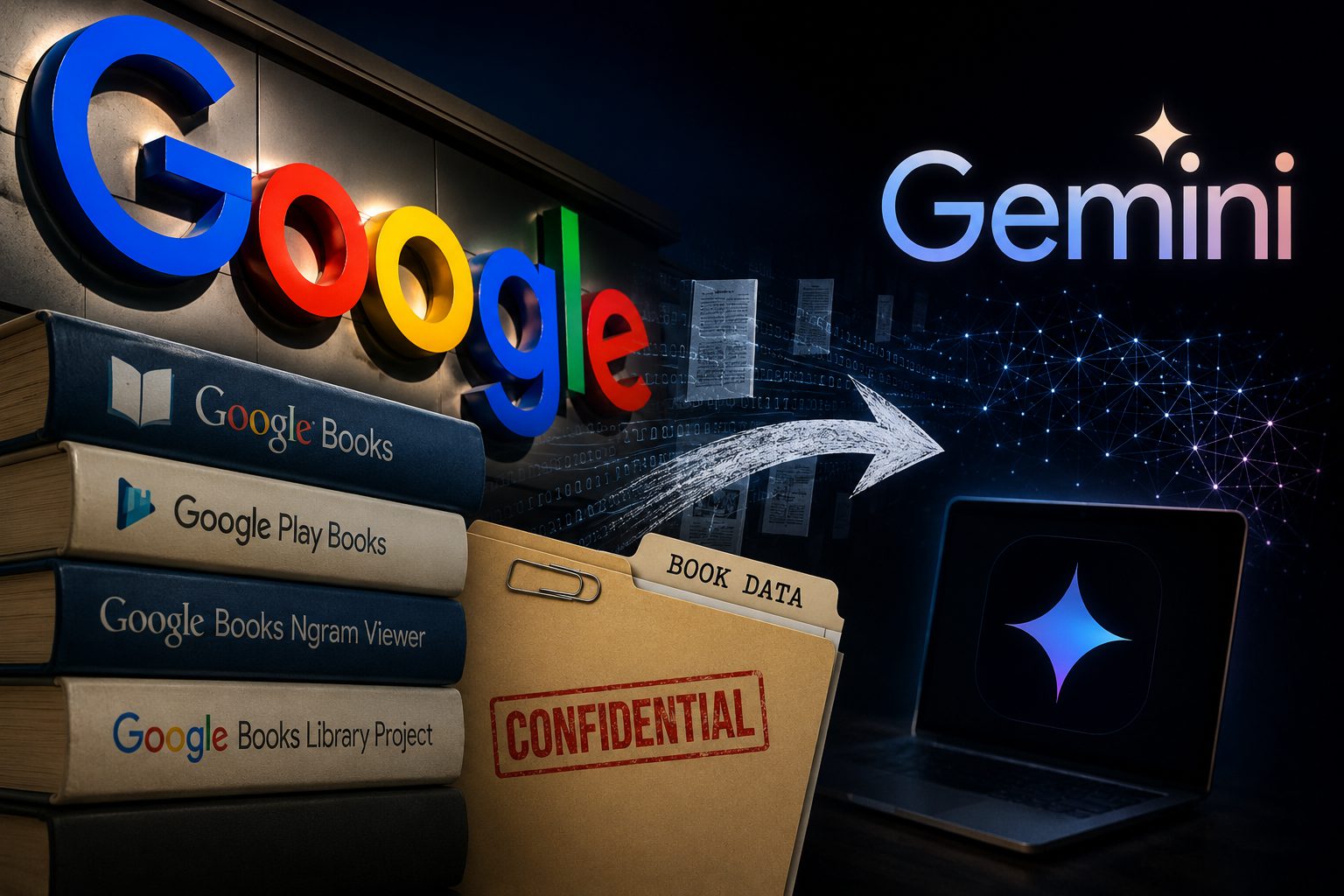
An internal Google document reportedly estimated the company faced $10 billion to $100 billion in potential fines if publishers discovered how their books were actually being used. That number didn’t come from outside lawyers. It came from inside the building. According to a class action complaint filed in federal court, Google’s own internal assessment calculated massive legal exposure from repurposing books supplied through Google Play Books as AI training data — and then allegedly proceeded anyway.
Hachette Book Group, Cengage Learning, Elsevier, and bestselling author Scott Turow are now suing Google, accusing the company of copying millions of books and scholarly works — through Google Books, Google Play Books, and Google Scholar — to train its Gemini AI models. No permission. No payment. The complaint calls it “one of the most prolific infringements of copyrighted materials in history.”
The Bait-and-Switch: Scope-Limited Programs, Unlimited Ambition
Publishers allege Google took texts entrusted for search snippets and retail sales and fed them into a billion-dollar AI competitor.
The core allegations are specific and pointed:
- Google repurposed books from “scope-limited” programs — Books (search snippets), Play Books (retail), Scholar (research indexing) — for AI training those agreements never authorized
- The complaint claims Google downloaded texts from pirate sites including Z-Library, OceanofPDF, and WeLib, and scraped content from behind paywalls and subscription platforms
- Google allegedly stripped copyright-management information — author names, copyright notices — from training datasets, which plaintiffs argue conceals infringement and violates separate legal protections
- Named titles include N.K. Jemisin’s The Fifth Season and Lemony Snicket’s Who Could That Be at This Hour?
- Plaintiffs seek statutory damages, a permanent injunction, destruction of unauthorized copies, and full disclosure of every title used
The original Google Books settlement authorized displaying searchable snippets. It did not authorize feeding entire works into a system that can reportedly generate a 100-page murder mystery in 20 minutes for roughly $0.39. That’s the concrete market-harm argument. Publishers aren’t simply upset about copying — they’re arguing Gemini can now substitute for the very books it consumed.
A Pattern, Not an Incident: The Broader AI Copyright War
The same publishers are simultaneously suing Meta, while Anthropic has already settled a similar case for a reported $1.5 billion.
Several of these plaintiffs filed a parallel class action against Meta and Mark Zuckerberg in May 2026, alleging Llama models were trained on torrented books from pirate sites — language nearly identical to the Google complaint. Anthropic reportedly agreed to a $1.5 billion settlement over similar claims involving its Claude chatbot, a pattern reminiscent of how OpenAI Secretly Funded efforts to shape policy outcomes quietly. Courts have delivered mixed results; some author suits against Meta lost key copyright claims. Fair use in AI training remains genuinely unsettled law.
Google “abandoned” its “Don’t be evil” motto to maintain online dominance through AI — from the class action complaint
The stakes extend well beyond any single verdict. If publishers prevail, AI companies face expensive licensing overhauls, potential data destruction orders, and slower model development across the industry. If Google wins, training on copyrighted content without compensation could effectively become normalized practice — reshaping the bargaining power between creators and platforms for years. Your favorite author’s next book might compete not just with other writers, but with a model trained on their previous ones. Google has not publicly commented on this specific filing.