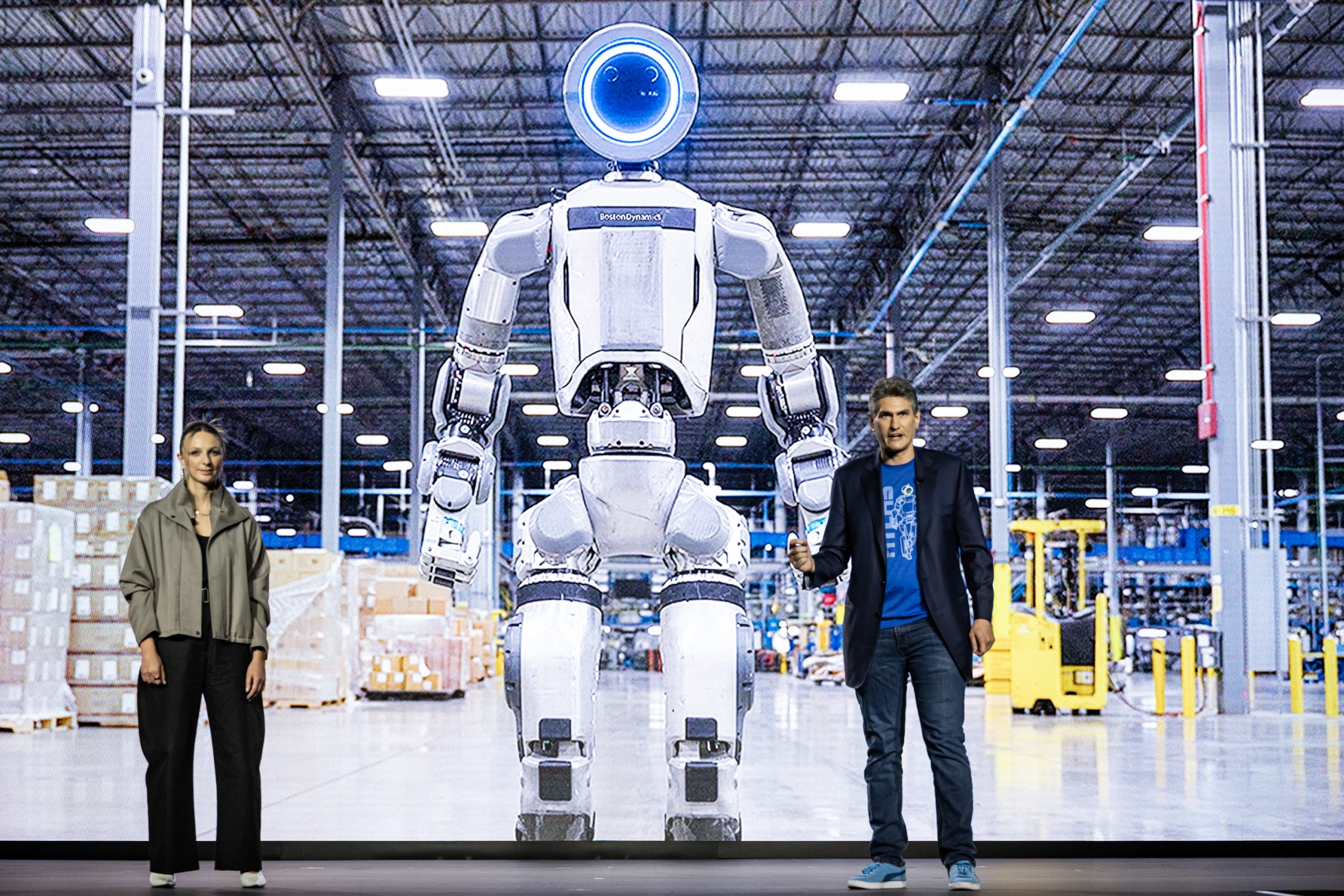
A Hyundai factory in South Korea just ground to a partial halt. Not over safety gear alone. The central sticking point reads like science fiction: whether Hyundai can deploy Boston Dynamics’ Atlas robot without union consent. Workers are withholding four hours of labor per day after negotiations collapsed, and the strike also encompasses wage and bonus demands — but the robot question is what makes this moment unlike any before it. Industry estimates suggest the stoppage could affect roughly 5,000 vehicles and cost more than 200 billion won in lost sales.
Why South Korea, Why Now
South Korea’s uniquely dense industrial base makes it the most likely early flashpoint for automation-related labor conflict anywhere in the world.
This matters well beyond one factory. South Korea has among the highest industrial robot adoption rates globally, and if automation-related labor conflict is going to erupt somewhere first, this is the spot. Hyundai is a major stakeholder in Boston Dynamics. Atlas demos aren’t theoretical anymore. And the company’s 2028 deployment target is aimed at the nonunionized Metaplant in Georgia — a detail the Korean union has clearly noticed.
Negotiate First: Why the Union Moved Before the Robots Did
The union’s pre-emptive strategy is less about blocking robots outright and more about locking in the rules before it’s too late to negotiate them.
The union’s demands go well beyond the usual playbook:
- Job security guarantees explicitly tied to AI and automation
- A shift from hourly pay to a fixed monthly salary
- A higher retirement age
- Larger bonuses linked to Hyundai’s profitability
- A formal labor-management agreement before any humanoid deployment
Hyundai’s official position is that Atlas is meant to assist, not replace, human workers. That’s a company line worth scrutinizing. Back in January, the union warned of potential “employment shocks,” according to Reuters. Humanoid robots are fundamentally different from the welding arms and cobots that have shared factory floors for decades — they’re built to operate in human-shaped workspaces and perform flexible tasks that traditional industrial robots simply can’t replicate.
The union’s strategy is essentially the labor equivalent of changing your privacy settings before the app forces an update you didn’t ask for. Secure the precedent now, while leverage still exists.
If Hyundai accepts consultation rights or deployment limits, every automaker union on earth gets a template to work from. Industry observers note, however, that many humanoid systems remain demo-stage prototypes, and factory-grade durability at production speed is still unproven. The technology may not be ready — but the negotiating window most definitely is.
The real question isn’t whether Atlas can sort parts on a workplace safety-compliant factory floor. It’s whether the rules written in a South Korean bargaining room end up shaping how automation gets negotiated everywhere else — including in the plant down the road from you.
Clarification:
Editor’s note (July 21, 2026): Hyundai reached out to us to clarify with the Statement below:
To clarify, the union’s current demands include compensation-related issues, including wage increases, bonuses, and retirement age extension. Potential deployment of robots in Korean production facilities is not part of the current labor-management discussions. Our current focus is on deployment at our Metaplant in Georgia, where Atlas will support production operations. Decisions about future Atlas deployment at other facilities will be made thoughtfully, in accordance with local operational needs, and in dialogue with the employees and workforce representatives at those sites.
While the union has previously expressed broader concerns about automation and future employment, it would be inaccurate to characterize the current strike as being caused by, or primarily driven by, Atlas.