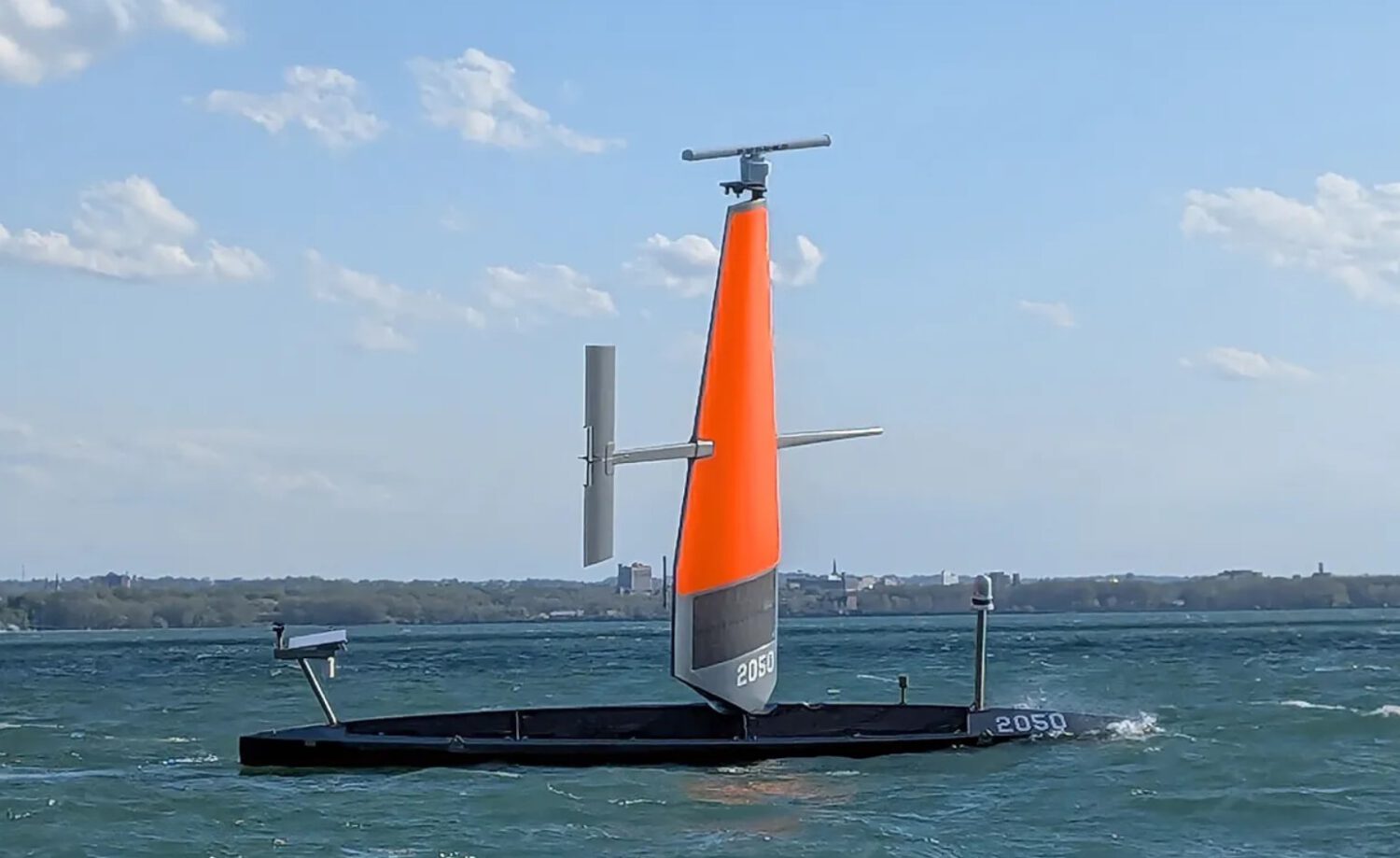
Sarnia Mayor Mike Bradley spotted something in the St. Clair River that he described as looking “like something from Mars.” He said he had not been warned it was coming and learned what it was through media coverage, not from Canadian or U.S. authorities.
The vessel was a Saildrone Voyager, an unmanned surface vehicle operated by the private U.S. company Saildrone under a $15.5-million U.S. Coast Guard contract. Sixteen Voyagers are covered by that contract, with six assigned to the Great Lakes.
What These Vessels Carry
The Voyagers carry a sensor package capable of detecting vessels that never appear on standard maritime tracking systems.
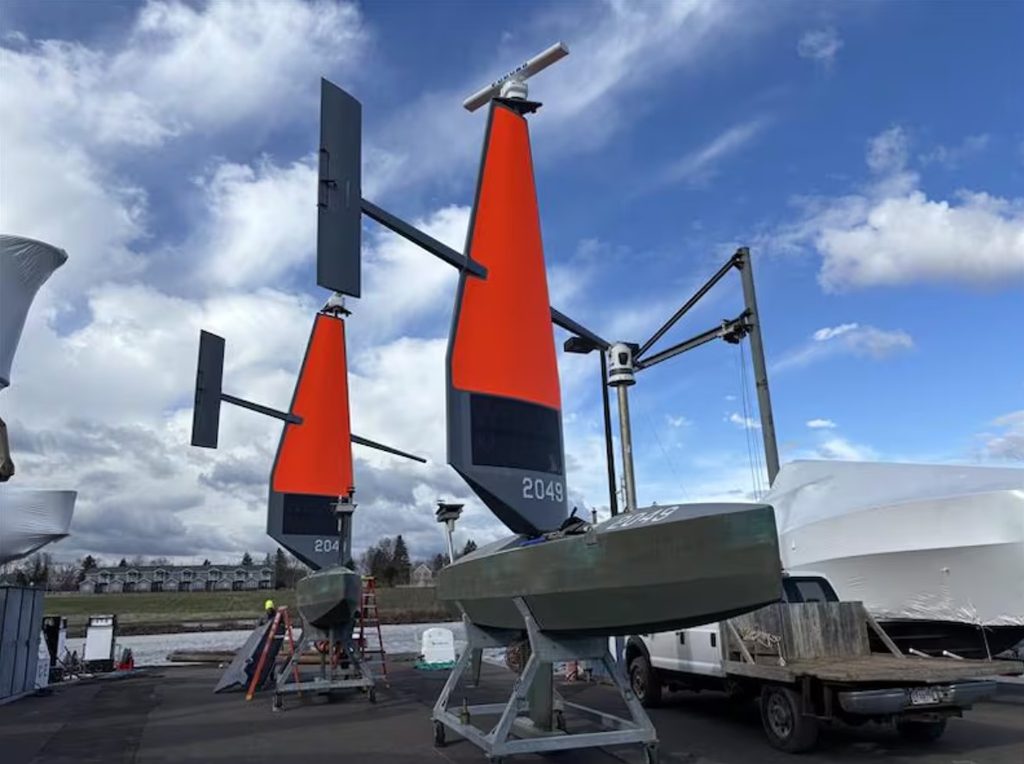
Wind-powered and capable of autonomous operation, the Voyagers are equipped with 360-degree high-resolution cameras, radar and automatic identification systems. Coast Guard personnel can monitor their feeds remotely and manually redirect the vessels when needed.
Radar and cameras can detect vessels that do not voluntarily broadcast their location, extending the program’s reach beyond boats already visible on standard tracking systems.
The Coast Guard’s Stated Purpose
U.S. officials describe the vessels as flexible safety tools, not platforms aimed at Canadian communities.
The Coast Guard announced the Great Lakes deployment in May, framing it as a maritime awareness initiative. The stated goals include supporting emergency-response planning, identifying illicit activity and improving border monitoring.
Lt. Junior Grade Samuel Rodriguez Garcia described the vessels to CBC as tools for situational awareness: “Think of them as mobile cameras that kind of help us gain a better insight into what’s going on live on scene.”
The Coast Guard told CBC that footage was not being recorded. It also acknowledged that U.S. and Canadian agencies, including law enforcement, could potentially access the technology through appropriate channels.
What Remains Unresolved
The assurance about recording settles one question while leaving several others publicly unanswered.
That statement does not resolve questions about sensor-data retention, technical logs, contractor access or who can request a live feed. It also does not establish whether any bilateral consultation with Canada took place before deployment.
York University researcher Petra Molnar told CBC the arrangement raises accountability concerns because a private company is secretly tracking users managing data on behalf of a government.
Bradley’s Objection
The Sarnia mayor argues the program’s risks extend well beyond its stated purpose today.
Bradley’s concern is direct: “We have thousands of boaters on the river St. Clair, Lake Huron, Lake Erie, and now they’re going to be photographed and watched.” He argues that assurances about how the technology is used today may not bind future administrations or constrain expanded uses as the program matures.
That concern arrives with context. U.S. Border Patrol testimony in June indicated that drug seizures and arrests of undocumented immigrants along the U.S.-Canada border were down, raising questions about the security rationale behind the deployment’s scale.
A Bureaucratic Circle From Ottawa
When CBC sought answers from Canadian federal agencies, each one pointed to the next.
The Canadian Coast Guard said it works with its U.S. counterpart but is not involved in the Saildrone program. Public Safety Canada redirected questions to the Canada Border Services Agency; CBSA said the RCMP is responsible for enforcing Canadian legislation on the water between ports of entry.
No Canadian agency identified in the reporting said it was involved in the program or claimed a role in overseeing it. Bradley has called on the federal government to object and said municipalities should have been informed if Ottawa knew about or accepted the deployment.
Whether the drones are capturing anything they should not is unverified at this point. What the available reporting does establish is that surveillance-capable vessels are operating in shared border waters, Bradley says he was not informed before deployment, and no Canadian agency has publicly identified itself as responsible for the program.