Single-junction solar cells have a well-established theoretical efficiency ceiling of roughly 33%, defined by the Shockley-Queisser model under specific idealized assumptions. Researchers at the Institut de Ciències Fotòniques (ICFO) in Barcelona have now demonstrated a laboratory mechanism that, under the right conditions, could push that number significantly higher.
The result, published in Energy & Environmental Science, is a proof of mechanism. It is not a product announcement.
What the Team Actually Built
Optical engineering, not new chemistry, is the key lever in this approach.
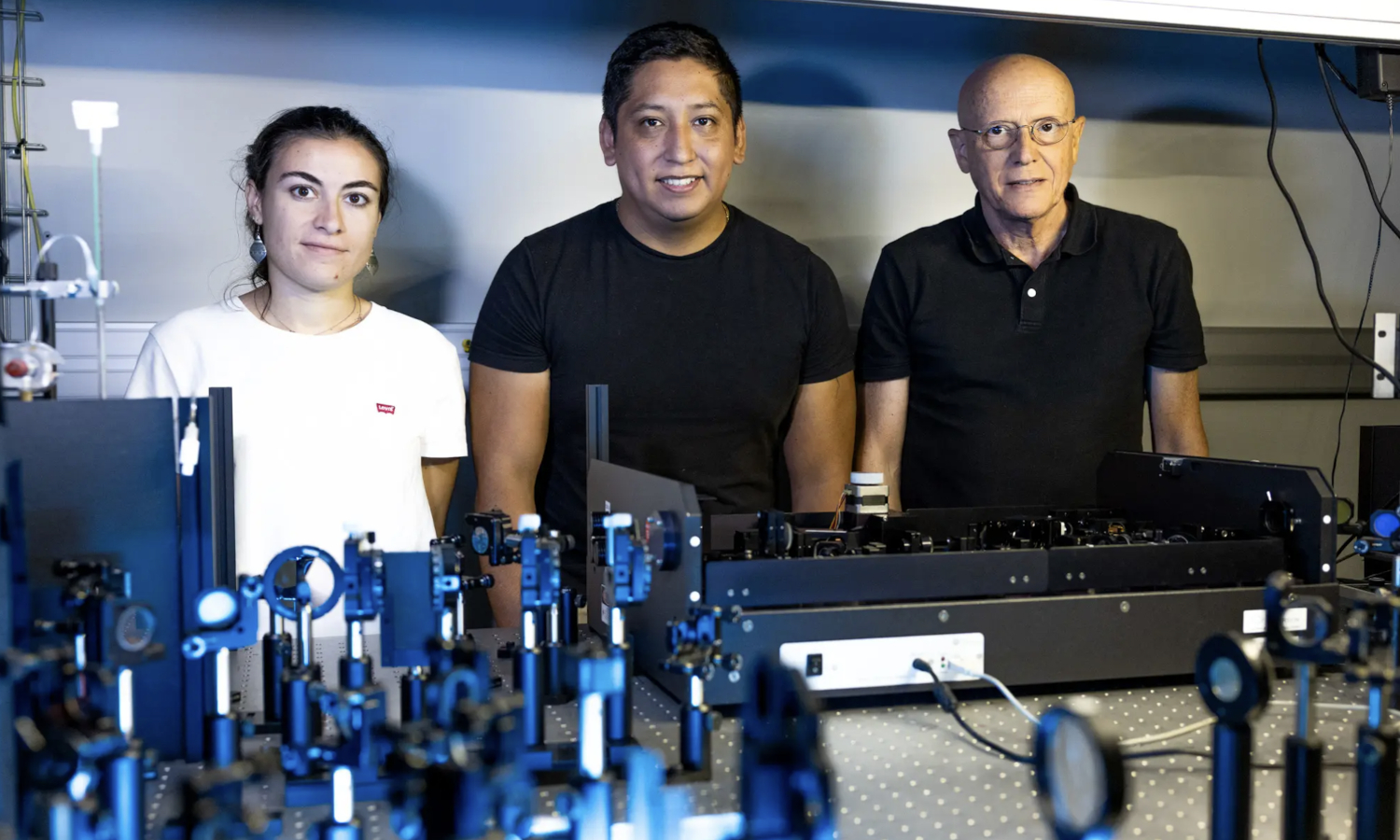
Led by first author Dr. Francisco Bernal Texca and Professor Jordi Martorell of ICFO and the Universitat Politècnica de Catalunya, the team converted an inverted organic solar cell into a light-controlling optical cavity. Collaborators included Chiara Cortese, Dr. Mariia Kramarenko, and Dr. Quan Liu.
The cavity uses reflective silver electrodes at the front and rear of the cell to suppress photon emission at wide angles, while still allowing incoming sunlight to pass through efficiently.
The target is a specific intrinsic loss called Boltzmann losses: absorbed solar energy that escapes the cell as re-emitted photons rather than becoming usable electricity. Restricting the directions in which those photons can leave raises the cell’s open-circuit voltage, which measures the electrical potential the device can deliver when no current is drawn.
Why the Physics Matters
ICFO’s work shows that a loss mechanism once treated as a fixed cost can be reduced through optical design.
The standard efficiency ceiling already accounts for certain unavoidable losses. What the team demonstrated is that Boltzmann losses can be reduced through optical engineering rather than accepted as unchangeable.
Narrowing the emission cone to closely match the angular cone of incoming sunlight is the key condition. ICFO says that, if achieved, single-junction cells could in principle approach 43% efficiency. That figure is a theoretical projection tied to how fully the emission can be controlled, not a result the experiment itself achieved.
Martorell noted that the underlying concept is not limited to organic photovoltaic materials and could apply across different solar technologies. Performance, durability, manufacturability, and cost would each need separate validation for any new material.
What This Research Does Not Show
The experiment demonstrates a mechanism in a laboratory cell, not a roadmap to near-term commercial products.
The experiment used a PM6:Y6 organic solar cell blend. That is a different material from the silicon modules covering most rooftops and utility-scale solar farms today, and the results should not be read as a direct performance claim for silicon.
Translating a laboratory optical strategy into a commercial product requires solving large-area manufacturing, long-term outdoor stability, encapsulation, and cost scaling. The published research does not demonstrate that any of those challenges have been resolved.
No 43%-efficient solar panels exist commercially, and nothing in ICFO’s announcement suggests they are arriving soon.
The Longer-Term Picture
If the approach eventually transfers to real-world devices, the benefits would matter most where space is the binding constraint.
Higher efficiency is most valuable in space-limited applications: rooftops, vehicles, portable power systems, and dense solar installations. More electricity from the same area means less material per watt and potentially lower deployment costs over time.
Those benefits are long-term and depend on manufacturing economics and device lifetime, not efficiency numbers alone. ICFO’s result earns its significance by showing the mechanism works at the cell level. Proving it scales is still the harder work ahead.