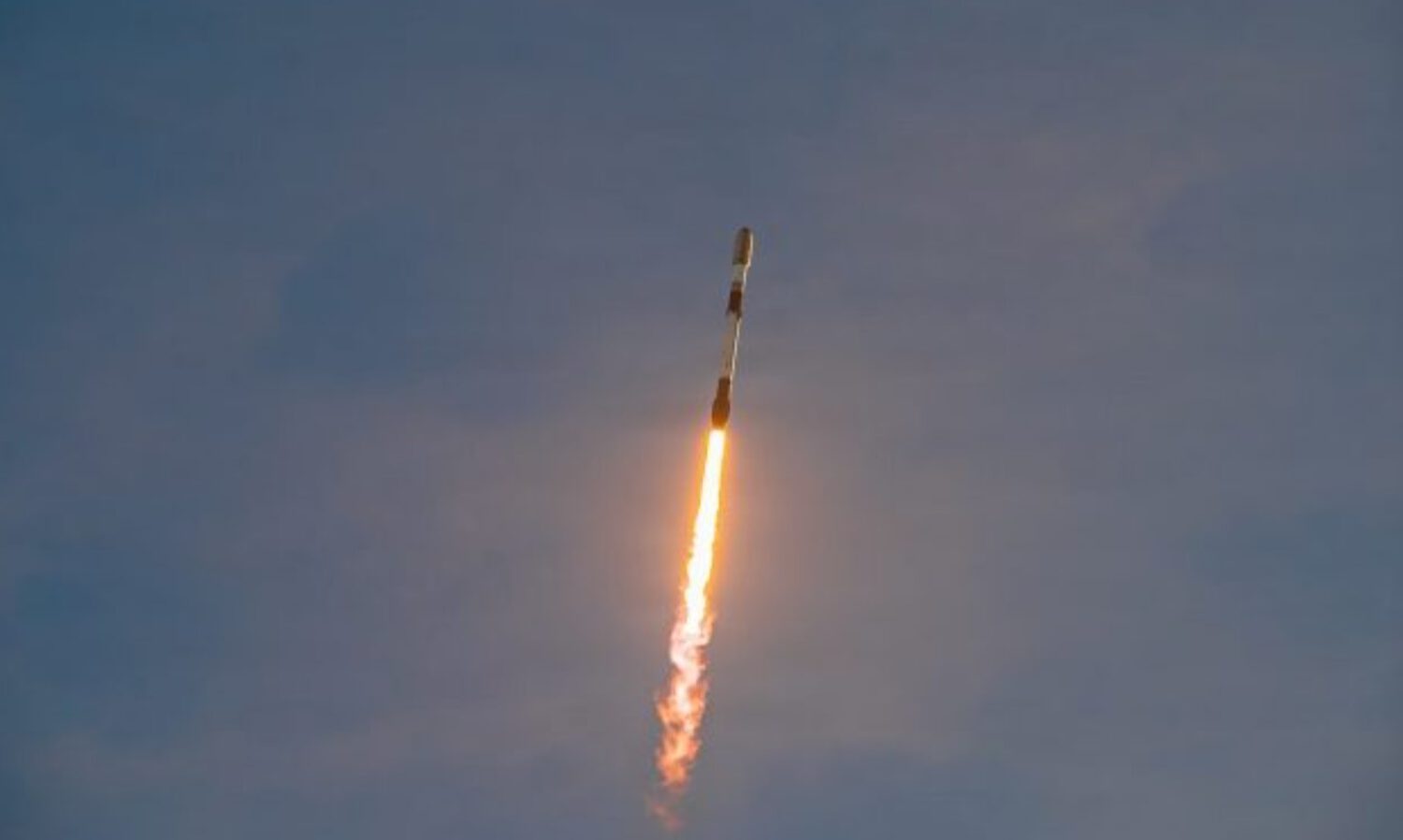
On Oct. 20, 2026, a Falcon 9 rocket lifted off from Cape Canaveral Space Force Station carrying SpaceX’s Starfall reentry capsule as part of the Bandwagon-5 rideshare mission. Inside were AFRL-developed agile cargo pods carrying Meals Ready-to-Eat, bottled water, emergency and survival equipment, spare batteries, and a satellite-communications-enabled tracker. After the orbital mission concluded, Starfall splashed down in the Pacific Ocean and was recovered.
What the Test Was Actually Measuring
Survivability data, not supply tonnage, was the actual deliverable.
The mission’s core objective was not maximum payload delivery. It was data: specifically, sensor readings tracking temperature, shock, and vibration that cargo experiences during launch, spaceflight, atmospheric reentry, and ocean recovery. AFRL also fit-checked a UNI-PAC III life raft inside the capsule to assess it for a possible future demonstration.
The test was designed to determine whether representative cargo could withstand the stresses of the mission and remain usable on the other end. Recovery of the cargo pods demonstrated that the pods and their contents survived launch, spaceflight, reentry, and splashdown. That environmental data, not the supplies themselves, is what advances the Rocket Cargo program.
The Vehicle Doing the Work
Disk-shaped and roughly 10 feet across, Starfall carries up to about 2,200 pounds of cargo.
According to secondary reporting, the capsule uses a heat shield for atmospheric reentry, compressed-gas thrusters for attitude control, and parachutes to slow its descent before splashdown. This test emphasized collecting cargo-environment data rather than demonstrating maximum delivery mass. The design, as demonstrated, is built for ocean recovery rather than precision delivery near a military position.
Why the Pacific Theater Makes This Relevant
For a theater defined by distance and dispersal, faster resupply is a strategic problem worth solving from orbit.
AFRL’s Rocket Cargo program is studying whether large commercial rockets can rapidly move military materiel to any point on Earth, reducing dependence on conventional transport aircraft and long supply chains. Vast distances, limited forward infrastructure, and exposed supply routes make the Pacific a relevant laboratory for that concept. AFRL’s longer-term ambitions reportedly include delivery capacities measured in tens of tons per launch. That scale could eventually support ammunition, vehicles, or heavy equipment. It remains a future objective, not a demonstrated capability.
What This Test Does Not Prove
An engineering milestone and a combat logistics solution are separated by years of development.
A Pacific Ocean splashdown is materially different from a controlled delivery near an active military unit. The roughly 2,200-pound payload capacity reported for Starfall reentry capsule is useful for urgent supplies, sensors, or communications gear, but falls well short of meaningful ammunition or vehicle resupply. Significant challenges remain before Rocket Cargo becomes operationally viable. Those include launch availability, terminal guidance, landing-site preparation, airspace and maritime safety, cost, and the vulnerability of fixed launch infrastructure.
What Comes Next
Surviving orbit was step one; landing where it matters is the real test.
Sierra Space is pursuing a related concept with its Ghost reentry vehicle, which has completed atmospheric drop tests from as high as 68,500 feet according to secondary reporting, though it has not demonstrated orbital delivery. For Rocket Cargo specifically, future tests will need to prove controlled land-based delivery, repeatable operations, accurate terminal guidance, and higher payload masses before the concept moves beyond the research phase. The Oct. 20 test demonstrated recovery of representative cargo after an orbital mission. Getting it to the right place, at the right time, in usable condition, is the harder problem still ahead , much like the deployment challenges faced by Snake Robots navigating complex field environments.