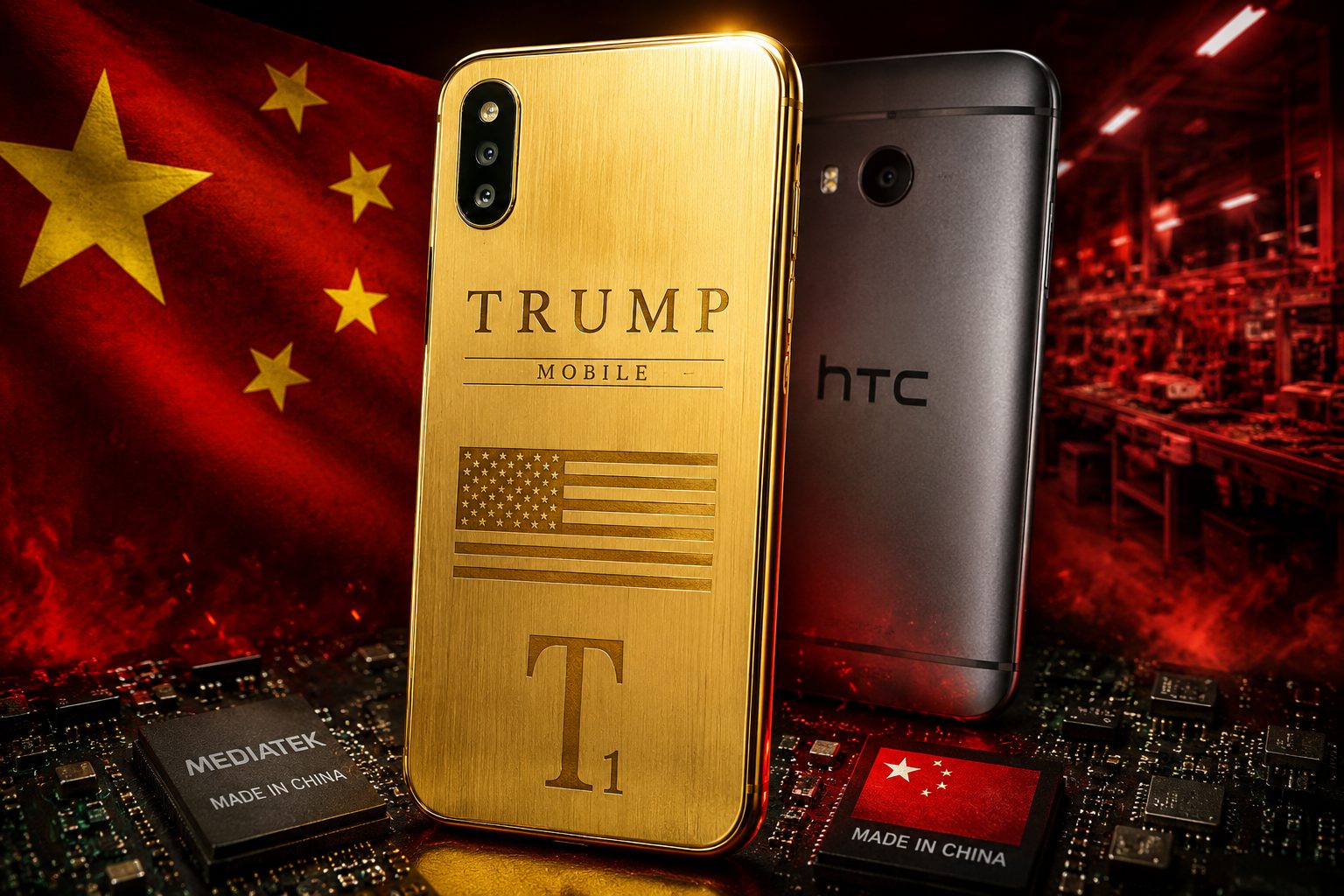
Experts examining the Trump Mobile T1 discovered something awkward: the device looks “almost identical” to the HTC U24 Pro, according to NBC News analysis. Your $499 purchase gets you the same 6.8-inch display, Snapdragon 7-series processor, 12GB RAM, and identical camera layout featuring 50MP main, 8MP ultrawide, 50MP telephoto, and 50MP selfie sensors. Even the gold exterior design language matches the HTC model beat-for-beat.
The similarities run deeper than coincidence suggests. Multiple tech outlets confirmed matching Bluetooth 5.3 specs, 512GB storage options, and Android 15 software configurations. If you’re wondering what separates a $499 Trump phone from its apparent hardware twin, the answer might just be the logo.
“Assembled in USA” Doesn’t Mean What You Think
Supply chain reality reveals the complexity behind “American-made” smartphone claims.
That “proudly assembled in the U.S.“ box text carries less weight than marketing suggests. Industry analysts expect the device relies heavily on overseas manufacturing and imported components—because American smartphone production capacity remains virtually nonexistent for key parts. Your AMOLED display, camera modules, and face-unlock sensors almost certainly originated in Asian factories, regardless of final assembly location.
The distinction between “assembled” and “manufactured” matters more than most buyers realize. True domestic smartphone production would require rebuilding entire supply chains that migrated to Asia decades ago. Like trying to recreate a TikTok dance from memory, the moves look familiar but something essential gets lost in translation.
Premium Pricing for Familiar Hardware Raises Value Questions
At $499, buyers pay a significant markup for what appears to be rebranded foreign technology.
The Trump Mobile’s pricing strategy becomes questionable when you consider the hardware lineage. You’re essentially paying premium mid-range prices for what appears to be a modified version of existing Taiwanese technology. The HTC U24 Pro’s import pricing suggests the underlying hardware costs significantly less than the Trump-branded version’s retail price.
Without independent teardown confirmation, the exact component sourcing remains opaque. But the pattern emerging here—expensive branding applied to familiar overseas hardware—mirrors broader issues with “American-made” tech claims that deserve scrutiny before you swipe your credit card.