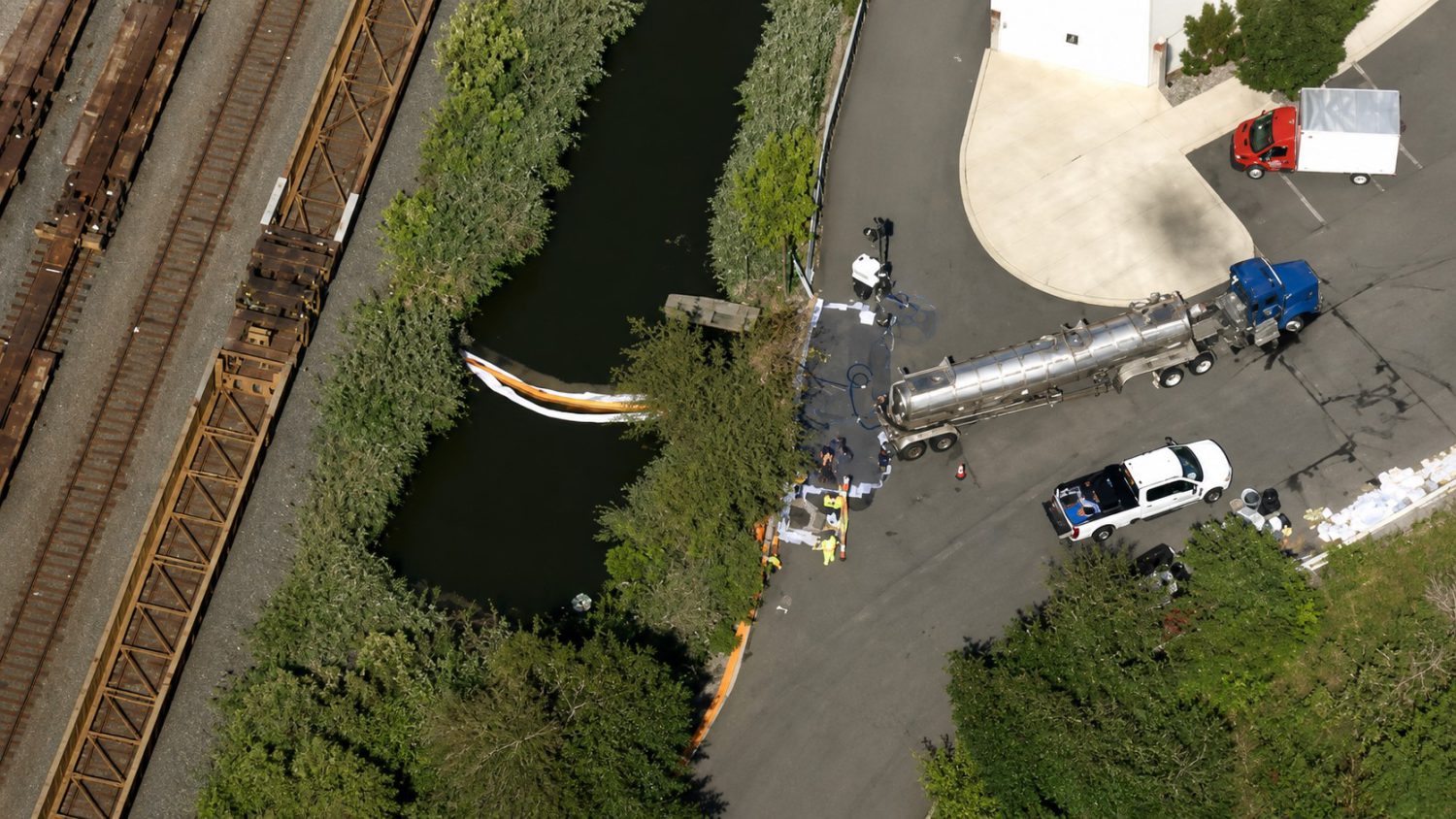
The facility runs without interruption, so AI workloads never miss a beat. Last Friday evening, its automated fueling system did something the operators almost certainly did not intend: it kept calling for oil until somewhere between 5,000 and 5,500 gallons of No. 2 diesel had poured into Anderson Creek, a tidal tributary cutting through the New Jersey Meadowlands. The question this spill forces is not just what went wrong at one building in Secaucus. It is what the industry has left unexamined in the rush to build, a question that touches broader concerns about AI infrastructure and its impact on surrounding communities.
A Tidal Marsh Absorbs the Overflow
Thousands of gallons of diesel reached a protected wetland before anyone could stop it, and early assurances of containment deserve careful scrutiny.
The NJ DEP estimates approximately 5,000 gallons were discharged from a storage tank at Equinix’s NY2 data center on Hartz Way in Secaucus. Hackensack Riverkeeper and environmental advocacy groups cite at least 5,500 gallons entering Anderson Creek, reflecting a slightly higher count than the state’s official figure.
DEP spokesperson Larry Hajna says the fuel stayed within a narrow section of Anderson Creek and did not reach the Hackensack River’s main stem. No drinking water intakes are immediately affected.
What “contained” means inside a tidal wetland deserves scrutiny. Anderson Creek runs through roughly 52 acres of tidal marsh, featuring smooth cordgrass habitat that stabilizes sediment and supports the base of the local food web. No. 2 diesel carries toxic petroleum compounds that harm fish, shellfish, and aquatic invertebrates, with eggs and larvae especially vulnerable.
No wildlife deaths have been confirmed as of the latest reports. Hackensack Riverkeeper Bill Sheehan cautions that it is too early to claim confidence about ecological damage, noting that diesel causes serious harm without triggering a visible fish kill and that early assurances should be treated carefully until monitoring data are in.
The Hackensack Meadowlands have spent decades recovering from industrial abuse, with community organizations and regulators working to restore what heavy industry spent generations degrading. A data center’s fuel system overflowing into that landscape carries a weight that the numbers alone do not capture.
A Machine That Could Not Stop Ordering Its Own Fuel
A reported computer glitch in an automated fueling system reveals a dangerous blind spot in how AI infrastructure is built and overseen.
Data centers keep large diesel reserves onsite for one straightforward reason: backup generators must fire instantly when the grid fails, and AI and cloud workloads do not tolerate interruption. As AI infrastructure scales up, those reserves grow larger and fuel deliveries become more frequent, raising the stakes of any failure in the systems meant to manage them.
The reported cause here is a computer glitch. The automated fueling system was reportedly “calling for oil,” according to Hackensack Riverkeeper Bill Sheehan and local officials, and discharged without stopping. Equinix says the root-cause investigation is ongoing and has committed to a full analysis. The company pledged to resolve the situation “quickly, transparently, and responsibly,” language worth reading alongside the fact that thousands of gallons reached a protected wetland before anyone intervened.
Activist Ben Dziobek of the Climate Revolution Action Network stated that pollution from data centers “extends far beyond municipal borders,” tying the facility cluster concentrated in Secaucus directly to AI expansion and fossil-fuel backup risk. There is a particular irony in a system sophisticated enough to support AI inference at scale lacking an adequate check on its own fuel overflow.
New Jersey recently enacted a law requiring data centers to report energy and water use twice yearly to the state Board of Public Utilities, including information about on-site and backup power supplies. The law covers reporting on backup power, but the safety and risk-management standards for diesel stored near sensitive ecosystems are not directly addressed. This spill makes a credible case that they should be.
What Better Looks Like
Stricter oversight of fuel systems near wetlands is achievable without halting the AI buildout.
Stricter siting requirements near wetlands are achievable. So are independent interlocks on automated fuel systems and explicit inclusion of backup fuel risk management in New Jersey’s reporting framework. None of those changes require stopping AI infrastructure expansion. They require treating diesel storage near sensitive ecosystems with the same engineering seriousness as server uptime. Whether regulators and operators move on that before the next overflow is the actual test.