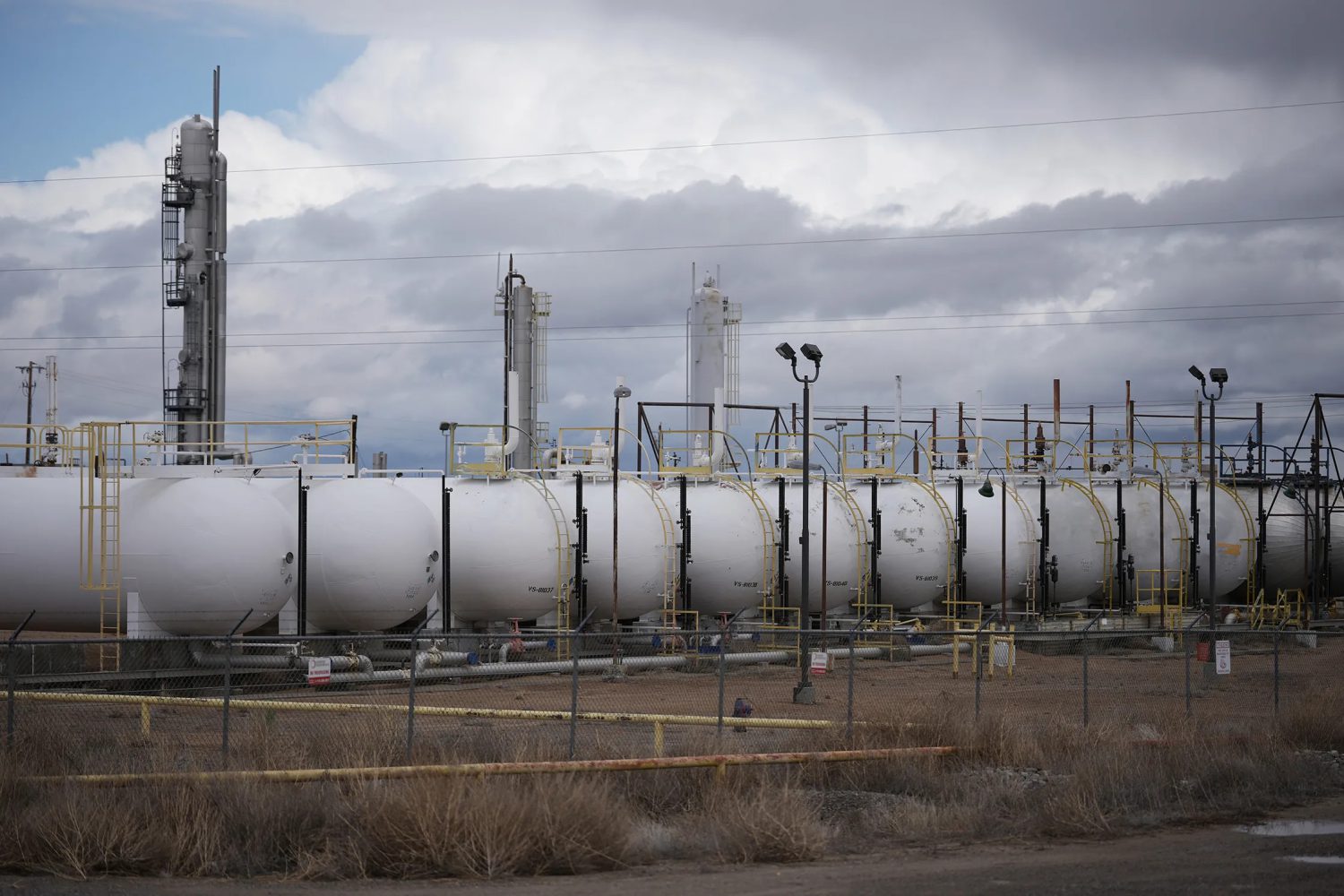
Gas capacity tied to US AI data centers jumped from roughly 4 GW in early 2024 to more than 189 GW by mid-2026, according to Global Energy Monitor. That’s not a rounding error—it’s a near-fiftyfold increase in two years. AI workloads are power-hungry in ways that make cloud computing look like a desktop screensaver, and the industry’s answer isn’t a grid upgrade. It’s private gas plants, built fast and kept off the public grid.
Behind the Server Rack, a Gas Plant
Tech companies are bypassing the public grid entirely—building private generation on-site rather than waiting years for grid interconnection.
Grid interconnection queues can stretch years. Gas turbines can be installed in months. So tech companies are increasingly building behind-the-meter generation—private plants either on-site or directly wired to their facilities, bypassing the public grid entirely. In March 2026, the Trump administration formalized this logic with the Ratepayer Protection Pledge: Amazon, Google, Meta, Microsoft, OpenAI, Oracle, and xAI all signed a voluntary “build, bring, or buy your own power” commitment. It’s nonbinding, fuel-agnostic, and light on enforcement details—but it sent a clear signal.
Reported figures from Global Energy Monitor illustrate how quickly the pipeline has expanded:
- Gas capacity for US data centers: ~4 GW (early 2024) → 97 GW (end of 2025) → 189+ GW (mid-2026)
- The US now leads the world in gas power development at 252 GW total in the pipeline, per Global Energy Monitor
- Texas alone has ~80.6 GW of gas in development, with nearly 40 GW aimed directly at data centers
- At least 46 US data-center sites have planned behind-the-meter generation; roughly 75% of known equipment specs use natural gas
- Some individual facilities hold permits allowing annual greenhouse-gas emissions larger than many mid-sized countries
“The US gas power build-out is tied directly to the data center buildout—you can’t talk about one without the other.” — Jenny Martos, Global Energy Monitor analyst, as reported by WIRED
China Picked a Different Bet
While the US races toward gas, China is quietly building its AI infrastructure on a foundation of solar and hydropower.
The contrast is hard to ignore. The US is ordering fast food—quick, cheap, consequences deferred—while China is meal-prepping. Chinese data centers are oriented heavily around solar and hydropower, often sited in rural regions with surplus renewable generation. Brookings fellow Kyle Chan, speaking to WIRED, acknowledged the US gas approach “may make sense economically” short-term, but warned that “over the long term, you pay a price—obviously, in terms of emissions, but also in terms of not investing in your own clean energy sector.” China’s renewable strategy isn’t altruism; it’s industrial policy with a longer time horizon.
Global Energy Monitor is clear: not all 189 GW will be built. Financing gaps, community opposition, permitting battles, and turbine supply constraints will kill some projects. But if a substantial fraction proceeds, US AI infrastructure will be fossil-tethered for decades—complicating corporate net-zero pledges and raising the long-term cost of any course correction. The pipeline isn’t destiny. It’s a choice still being made, and the window to make a different one is narrowing fast. AI Is Making that window even harder to navigate, as the same infrastructure buildout creates new vulnerabilities that adversaries are already studying.