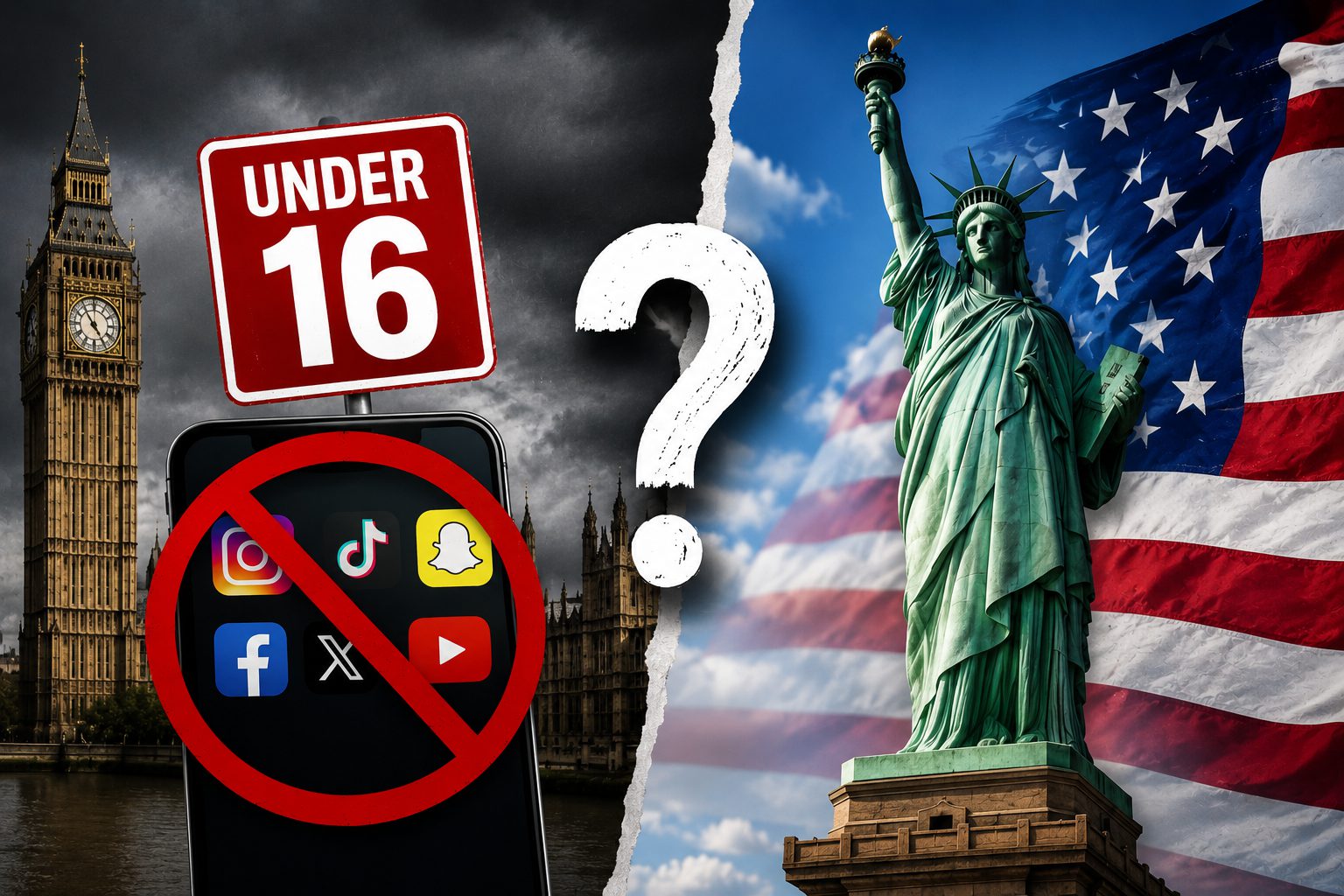
Britain’s bold under-16 social media ban names TikTok, Instagram, YouTube, and more. Zigazoo’s founder argues this is just the beginning of a global wave heading straight for U.S. shores. Six platforms. One sweeping policy, and a government claiming it’s going “further than any country in the world” to protect children online. The U.K.’s decision to bar under-16s from major social media platforms isn’t an isolated regulatory quirk — it’s the latest move in a coordinated global shift. Prime Minister Keir Starmer described social media as “addictive-by-design,” and the first enforcement is targeted for Spring 2027. The central tension here isn’t just about access. It’s about whether banning kids from Instagram actually makes them safer — or just redirects them somewhere worse.
What the Ban Actually Covers
The policy targets major platforms but carves out messaging apps and educational access.
Six platforms got called out by name: TikTok, Instagram, YouTube, Facebook, Snapchat, and X. The first regulations are expected before year’s end, with enforcement arriving Spring 2027. But the details matter more than the headline.
Here’s what the policy specifically includes:
- Under-16s barred from the six named social platforms
- Restrictions on livestreaming and stranger contact on other services, including gaming platforms
- WhatsApp and Signal are explicitly excluded
- Kids retain access to learning tools, news, games, and messaging with known contacts
- “Highly effective age assurance” measures required from platforms
The Dominoes Are Already Falling
Australia moved first, and nearly a dozen countries are following — while U.S. federal law remains stuck in 1998.
Australia enacted similar restrictions already. France, Spain, Canada, Brazil, Indonesia, Denmark, Thailand, and South Korea are either adopting or considering related measures, according to NPR. That’s not a trend. That’s a stampede.
Meanwhile, U.S. federal law still relies on COPPA — a statute written when the hottest social platform was literally AOL Instant Messenger. A teenager today has never lived in a world without Instagram, yet the legal framework governing their online safety predates it by nearly a decade. “Global dominoes.” — Zak Ringelstein, Zigazoo founder, on the spread of under-16 social media bans, via Fortune.
Ringelstein’s platform claims 12 million users, blocks adult-to-minor contact, runs no advertising, and monetizes through virtual currency — think Roblox, not banner ads. Backers include Serena Ventures, Ciara and Russell Wilson, and Charli D’Amelio. Worth flagging plainly: Ringelstein has a direct financial stake in this narrative. His entire business model depends on mainstream platforms being deemed structurally unsafe for kids.
The Enforcement Problem Nobody Wants to Talk About
Critics warn bans could backfire, pushing kids toward darker, unregulated corners of the internet.
Child-safety advocates and civil-liberties organizations have flagged a familiar tension: ban kids from Instagram, and you might find them on platforms with zero moderation — the digital equivalent of locking the front door while leaving every window open. Concerns raised by groups including UNICEF and the Brookings Institution point to the risk that determined teenagers, armed with VPNs and workarounds, simply migrate to less visible, less accountable spaces.
Meta argues age assurance should happen at the device level, not through platform-specific bans. Ringelstein agrees verification matters but argues mainstream platforms are structurally incapable of retrofitting genuine child safety — that you can’t bolt a seatbelt onto something that was never designed to carry passengers.
Whether age-based bans become durable policy or quietly erode against a generation of VPN-equipped teenagers remains the question no government has convincingly answered yet.