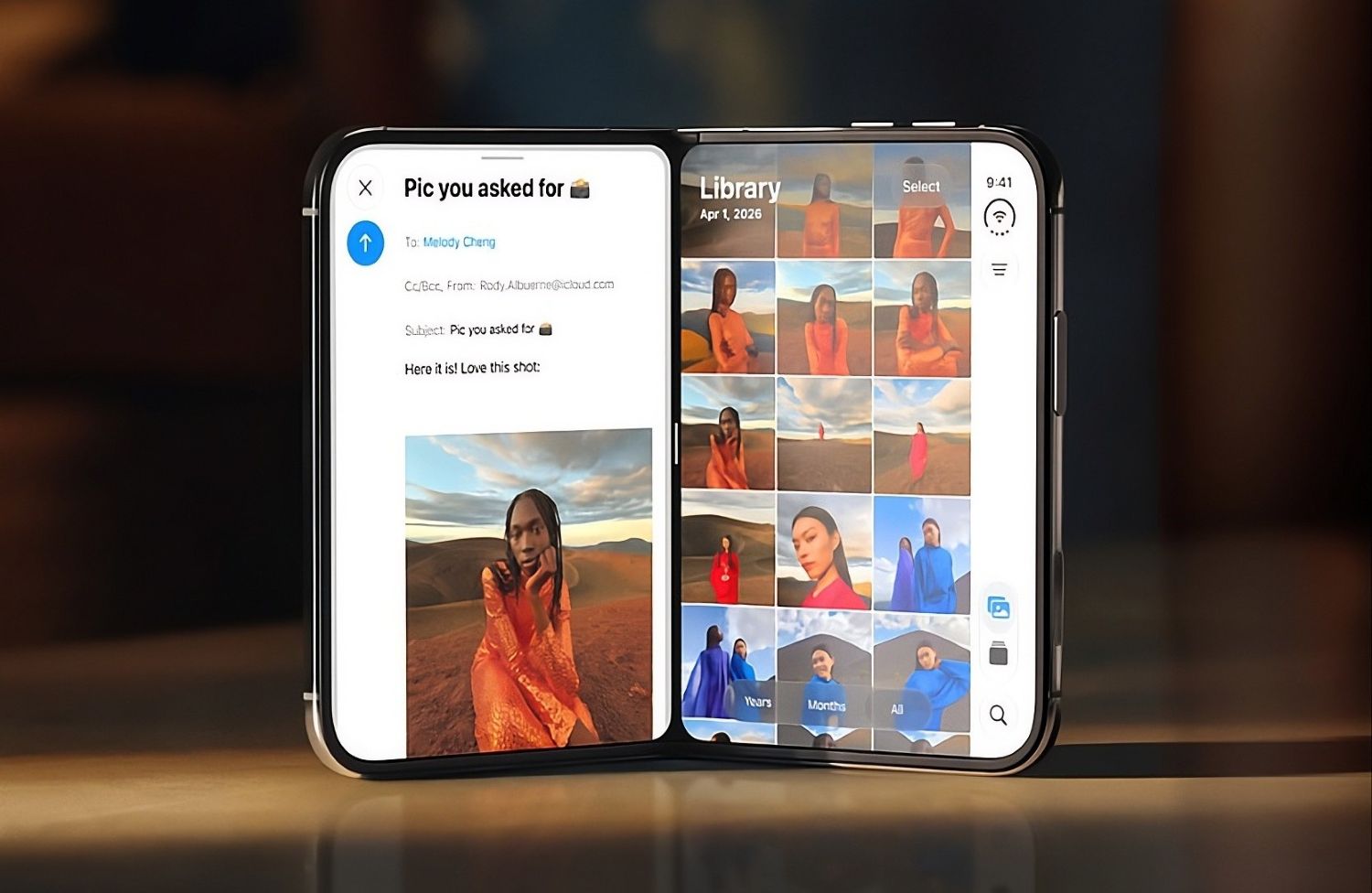
The iPhone Duo’s control architecture is not a minor quirk. Touch ID sits in the right-side button, the home-screen dock runs along the right edge of the display, and the wider foldable chassis demands more lateral reach than any previous slab iPhone.
Apple’s own launch language describes “essential controls moved to the side” as an ergonomic feature. That framing holds up perfectly if your dominant hand is your right one. For the roughly 10 percent of users who are left-handed, that same layout turns every basic interaction into a small negotiation with the hardware.
iPhone Duo is the most transformational change to iPhone since the original.
John Ternus, CEO, Apple
As reported by the New York Post’s Kyra Breslin on September 12, left-handed users and people with stroke-related mobility limitations are already raising that question publicly. Commenters aren’t asking for sympathy. They’re asking whether the device functions for their hand.
Foldables still represent under 2 percent of global smartphone sales, according to IDC data cited by NY Post. Apple’s entry into that market carries weight. The design choices it makes here will signal how seriously it takes physical inclusivity at the premium tier.
A Mirror Mode Won’t Move the Button
Software can shift what’s on screen; it cannot move the button under your thumb.
An iOS update could plausibly mirror the dock, reposition navigation affordances, and shift on-screen controls to the left side of the display. That would help, and Apple should ship it.
What an update cannot do is move the Touch ID button, reposition the camera cluster, or reconfigure the hinge. Those are physical facts. Commenters quoted in the New York Post coverage are pointed about this: they are not willing to “hold it upside down even if they fix software.” Hardware orientation is the core issue, not the UI layer on top of it.
Consider what Duo replaces: Face ID, a biometric that requires nothing from either hand. A right-edge button is a lateral step for anyone whose functional hand is their left.
Some left-handed foldable users report adapting to right-biased layouts without major difficulty. Adaptation is not the same thing as inclusive design. Conflating the two lets the original oversight off the hook.
The Gap Between Apple’s Reputation and This Product
Apple has built one of tech’s strongest accessibility records; this product tests it.
Apple’s accessibility ecosystem is genuinely strong. AssistiveTouch, Switch Control, and Voice Control, along with a long track record of proactive accommodation, set a high bar. None of that is in question.
What is in question is whether a flagship device that replaces a hand-neutral biometric with a right-edge button represents a step backward for users who depend on left-hand or single-hand operation. None of Apple’s launch materials, the Apple Newsroom release, or Wired’s full event summary mention a left-handed mode or mirrored control option for the Duo. That silence is the story.
Apple still has runway before preorders open October 16. A committed software mirroring option before or at launch would address part of the problem. The harder ask, the one that matters for the next iteration, is treating handedness as a hardware variable during the design phase, not a software fix applied after the criticism lands.
The Duo costs $1,999. At that price, “some users adapt” is not an accessibility strategy.