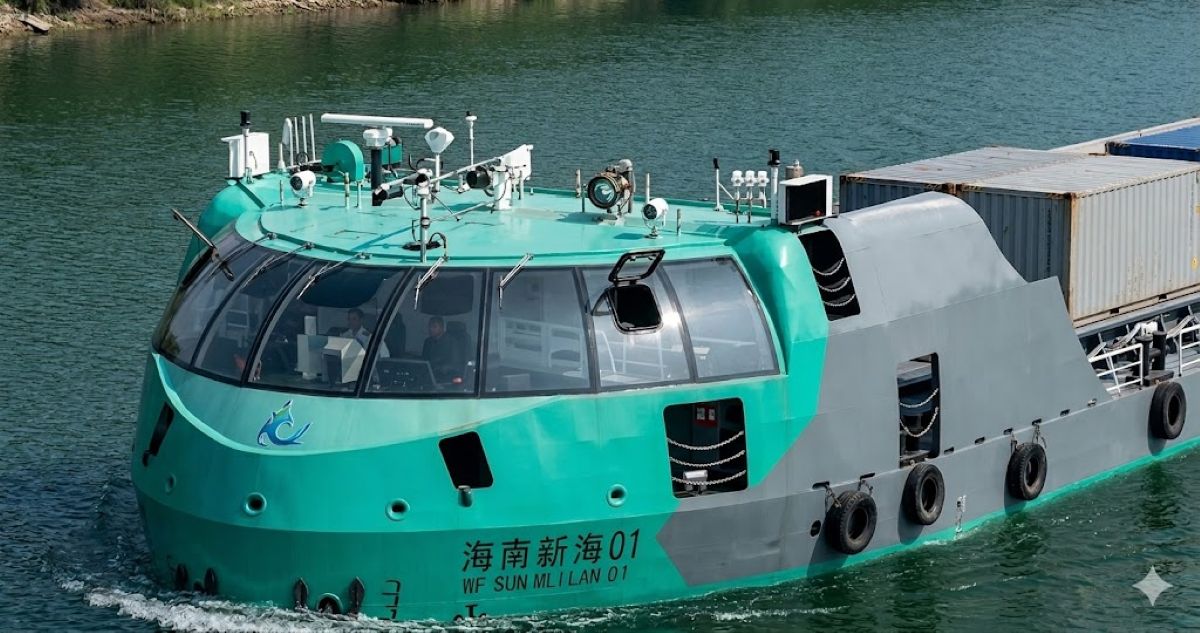
The Hefu Weilan 01 just solved shipping’s biggest electrification headache. While your phone takes an hour to charge and early Tesla battery-swapping stations flopped, this 3,000-tonne cargo ship swaps its entire power source in 30 minutes flat.
China’s standardized battery-swapping vessel completed its maiden commercial voyage between Wuhu and Chaohu ports, carrying 49 containers while proving that modular energy storage actually works—when you think bigger than cars.
Shipping Containers Meet Battery Packs
Six 430 kWh modules snap in and out like oversized shipping containers.
The breakthrough isn’t just electric propulsion—it’s treating energy like cargo. Six standardized battery modules, each packing 430 kWh, slot into the ship using the same ISO container standards that revolutionized global trade.
Port cranes handle battery swaps the same way they move shipping containers, eliminating the need for specialized equipment. One module swaps in five minutes; the full 2,580 kWh array refreshes faster than most people’s lunch break.
This modular approach means different routes can run different battery configurations, and upgrades happen without rebuilding ships.
Certified Success on China’s Waterways
Official approvals from three classification societies prove this isn’t just a prototype.
The China Classification Society certified the battery-swapping system, while Bureau Veritas and DNV granted international approval—the maritime equivalent of passing every safety test imaginable.
The 8-knot vessel operates on predictable inland routes where battery limitations matter less than fuel costs and emissions. Think of it like the difference between city driving and cross-country road trips: short, planned routes make electric viable even when long-haul doesn’t.
The Real Test Was Commercial Cargo
Successfully hauling containers between ports proves the economics work.
Unlike flashy concept vehicles that never see real work, Hefu Weilan 01 loaded actual cargo and delivered it on schedule. The proof isn’t in the technology—it’s in the logistics.
When shipping companies can swap batteries faster than refueling diesel engines, while using existing port infrastructure, the math starts working. This mirrors how China scaled high-speed rail and electric buses: standardize the infrastructure, then deploy at volume.
Battery Highways Coming to Waterways
Success could spark dedicated swapping corridors across China’s river networks.
If this model scales, expect battery-swapping stations along major inland shipping routes—the marine equivalent of Tesla Supercharger networks. Standardized battery containers could serve multiple ships, creating shared energy pools that reduce downtime and costs.
The real revolution isn’t one electric ship; it’s an ecosystem where charged batteries wait at every port.