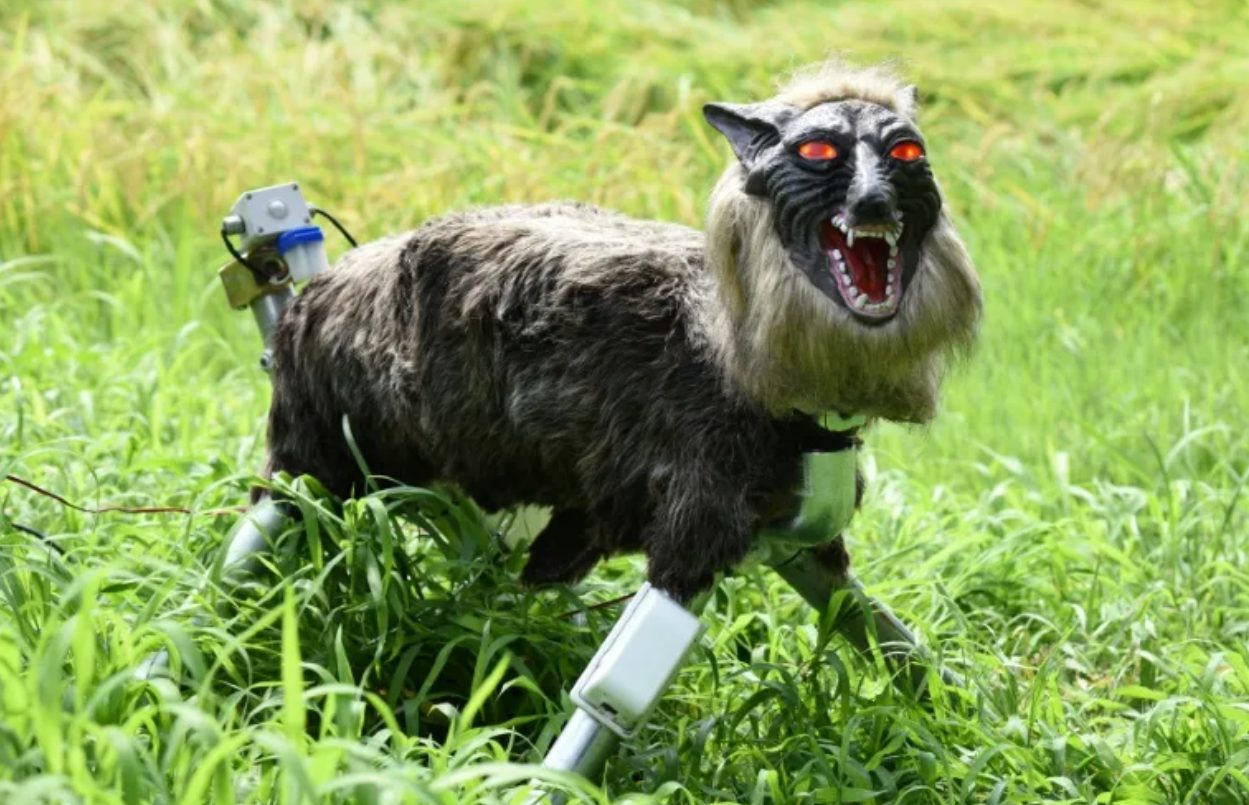
Bear attacks killed 13 people across Japan this year—more than double previous records—but salvation comes from an unlikely source: robotic wolves that locals once dismissed as ridiculous. More than 50,000 bear sightings were recorded nationwide, also doubling previous highs, as hungry bears wandered into homes, schools, and supermarkets with alarming frequency. The crisis has transformed Monster Wolf, an animatronic scarecrow originally designed for crop protection, into one of Japan’s most sought-after safety devices.
Mechanical Predator Meets Real Threat
Solar-powered deterrent systems use LED eyes and randomized audio to establish territorial dominance.
Monster Wolf resembles something from a horror movie set—artificial fur stretched over a pipe frame, topped with a snarling head featuring glowing red LED eyes and bared fangs. When motion sensors detect approaching animals, the device springs to life with movements designed for maximum startle effect, like a haunted house attraction triggered by unsuspecting visitors. The system broadcasts over 50 types of sounds randomly—animal howls, human voices, electronic noise—preventing bears from becoming accustomed to specific patterns. Its audio reaches up to one kilometer away, creating a deterrent bubble that covers roughly one square kilometer of strategic territory.
From Farm Joke to Public Safety Priority
Manufacturing constraints create months-long waiting lists as demand explodes beyond agricultural origins.
Ohta Seiki launched Monster Wolf in 2016 to protect crops from deer and wild boar, enduring ridicule about the device’s appearance. Current company president Yuji Ohta can barely keep up with orders. “We make them by hand. We cannot make them fast enough now. We are asking our customers to wait two to three months,” Ohta explains. His company has received around 50 orders this year—exceeding typical annual totals—from farmers, construction workers, and golf course operators whose livelihoods depend on working safely outdoors.
Proven Performance Drives Adoption
Field trials demonstrate measurable results against traditional deterrence methods.
Takikawa town reported zero human-bear encounters in the first two months after installing two Monster Wolf units, following earlier bear sightings that had raised community alarm. At $4,000 per unit, the solar-powered systems offer broader coverage than many electric fence installations while requiring minimal maintenance. Ohta Seiki is developing mobile versions that can patrol specific paths and handheld models for hikers, plus AI camera integration to distinguish between species and reduce false activations.
This represents more than quirky Japanese innovation—it’s practical robotics addressing the intersection of aging rural populations, climate-driven wildlife behavior, and the need for 24/7 security that doesn’t require human patrol. International inquiries, including requests from India about elephant deterrence, suggest Monster Wolf’s approach could influence wildlife management globally.