Your brain’s speech production system has a fatal flaw that one bizarre gadget exploits mercilessly. The SpeechJammer captures your voice and fires it back at you with a 0.2-second delay, triggering a neurological short-circuit that renders most people temporarily speechless. Like trying to walk while watching your feet on a delayed video feed, the effect hijacks your brain’s natural feedback loop.
The Neuroscience Behind Delayed Auditory Feedback
Your brain expects to hear your voice in real-time—delay that by milliseconds and chaos ensues.
This isn’t science fiction; it’s established neuroscience called Delayed Auditory Feedback. Japanese researchers Kazutaka Kurihara and Koji Tsukada weaponized this phenomenon into a gun-shaped prototype that works from 30 meters away. When you speak, your brain monitors vocal output through real-time auditory feedback. Introduce even a tiny delay, and the monitoring system crashes like a Windows 95 computer trying to run modern software.
DIY Engineers Push the Acoustic Envelope
Recent builds use ultrasonic transducers to beam delayed audio with surgical precision.
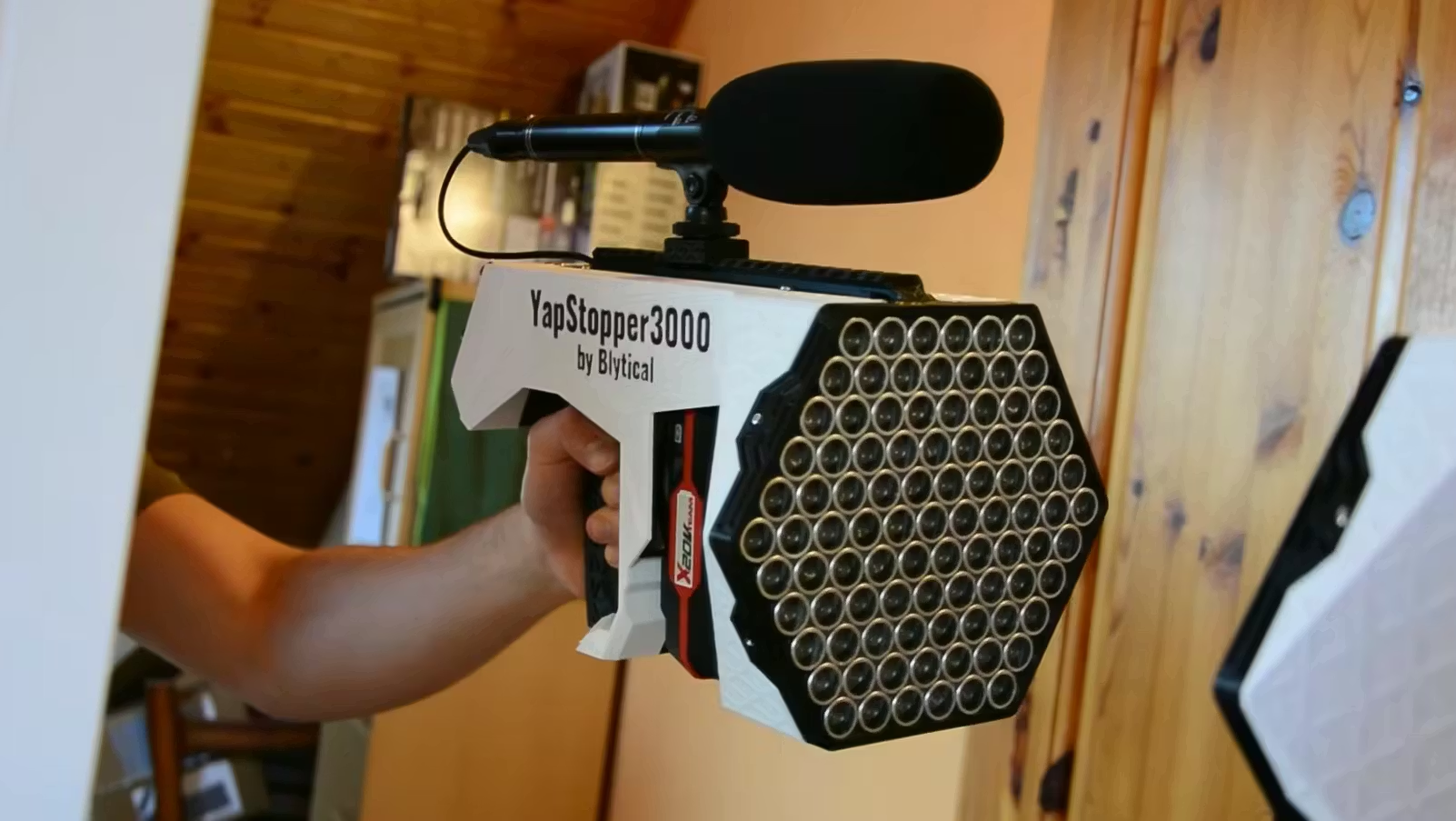
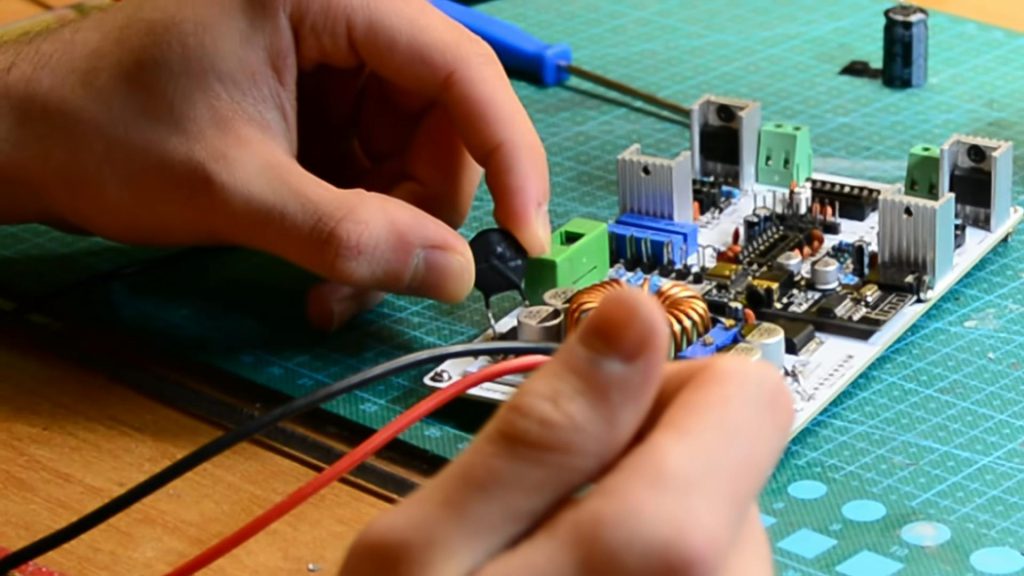
Maker Blytical spent five months building an upgraded version featuring 40 kHz ultrasonic transducers that create an “acoustic spotlight.” This beam-forming technology theoretically allows targeting specific individuals without affecting bystanders. The futuristic chassis includes switches, adjustment knobs, and a laser pointer for aiming.
However, reality bit hard. Constant component failures, frequency drift, and thermal instabilities plagued the build. The prototype never achieved full functionality despite impressive engineering ambitions.
Effectiveness Varies Wildly Across Situations
The device works better for people reading aloud than speaking spontaneously.
While laboratory demonstrations prove the concept, real-world performance tells a different story. The effect varies dramatically between individuals and diminishes with habituation—your brain adapts. Prolonged vocalizations like “umms” and “ohs” prove resistant to jamming.
Most concerning, the inventors themselves acknowledged serious ethical implications around arbitrary speech suppression. They noted that determining “unfair expression” depends entirely on the operator’s judgment.
From Lab Curiosity to Consumer Apps
Smartphone apps now bring delayed auditory feedback to anyone with headphones.
You can experience this brain glitch without building complex hardware—a consumer app called “Speech Jammer – Delay Effect” delivers the same neurological disruption through standard headphones. This accessibility shift transforms what was once laboratory equipment into party tricks and presentation training tools.
The SpeechJammer represents acoustic engineering at its most unsettling—a device that temporarily breaks human communication using nothing but cleverly timed sound. While current implementations struggle with reliability and ethical concerns, the underlying neuroscience remains fascinatingly robust, suggesting our brains are more hackable than we’d prefer to admit.